
One in six Scottish shops lying empty, study finds
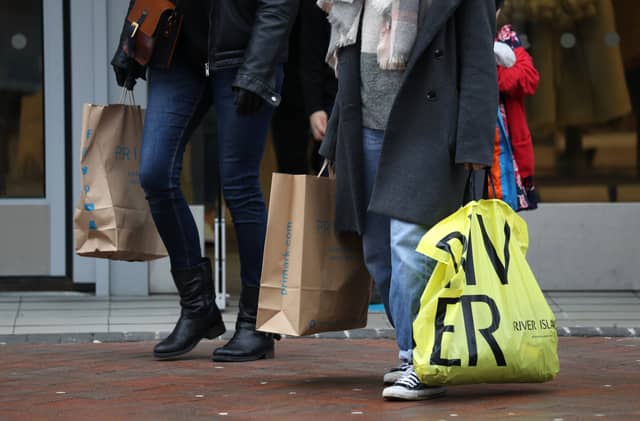

One in six shops in Scotland are vacant, new figures show.
The vacancy rate is one of the highest in Britain, according to the latest Vacancy Monitor issued by the Scottish Retail Consortium (SRC) and the Local Data Company.
The SRC warned vacancy rates may struggle to “ever fully recover”.
The rate remained 15.7% for the third consecutive quarter – an 0.4% improvement on the same point in 2021.
Scotland ranked eighth out of 11 areas UK-wide for the highest shop vacancy rates, with the North East ranking worst at 18.2%.
SRC director David Lonsdale said there is “little sign” of improvement north of the border.
He said: “Scotland’s vacancy rate has plateaued over the past three quarters and seems stubbornly stuck at a fifth higher than during pre-pandemic times.
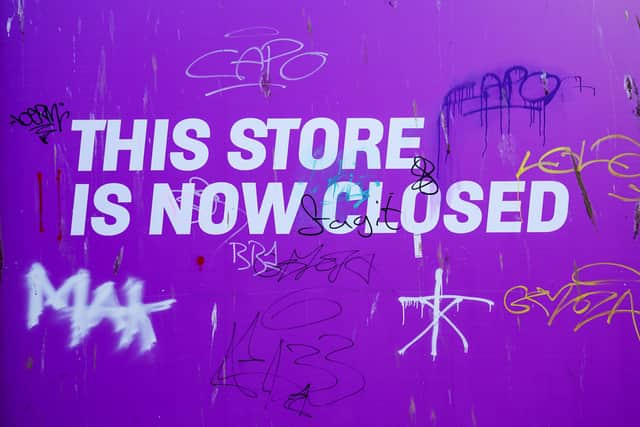
“The volume of empty units is especially marked in shopping centres.
“The fallout from the cost-of-living crunch and pandemic is exerting a heavy toll on retail destinations, as does what increasingly looks like a sustained shift towards hybrid working. This could make it trickier for store vacancy rates to ever fully recover.”
In Scotland, shopping centre vacancies in the final quarter of 2022 remained unchanged from the same point in 2021 at 20.5%, with high street vacancies going from 14.7% to 14.8%.
Retail park vacancies improved to 9.8% in 2022, from 11.0% previously.
Lucy Stainton, director of the Local Data Company, said: “Retail parks continue to outperform other location types, which is perhaps an indication that some of those shopping habits formed during the height of Covid are sticking – with consumers favouring these drive-to locations and larger format units.
“The Christmas trading period seemed to indicate that consumers were favouring, and returning, to stores, alongside their online spend.”
“Over 100,000 Scottish retail, leisure and hospitality businesses are being short-changed as a result. That will endanger jobs and damage the prospects for growth. The Scottish Fiscal Commission has estimated that John Swinney’s failure to match the support being provided elsewhere has cost Scottish firms £200 million.
“Thanks to the Barnett consequentials, the UK Government had provided an additional £222 million that could have helped hard-pressed firms, but it was not passed on.
“The lack of rate relief support puts Scottish businesses at a disadvantage, but it’s also a huge blow to the firms that are the backbone of our high streets and communities across the country.”
Public finance minister Tom Arthur said the retail sector has experienced “challenging trading conditions” due to coronavirus, and data shows the impact of the pandemic will continue to be felt.
He added: “The cost-of-living crisis, driven by rising inflation and energy prices, is a real concern. The powers and resources needed to tackle this emergency on the scale required – access to borrowing, welfare, VAT on fuel, taxation of windfall profits, and regulation of the energy market – lie with the UK Government.
“We have continually urged the UK Government to use all the powers at its disposal and we will continue to do everything within our resources to help those most affected.
“The Scottish budget 2023-24 delivers the lowest poundage in the UK for the fifth year in a row, saving ratepayers £308 million compared to an inflationary increase and ensuring over 95% of non-domestic properties in Scotland continue to be liable for a lower property tax than elsewhere in the UK.”