
Pakistan’s army chief meets Iranian speaker in push to extend ceasefire
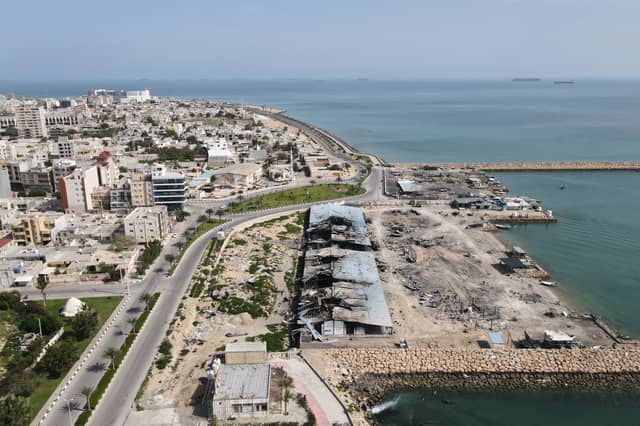

Pakistan’s powerful army chief has met Iran’s parliament speaker as part of international efforts to press for an extension to a ceasefire that has paused almost seven weeks of war between Israel, the US and the Islamic Republic.
It was unclear whether the frantic diplomacy could lead to a lasting deal as the two-week ceasefire passes the halfway mark.
The Iran war has killed thousands of people and upended global markets by disrupting the flow of oil.

There was no immediate comment from Pakistan, which has become a key mediator after hosting direct talks between the US and Iran that authorities said helped narrow differences between the sides. Mediators are seeking a new round before the ceasefire expires next week.
The White House said any further talks regarding Iran would likely take place in the Pakistani capital, Islamabad, though no decision had been made on whether to resume negotiations.
The fragile ceasefire is holding despite a US naval blockade of Iranian ports and Iranian counter-threats to target regional ports across the Red Sea.
The war has jolted markets and rattled the global economy as shipping has been cut off and air strikes have pounded military and civilian infrastructure. Oil prices have fallen amid hopes for an end to fighting, and US stocks on Wednesday surpassed records set in January.
During the fragile ceasefire with Iran, fighting has continued in Lebanon between Israel and the Iran-backed militant group Hezbollah.

But Lebanese President Joseph Aoun refused on Thursday to speak to Israeli Prime Minister Benjamin Netanyahu, a government official familiar with the developments told the Associated Press.
The government official said the remarks were made during a call with US secretary of state Marco Rubio and that Washington “understands Lebanon’s position”.
Mr Aoun’s office acknowledged a call with Mr Rubio, but did not mention the possibility of talks with Mr Netanyahu. Mr Netanyahu’s office did not do so either.
Lebanon and Israel held their first direct diplomatic talks in decades on Tuesday in Washington following more than a month of war between Israel and Hezbollah. Lebanon has insisted on a ceasefire to stop the fighting between Israel and Hezbollah before engaging in direct talks, while vowing to commit to disarming the group.
Washington has not publicly stated its support of a ceasefire as a precondition, and the Israeli government has framed the talks as peace negotiations with a focus on disarming Hezbollah.

Israel and Lebanon have technically been at war since Israel was established in 1948, and Lebanon remains deeply divided over diplomatic engagement with Israel.
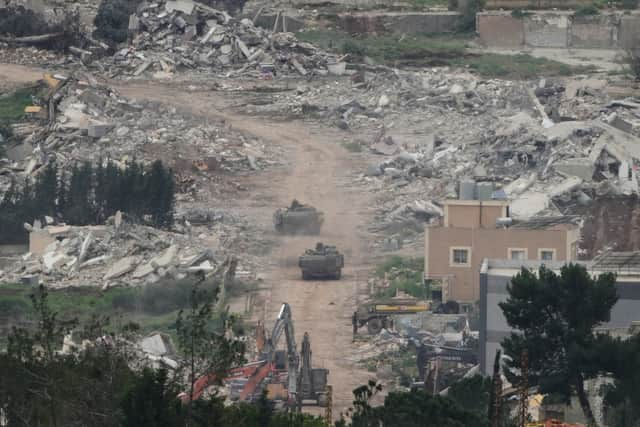
Israeli troops have pushed deeper into southern Lebanon to create what officials have called a “security zone”, which Mr Netanyahu has said will extend at least five to six miles into Lebanon.
Even as the US blockade on Iranian ports and renewed Iranian threats strained the ceasefire, regional officials reported progress, telling AP that the United States and Iran had an “in-principle agreement” to extend it to allow for more diplomacy.
But tensions simmered.
The commander of Iran’s joint military command, Ali Abdollahi, threatened to halt trade in the region if the US does not lift its naval blockade, and a newly appointed military adviser to Iranian Supreme Leader Mojtaba Khamenei said he does not support extending the ceasefire.
Iranian Foreign Ministry spokesman Esmail Baghaei said Iran is open to discussing the type and level of its uranium enrichment, but his country “based on its needs, must be able to continue enrichment”, Iranian state media reported.
The Pentagon urged Iran to make a deal, with US defence secretary Pete Hegseth telling reporters at the Pentagon that “ultimately, they need to come to the table”.
He said the US will ensure that Iran never has a nuclear weapon.
“We’d prefer to do it the nice way through a deal led by our great vice president and negotiating team. Or we can do it the hard way,” Mr Hegseth said.
Iran has repeatedly insisted that it does not seek a nuclear weapon and that its nuclear programme is for peaceful proposes.

US treasury secretary Scott Bessent said the Trump administration would ramp up economic pain on Iran with new economic sanctions on countries doing business with it, calling the move the “financial equivalent” of a bombing campaign.
Pakistani Prime Minister Shehbaz Sharif met Qatar’s emir, Sheikh Tamim bin Hamad Al Thani, during a visit to Doha, his office said, as part of a regional visit aimed at discussions on the ongoing US-Iran peace process.
Since the war began, Iran has curtailed maritime traffic through the strait, which a fifth of global oil transited through in peacetime.
Tehran’s effective closure of the strait sent oil prices skyrocketing, raising the cost of fuel, food and other basic goods far beyond the Middle East, and the US has responded with a blockade on Iranian shipping.
US Central Command said on Wednesday that no ships had made it past the blockade since it was imposed two days earlier, while 13 merchant vessels complied with a direction from US forces to turn around and re-enter Iranian waters.