
Paralysed ex-professional dancer reclaims stage thanks to technology translating her brainwaves into dance moves
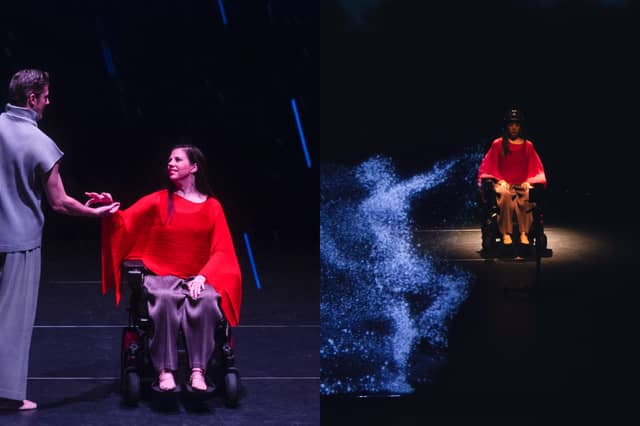

An ex-professional dancer who became “70% paralysed” has reclaimed the stage and says she feels “alive again” after using technology that translates her brainwaves into dance movements.
Breanna Olson, a 46-year-old single mother who lives in Tacoma, Washington, US, noticed weakness in her legs in 2022 and around 18 months later was diagnosed with amyotrophic lateral sclerosis (ALS).
According to the NHS, ALS is a type of motor neurone disease which causes muscle weakness and is usually life-shortening. There is currently no cure.
By the time Breanna got diagnosed, in October 2023, she was partially paralysed and wheelchair-bound. She left her job as an optician and was forced to stop dancing.
In February 2025, she was contacted by Dentsu Lab and NTT, who told her they may be able to help her perform on stage again using their bespoke brain-computer interface technology.
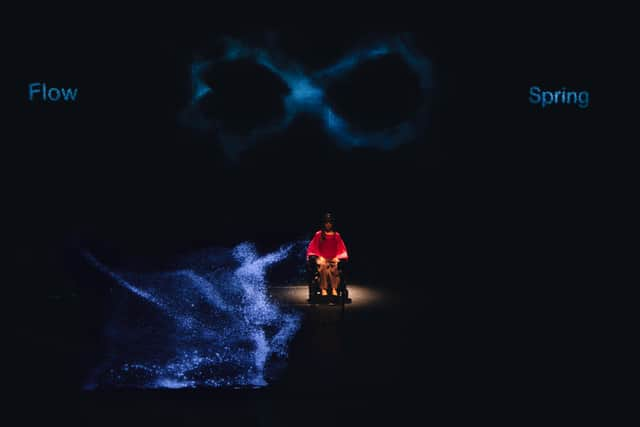
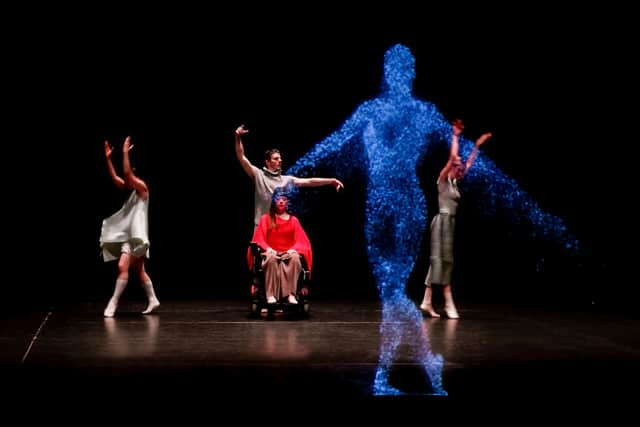
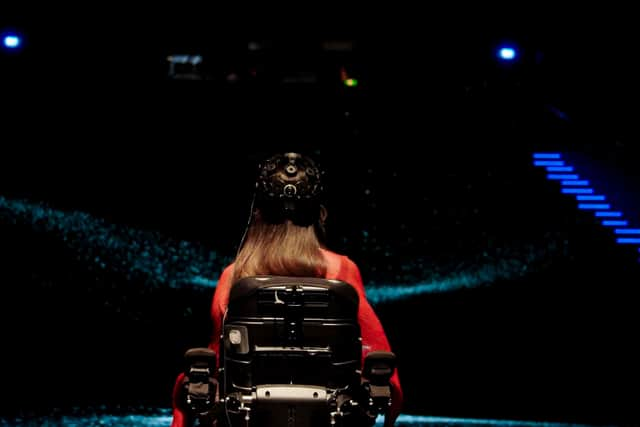
The technology uses machine learning to update an electroencephalography (EEG) headset, enabling Breanna to control a virtual, holographic version of herself live on stage using her brainwaves.
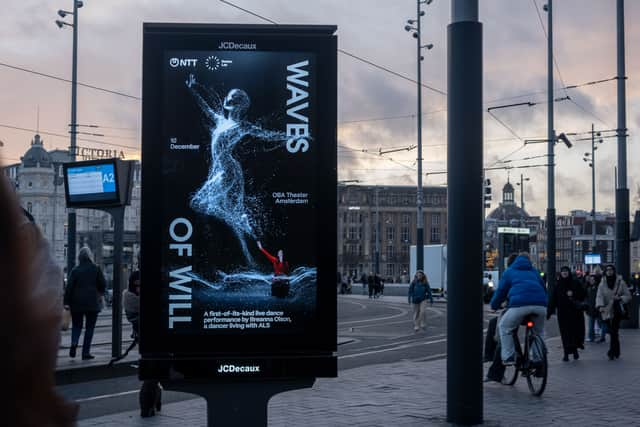
In December 2025, she performed on stage in Amsterdam from her wheelchair, using the technology to animate an avatar, and now hopes to perform with her children while advocating for others living with ALS.
“After the performance, I just felt alive again, I was overwhelmed and just started sobbing.”
Breanna grew up “always loving dance”, attending ballet classes and dancing professionally between the ages of 18 and 19.
She explained: “My brother joined me in dance when he was about 11 and we moved across the country and went to a Russian ballet school, and we partnered for part of my professional career, and it’s just been something that has connected us throughout our life.”
After leaving her professional dance career, her passion continued, often “playfully” dancing with colleagues and her children.
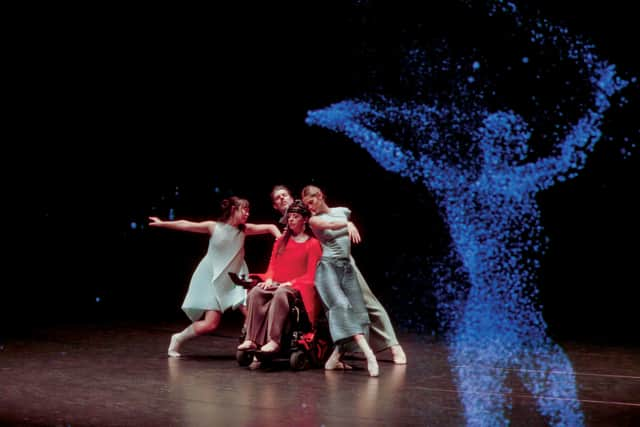
She performed on stage through these styles and found that dance helped her through this “difficult time”, bringing her “so much joy”.
“Dance means, to me, life, expression, freedom, connection, connection to anyone,” Breanna added.
At the age of 42, in 2022, Breanna was working as an optician, managing childcare and still leading an active lifestyle, often hiking and paddleboarding.
That changed when, at the beginning of a hike, she noticed her legs were “being very slow”.
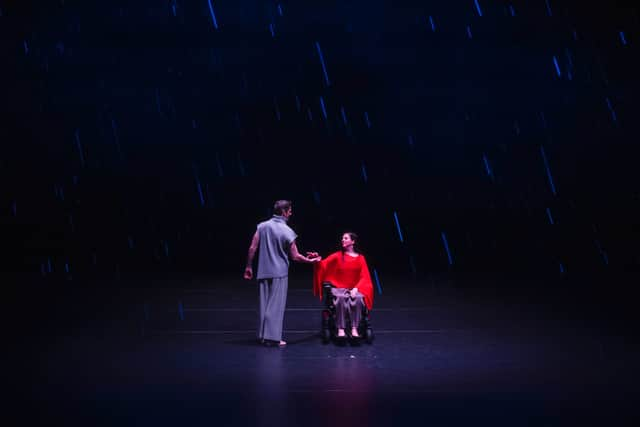
As the weeks went on, she began to experience increasing weakness and cramping, and her condition deteriorated.
By the time she received her diagnosis, in October 2023 at age 43, she was using a wheelchair and left her job as a result.
Breanna added: “It was a very difficult time, taking care of teenagers, and my energy and being tired was a big issue.”
She has since become “70% paralysed” and is “reliant on a caregiver to do pretty much everything”, although she can still feed herself and eat solid food.
Following her diagnosis, she asked her brother, Casey Herd – a dancer with the Dutch National Ballet – if there was a way they could dance together again.
Together, they made it happen – in November 2023 they created a video, directed by Breanna’s daughter, and uploaded it to Breanna’s social media in January 2024.
She said: “At the time, I could stand on my own in place, I wanted to be on the same level, so we sat on stools.
“Then I wanted the moment where he helps me rise to standing to signify strength.
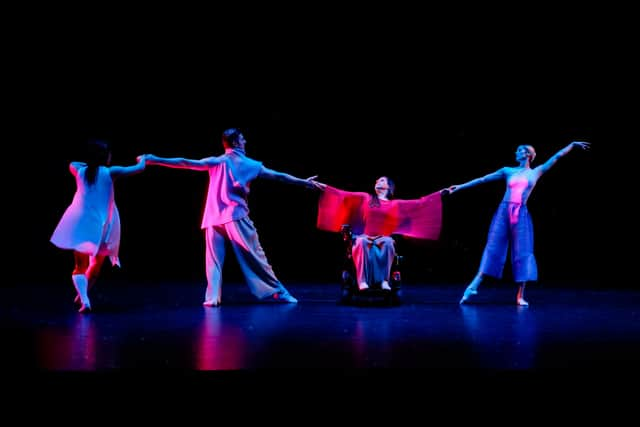
“I wanted different levels to rise up to in such a short dance and the end pose to represent hope, unity, looking up and forward to the future.”
In February 2025, she was contacted by representatives from Dentsu Lab and NTT as they had seen the video and they told her they may be able to help her perform on stage again.
They explained that a brain-computer interface could enable her to express dance movements.
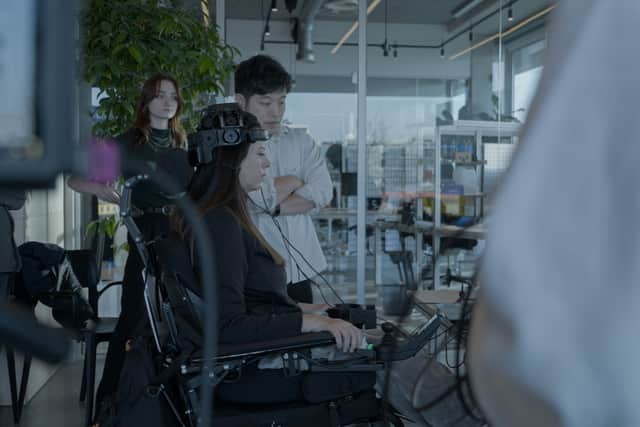
This allows users to select pre-defined movement patterns at the moment they choose, live on stage.
Rather than responding to passive stimuli, the interface enables users to actively communicate their motor intention and translate this into movement.
Breanna said: “I was unbelievably excited, and just again, the chance to perform, but perform with a live audience, was particularly special.
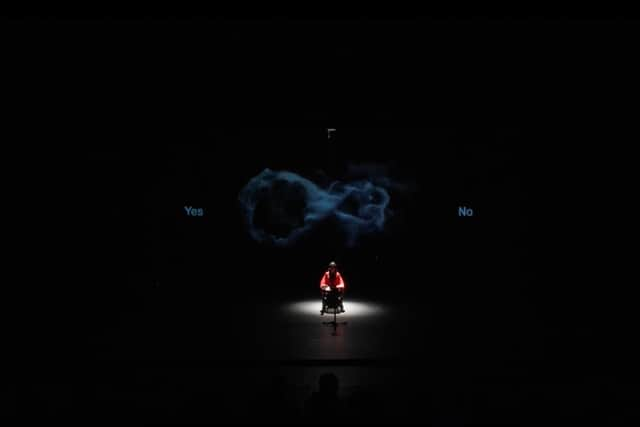
“It became easier the more I used it and I think ultimately the reward is very exciting – that you can express yourself in a way that you can no longer with your body.”
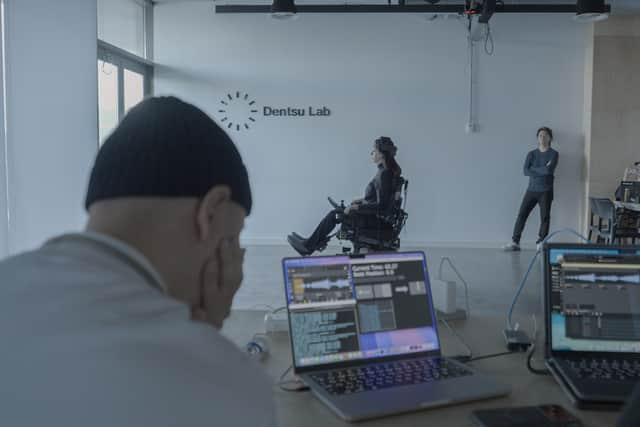
In preparation for the performance, Breanna practised using the brainwave technology so the AI could learn her brain patterns.
She also worked closely with choreographer Peter Leung to create the routine.
The performance, titled Ways of Will, took place in December 2025 in Amsterdam and was divided into three acts.
In the first act, Breanna appeared on stage in her wheelchair, wearing the head set and using the brainwave interface to trigger pre-defined movements of an avatar.
Pascal Rotteveel, 38, Dentsu Lab’s global executive creative director, said: “We basically logged a whole list of all the different moves.
“We motion-capture the different movements with one of the dancers from the ensemble and use archival footage of Brianna dancing to give nuance to the moves.
“We basically had a huge repository of moves, and then Brianna, live on stage, was choosing between those moves and stitching them together using her brainwaves and the technology.
“She has used this technology to express her creativity in designing the performance as well as actually perform it through her holographic avatar.”
After the performance, Breanna said she “felt alive again”.
Looking ahead, she hopes to perform again this year with her children, who were unable to attend the Amsterdam performance.
She added: “My goal is to advocate as much as possible for people living with ALS – I don’t think there are very many performers in the world with ALS, and so I hope that this gives them, as well as their families, hope.”
Reflecting on her journey, she said: “I think knowing this was going to happen a few years ago would have helped me a great deal.
“Hopelessness is huge in a disease where there’s no treatment, it would have really gotten me through…so I’m just so grateful.”