
Parents of girl with ultra-rare brain tumour making up less than 1% of diagnoses hopes she will ‘prove doctors wrong’
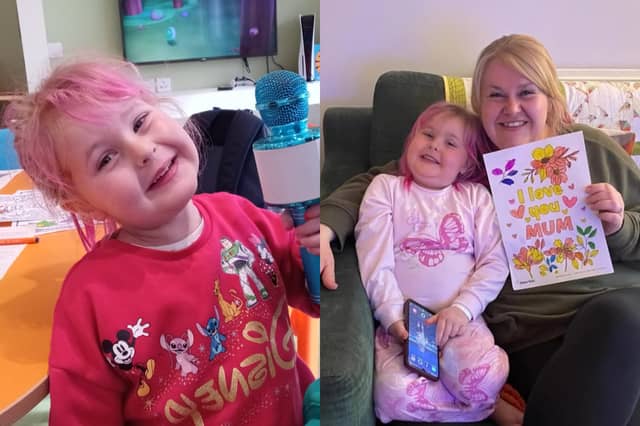

The parents of a five-year-old girl with an ultra-rare brain tumour making up less than 1% of diagnoses hopes she will “prove doctors wrong” and outlive her 12-month prognosis.
Charlotte and Stefan Hassall, both 36, from Cheshire, described their daughter Rosie as “a little firecracker” who has “always been bubbly” when, in November 2024, she started experiencing extreme headaches and issues where her eyes “pinged” in the wrong direction.
Concerned, NHS worker Charlotte and Tesco employee Stefan took Rosie to see both a doctor and an optician but nothing wrong could be found and it was thought she could have migraines – which run in the family.
After Rosie’s head pains worsened to the point it was too painful for her to cry and she could not laugh or sneeze, the family sought another eye test where suspected nerve damage was detected in Rosie’s left eye and, after attending an out-of-hours doctor appointment, she was referred for an MRI scan.
Three days before Christmas, Rosie was diagnosed with a brain tumour the size of a kiwi and after a biopsy, the couple were told it was cancerous, inoperable and incredibly “aggressive”, with doctors estimating it had grown within a matter of days or weeks.
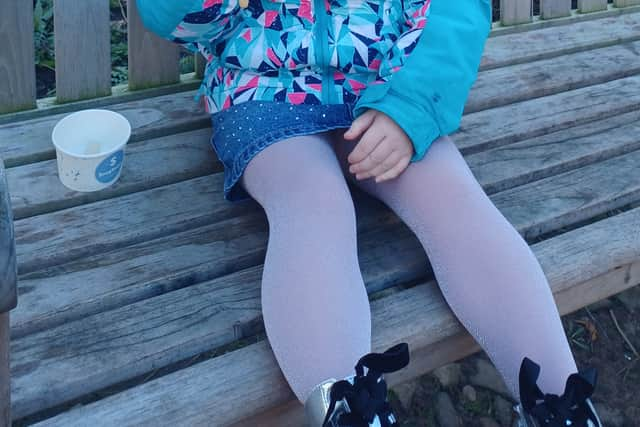
“Rosie is a fighter, we can see how much she has fought since she’s had this and I’m hoping that she proves them wrong and they can learn off her,” Charlotte told PA Real Life.
“She will be the one that gets through it but you never know and if she’s not, we can help other families down the line with what we’re going through.”
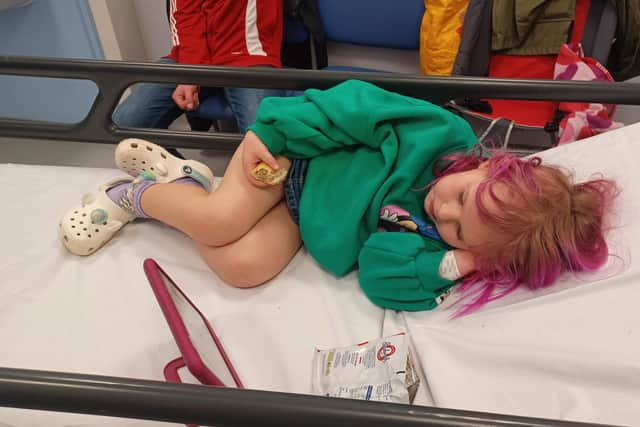
“We didn’t think anything of it at first but over the next few days, the pain got worse,” Charlotte said.
“We were having tea one night and she said she’d learnt to go cross-eyed but her left eye actually pinged the other way.
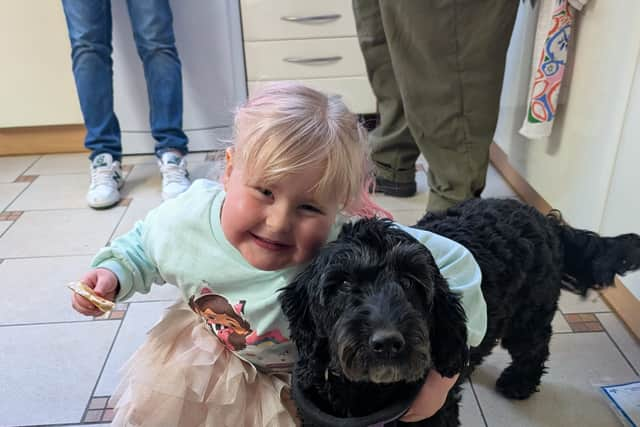
Charlotte took Rosie for a doctor’s appointment where it was thought she could be experiencing migraines – a condition which runs on both sides of the family.
She also visited an opticians, Vision Express, but a reason for Rosie’s symptoms could not be found as both her eye and vision were working as normal.
“She had 27 episodes of this pain in her head and the doctors were a little bit stumped about what it could be,” she said, adding they were also advised to give Rosie Calpol to help with the pain.
“She was just so poorly, rolling about in pain on the floor, she was really uncomfortable and really quite stressed out.
After seeking a second eye test from Specsavers, where Charlotte said her daughter’s symptoms had become “a lot worse”, it was thought Rosie had suspected nerve damage in her left eye and she was referred to an ophthalmologist.
Rosie underwent “thorough” tests before being sent for an MRI scan at Leighton Hospital on December 19.
The family received the results of the scan on December 22 which revealed a six centimetre tumour in her brain.
“I argued with them at the time and said they’re wrong because they’ve only done one scan, they can’t surely be right off one scan.”
The same day, Rosie underwent an MRI scan with contrast – where a dye is injected to make certain tissues and blood vessels show up more clearly – before the family were referred to Alder Hey Children’s Hospital in Liverpool and the presence of the tumour was confirmed.
On January 26, the family received Rosie’s official diagnosis which was a “new entity” of a paediatric bithalamic glioma.
Bithalamic gliomas are incredibly rare tumours which make up less than 1% of brain tumour diagnoses, according to Brain Tumour Research.
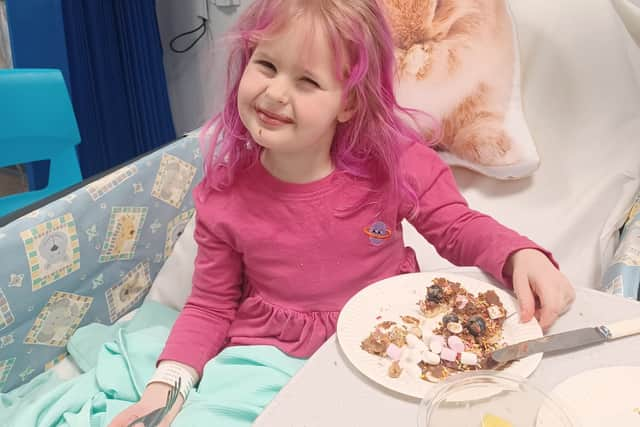
Charlotte added: “They said it was literally a matter of days or weeks that it could have happened and grown quite quickly because the symptoms just came on.
“Even though she has a paediatric bithalamic glioma, it’s a new entity, it’s a very rare form of cancer that she’s got – when you Google it, there’s not much you can find.”
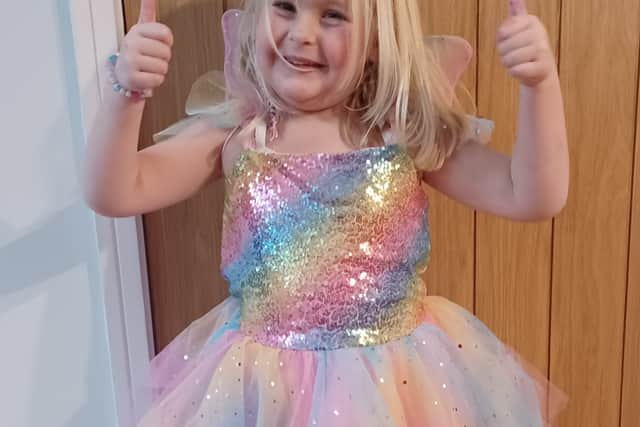
The family were informed the average prognosis for bithalamic gliomas is between nine and 12 months, but they remain positive as they know Rosie is “a fighter”.
“Rosie is incredible and she’s just tried to carry on as much as she can, she’s such a tough cookie,” Charlotte said.
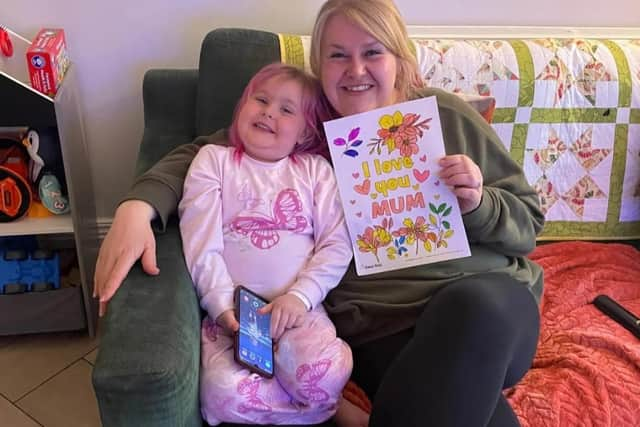
“If anyone knows anything more about her cancer, we can learn from it and help other families as well,” Charlotte said.
The family have launched a GoFundMe page for support as Charlotte and Stefan have taken time off work to care for Rosie and help her enjoy the days she has away from hospital, raising over £33,000.
To find out more, visit the fundraiser for the family here: gofundme.com/f/support-rosie-and-her-family-through-brain-cancer