
Peacekeepers may have waited up to 15 minutes before seeking help, inquest told
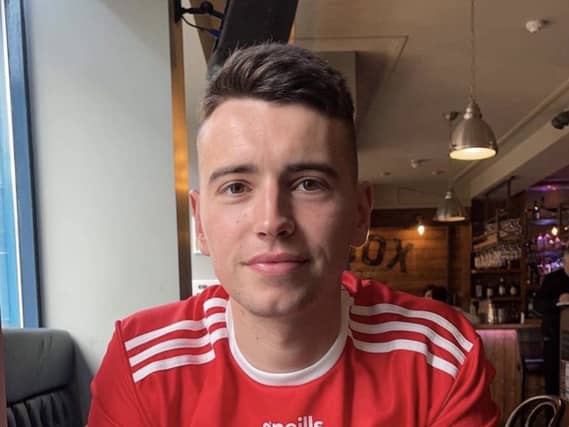

Private Sean Rooney was shot in 2022 while on a transport mission in Lebanon.
Irish peacekeepers in the lead vehicle of a convoy may have remained on the side of the road for 10 to 15 minutes knowing that a separated vehicle had been surrounded by a highly hostile and armed crowd, an inquest has heard.
Private Sean Rooney was shot dead in December 2022 after the UN vehicle he was driving was attacked while on a transport mission in Lebanon.
Dublin District Coroners’ Court on Monday heard further details about the separation of two vehicles which had been travelling in a convoy on the night of December 14, 2022.
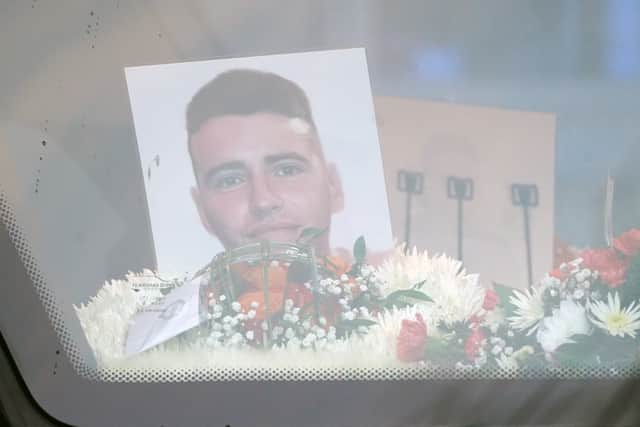
The inquest heard that Pte Rooney may have already been dead by the time the tactical operations centre (TOC) based at Camp Shamrock was made aware that the convoy had become separated.
The inquest on Monday focused on the time it took for the soldiers travelling in the lead convoy to contact headquarters about the separation, how long it took them to realise they had become separated, and how they reacted to the other vehicle becoming surrounded in a hostile Lebanese area.
Gunner Michael O’Sullivan was on his first tour of UN duty to Lebanon in November 2022.
Gnr O’Sullivan was the driver of the lead vehicle and it was his first time driving the vehicle in Lebanon, the inquest heard.
He said that before leaving Camp Shamrock, he received a short briefing about 10 to 15 minutes long.
After spending a short time at the UN outpost, EP-28, at the edge of Unifil’s area of operations, the peacekeepers were told to “mount up and to leave” the outpost.
Sean Guerin, the barrister representing Pte Rooney’s family, asked Gnr O’Sullivan about communication between the vehicles as they left the outpost.
Mr Guerin put it to Gnr O’Sullivan that it would be “fair to say that no-one was watching the vehicle behind to make sure that it left” EP-28.
Gnr O’Sullivan replied that he was.
Asked what he saw, he replied: “I pulled off. I travelled a couple of metres down the road, and it was literally pitch dark at night, obviously, no street lights, and there’s headlights behind me, the same level as the (Toyota Land Cruiser), and I presume that was (it) pulling out.”
It was put to him by Mr Geruin that he could not have seen the vehicle lights pull out of EP-28, and Gnr O’Sullivan replied that the headlights were behind him.
“I just presumed it was them because there was no way I could see the other vehicle with the darkness,” he added.
He told the inquest that he had travelled a distance before turning on to a motorway, and became aware that the vehicle was not behind them.
He also said that he had driven for about five minutes at a reduced speed on the motorway to allow the other vehicle to catch up.
Asked again how far along the motorway he had travelled before he realised the vehicle was not behind them, he said it was “hard to give a rough estimate”.
Gnr O’Sullivan also agreed that the realisation that the convoy had separated was a “pretty striking moment and a pretty memorable one”.
He told the inquest that he did not think they had driven far down the motorway, as they had to reverse once they had learned the other vehicle was not following them.
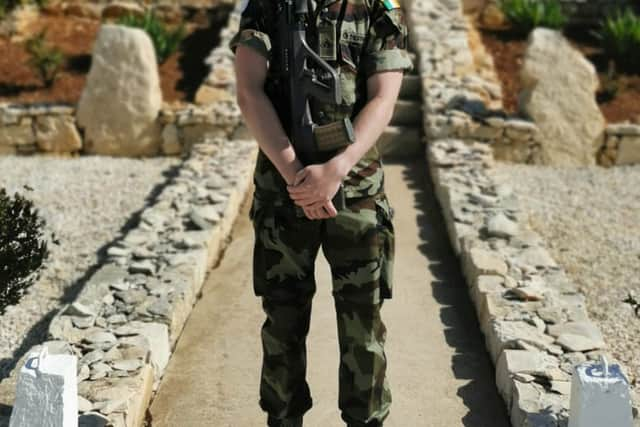
The peacekeepers eventually made contact with Pte Rooney’s vehicle and during the fifth and final phone call, they heard Pte Rooney and others trying to escape a crowd of some 60 people as they were fired on.
It was during this phone call that they became aware that the vehicle was under a denial of freedom of movement (DOFOM).
Mr Guerin said the evidence suggests his lead vehicle sat on the side of the road for 10 or 15 minutes or more, knowing that a DOFOM was under way, and before they travelled north to search for help.
Gnr O’Sullivan said they went looking for help after the last phone call.
Earlier, a soldier who had also been travelling in the lead car said he “wanted to tell the truth” and was “never trying to deceive” anyone about the details of the moments leading up to Pte Rooney’s death.
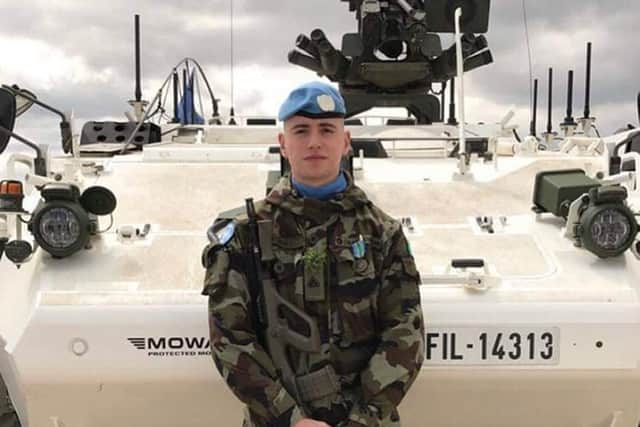
The inquest into Pte Rooney’s death has heard he was supposed to be following a lead vehicle, but the convoy had become separated earlier in the journey and both Land Cruisers ended up on different roads.
Corporal Richard Shanahan was asked about aspects of his evidence which counsel for the Defence Forces, Frank Kennedy BL, claimed to have been the source of some controversy.
He said it related to how far the lead vehicle had got down the road before stopping, and whether or not the vehicle had returned to EP-28.
The jury had previously heard that the vehicles became separated after a stop at EP-28.
There had been an issue with the key fob in Pte Rooney’s vehicle and it left the outpost several minutes after the lead Land Cruiser.
Pte Rooney’s vehicle proceeded towards a village where it was surrounded and attacked, and was fired upon as the peacekeeper tried to drive away.
Mr Guerin had asked Cpl Shanahan about his evidence, suggesting that there were inconsistencies .
Cpl Shanahan later said that he apologised “if there are any discrepancies in my statement”, adding that with the passage of time, his memory was changing and that it was “quite a stressful time”.
He also agreed that the death of Pte Rooney was an “extremely traumatic experience”.
Cpl Shanahan, who at the time was a signalman in the lead vehicle with commanding officer Captain David Kelly and two others, was asked about suggestions that he was attempting to deceive the inquest.
He told the inquest on Monday: “I was never trying to deceive anybody. I wanted to tell the truth.”
Cpl Shanahan also accepted that the moment they became aware that the convoy had become separated may not have been reported back to the tactical operations centre for at least half an hour.
The inquest was told that it was during the final call to the soldiers in the second Land Cruiser, when the situation had become “extremely grave”, that they made contact with headquarters.
The call had been made at 11.16pm, some 26 minutes after they first became aware of the separation.
Mr Guerin asked if there was an explanation for the delay, to which he replied he was “not sure”.
Mr Guerin asked the witness if there was a discussion about whether or not their headquarters should be told about separation.
“I can’t recall,” Cpl Shanahan said.
He added: “Once we made contact with them the first time, we decided that we were going to wait at the junction. I think we didn’t realise how serious the situation was going to develop into.”
Mr Guerin asked whether they had any discussions about calling for assistance.
The solider told the inquest that he was “not sure”.
“I do suggest, Corporal Shanahan, with respect, that it may be hard to believe that,” Mr Guerin said.
He added: “It’s hard to believe that a vehicle that has been isolated from its convoy, as your vehicle was as much as the other, in the dark of night in December, outside the area of operations, without any supporting vehicles, with no other means of assistance except to radio back to the top, back to headquarters, and ask for support, it may be difficult to believe that you didn’t have a conversation about whether to make contact with the top.”
The inquest continues.