
Pet-friendly design choices for stylish interiors


When it comes to home comforts, finding a happy compromise that satisfies everyone’s needs can be challenging – especially if you’re a pet parent.
After all, tactile furnishings are very of the moment and if you’re hankering after a tassel-trimmed tieback for your new curtains, kitty might think this is the best toy for playtime… eek.

Step forward pet-friendly furnishings, stain-resistant fabric, and comforting choices for the whole family.
To help you strike the perfect balance between style and durability, Magdalena Gierasinska, head of product and design at Barker and Stonehouse, shares her top tips for choosing furnishings that work for both people and pets…
Opt for durable, pet-resistant finishes
The best hard furnishings for pet-friendly homes are designed to withstand daily knocks, paw marks and the occasional scratch…
“Solid wood is a great choice, especially when finished with a protective lacquer that makes it easy to wipe clean,” suggests Gierasinska.
“Reclaimed wood can also be ideal… its natural variations and rustic character help disguise minor scuffs, so it continues to look good for years.”
For households with pets who like to chew, she recommends avoiding sharp corners or fragile edges that could be damaged or cause injury.

Gierasinska continues: “Curved shapes bring a softness, fluidity and a sense of comfort to interiors, balancing the sharp lines of modern architecture, all whilst making the space pet-friendly.”
Think smart with storage
Well-planned storage can help maintain a stylish home while keeping pet items neatly tucked away…
“Closed storage solutions are ideal, as they keep belongings protected from fur, dander, and curious paws.
“Items such as shoes, clothing, and soft furnishings are shielded from chewing, scratching, or accidental damage,” advises Gierasinska.
Additionally, she says they prevent pets from accessing potentially harmful items, such as cleaning products or small objects. “Creating a safer and more hygienic environment for both animals and owners.”
Choose stable, weighty designs
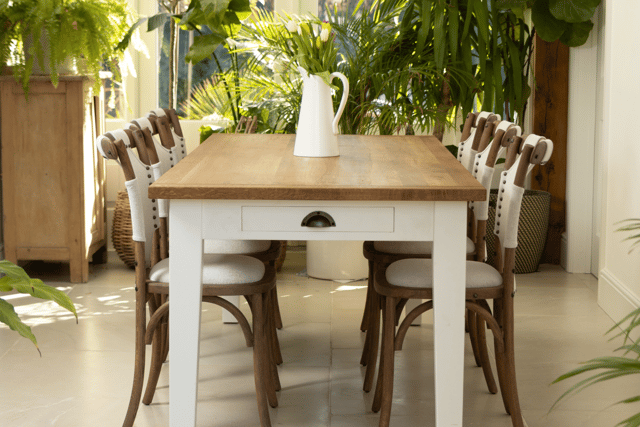
“Dining tables with sturdy central pedestals or solid leg frames are less likely to wobble if nudged,” she highlights. “For tall cabinets or shelving units, they may need to be fixed to the wall to prevent tipping, particularly if you have climbing cats.”
“When it comes to materials, hardwoods like oak or walnut are durable and resistant to scratches, while sealed finishes make surfaces easier to clean – and less prone to absorbing stains from muddy paws or spills,” advises Gierasinska.
Low-maintenance materials make life easier

“Ceramic-topped tables are incredibly practical. They resist scratches, heat and stains, and are easy to care for; perfect if your pet has a habit of putting their paws where they shouldn’t.”
For high-traffic areas, she recommends darker or mid-toned finishes to mask marks. “Oak, walnut and even matte black work beautifully in modern homes, and are forgiving of the everyday realities of pet life.”
Blending practicality with personality
Ultimately, designing a pet-friendly home doesn’t mean sacrificing style…
“By choosing well-made, durable, hard furnishings with thoughtful details, you can enjoy a space that’s both beautiful and built to last, no matter how many paws share it with you.”