
Polestar spends thousands of hours on a frozen lake to create the sportiest EVs
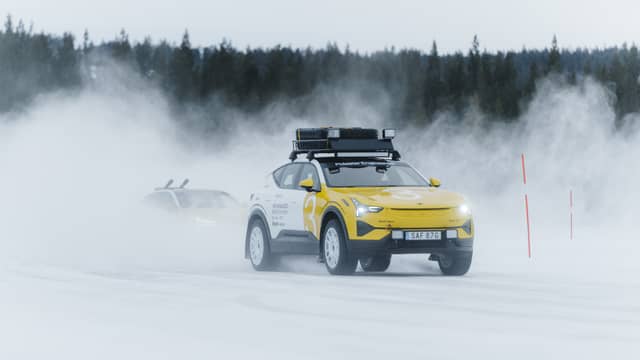

You know you’re in safe hands when you have someone like Joakim Rydholm sitting alongside you at the wheel. He’s flicking a rally-prepped Polestar 3 one-off through a series of high-speed S bends carved into a frozen lake, pitching the car into a variety of lurid and hair-raising slides.
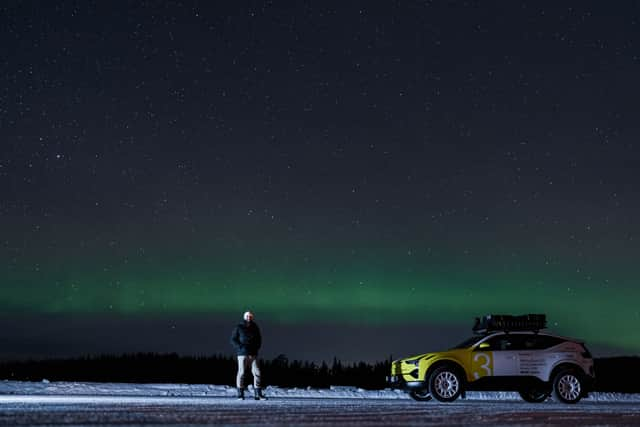
The sun has long since set – the darkness is jet-black – and somewhere above us the Northern Lights are glowing, but Rydholm is busy with yet another bottom-clenching four-wheel drift and casually explaining the finer points of its chassis set-up. Meanwhile, I’m hoping my dinner of reindeer prepared in seven different ways doesn’t make a reappearance.
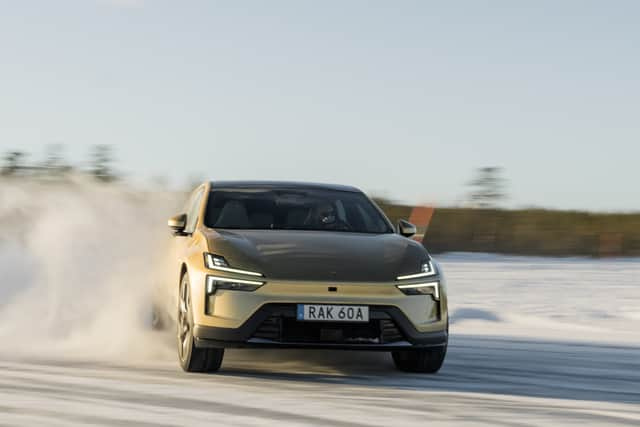
Our blast underneath the luminescent sky is effectively a peek behind the curtain into the Polestar engineering team’s typical winter working day. The seemingly never-ending series of S-bends is part of a specially-constructed track sliced into a frozen lake near Jokkmokk, a tiny Swedish town, deep in the Arctic Circle, and famed for its markets which have been running for 400 years.
The track, affectionately known by Polestar as the ‘Joakim-ring’, is used in a similar way to the ‘Nurburgring Nordschleife’ in Germany, and that’s to test cars to their limits. But, instead of 13 miles of undulating tarmac, here, the track is made from smooth ice that’s just a few metres deep and has been created purely to develop electric performance cars.

Earlier in the day, when the sun was high in the sky, I had the chance to drive Polestar’s model range in ways that are unimaginable in the UK’s often grey and miserable climate. First, I chose a Polestar 4 for Track 4 – the fastest circuit of the three that loops around the others.
It gives me the opportunity to exploit the Polestar 4’s prodigious 536bhp punch. Polestar’s Christian Samson sits beside me to show me the ropes; he gradually coaxes me to trust the car and push it. Before long, I’m hurling it into dramatic four-wheel drifts that fire snow into the sky and make me look like a hero; little do I know Samson will be performing similar coaching for my breathing later when I plunge into the ice bath…
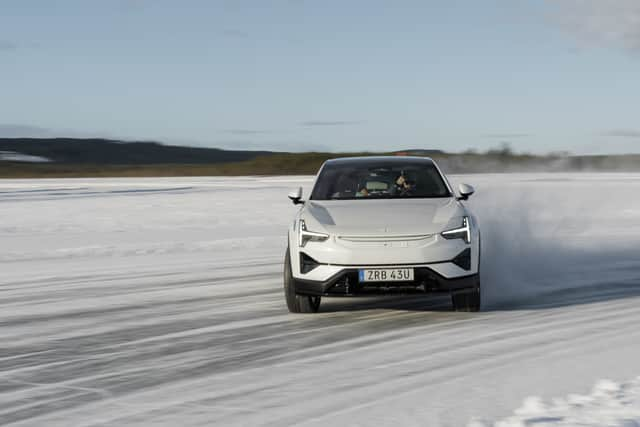
There’s not too much time to dwell on the 4 as it’s time for the 3. Polestar’s largest model to date impressed me when I first drove it last summer in the UK, and here, the car’s sporting character is even clearer to see. The 3’s track is tighter and slower, but really shows off the car’s sharp steering and clever torque-vectoring tech – the latter adds a bit of torque to the rear axle to really help rotate the car. It’s a stupidly fun system to play with on the ice, but in the real world, this translates to making this sizeable car feel and handle as if it’s a smaller vehicle than it really is.
The Polestar 2 has always had a more dynamic feel than its nearest competitors, and despite its advancing years, it still has the edge. It also likes to kick its tail out and slide, if track 2 is anything to go by. This is the tightest and trickiest course of them all, and shows off the Polestar 2’s weighty and razor-sharp steering well. But I admit I spend more of my time looking in the direction I had come rather than where I should have been going; my skills not up to the slippery ice as I had hoped.
“Because if these cars work in minus 30 degrees then they will work everywhere else,” Rydholm tells me. “When we start a new project, we drive the prototypes without ESC, ABS and traction control. Then we start tuning the springs and when they are all in harmony we tune the roll-bars and the bushes. Only when we are happy with the results and the car feels confident without the systems, we then add ESC, ABS and traction control.

What Rydholm means is that Polestar could save time and money using these systems from the outset, like many other car manufacturers do. There’s nothing wrong with doing things that way, but Polestar feels it can create a better performance car with this approach, and is delivering what customers expect from a premium brand.
“If we are a performance brand we need to have good components, so that’s why we have Öhlins for passive dampers, ZF for active dampers, Brembo brakes and Michelin tyres. We then spend thousands of hours behind the steering wheel to make sure they all work in harmony – this is how Polestar creates performance cars.”
I have my fears that an all-electric future means the prospect of insipid cars that all drive the same. But after a day with Rydholm and the Polestar team, the future looks exciting… although probably best experienced on a closed frozen lake.