
Police warning as almost 4,500 addresses ‘red-flagged’ by ambulance service


A veteran police officer has warned it may become “physically impossible” for officers to attend some call-outs with paramedics – as figures revealed there are almost 4,500 addresses across Scotland where ambulance crews will not attend without such back-up.
Data released using freedom of information legislation shows 4,412 addresses have been “red-flagged” by the Scottish Ambulance Service – including 1,122 properties in the Lothians with an EH postcode.
In addition, there are 885 addresses in the Greater Glasgow area and 532 in Ayrshire where paramedics will not attend unless accompanied by police officers.
However, one long-serving officer is now warning Police Scotland may not always be able to take part in such call-outs.
Brian Jones, vice-chairman of the Scottish Police Federation (SPF) – which represents rank-and-file officers – spoke out as it emerged the number of “red-flagged” properties has increased from a reported total of about 2,500 addresses in 2018.
These can be areas where there have been violent incidents in the past, leaving paramedics unable to go in – even in a medical emergency – without police support.
Mr Jones said: “We fully understand why ambulance crews won’t go to places if they think they’re going to be attacked.
“But the police are the service of last resort – we have no choice in the matter.
“In the near future there will come a point when a decision will have to be made about what we can’t go to, because it will be physically impossible to go to everything.
David Kennedy, general secretary of the SPF, said officers fear someone could end up dying if there comes a point where officers are told not to attend such incidents.
He was asked on BBC Radio Scotland whether senior officers have said there will eventually come a point when they are instructing officers not to go.
He replied: “They haven’t said directly they’ll be instructing them not to go, but the big concern senior officers have got, even in the control rooms, we’re really concerned at the moment that we’re going to have another M9, and that is somebody dying because the police don’t attend, and that is not something that we want to see.”
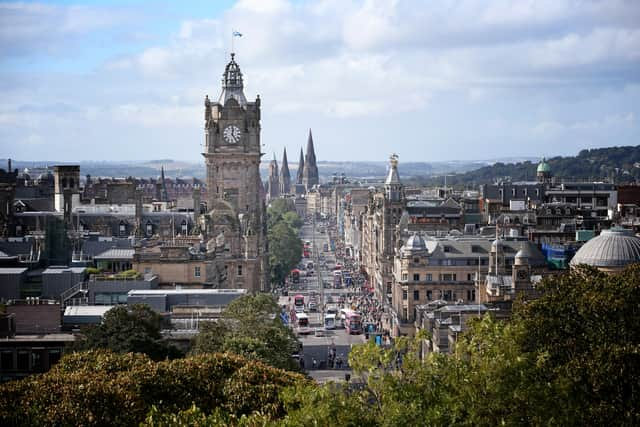
The EH1 postcode, which covers the centre of Edinburgh, is the postcode area with the most problem addresses, with 173 homes or businesses lists, according to the data, released in response to a Freedom of Information request from justice and social affairs publication 1919 magazine.
In the KA1 area, which covers much of Kilmarnock, there are 134 such properties, with another 125 in the EH4 zone in the north of Edinburgh, while PA1, which covers parts of Paisley, has 112, with a further 105 properties in the EH5 zone, which is also in the north of Edinburgh.
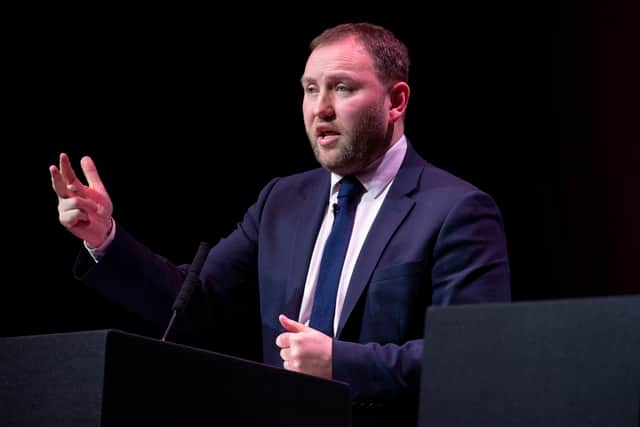
Edinburgh MP Ian Murray said it is “deeply troubling” that so many of the addresses are in the capital.
The Labour MP for Edinburgh South added: “Ambulance crews on the front line are trying to save lives and their own safety should never be put at risk.
Scottish Conservative MSP for the Lothians Miles Briggs said: “Paramedics have a hard enough job without being faced with the threat of violence.
“It’s depressing to see so many homes right across the country where it simply isn’t safe for an ambulance crew to go.
“It’s also worrying for Edinburgh, which has such a high proportion of these properties.
“These dangerous individuals have absolutely no respect for our brave emergency workers.
“What’s worse, their behaviour puts a strain not just on paramedics but on the police too who have to be on the scene whenever they or someone in their home requires help.”
A Scottish Ambulance Service spokesman said: “Our staff should not fear for their safety when working, and these measures have been put in place to help protect them while they do their job.
“Individual addresses where previous incidents have occurred are automatically flagged to our crews, allowing staff to undertake dynamic risk assessments or if required request additional support. It is not correct to say that individual addresses are too dangerous or ‘no-go areas’.
“Our staff are trained in assessing risk and managing aggression so that they can make a sensible decision based on the circumstances. Getting to the sickest patients is always our priority.”