
Poorest children most likely to have developmental concerns, statistics show

Children as young as two are 23% more likely to have developmental concerns if they are from the poorest backgrounds, new statistics have showed.
The early child development report released by Public Health Scotland shows “persistent” inequalities in the proportion of children who are found to have a developmental concern.
At 27-30 months, children in the most deprived areas are 2.6 times – or 23% – more likely to have a developmental concern compared to 9% of those from the least deprived areas, figures show.
Data in the report covers developmental concerns recorded by health visitors and can include gross motor skills, speech, language and communication, social, vision and hearing.
Speech, language and communication remain the most frequently recorded concerns in this age group.
Early child development is influenced by biological factors such as premature birth, as well as environmental factors including parenting and opportunities for play.
Problems with early child development are considered important because they are strongly associated with long-term health, educational and wider social difficulties, according to the report.
In 2020/21, 10% of children who received a 13-15 month review had a concern noted about at least one area of their development.
And 15% of those at 27-30 month reviews and 13% of children at a 4-5 year review had a concern noted for at least one developmental area, according to the report.
It also states there is increasing evidence that intensive early intervention for children with serious developmental problems can improve outcomes.
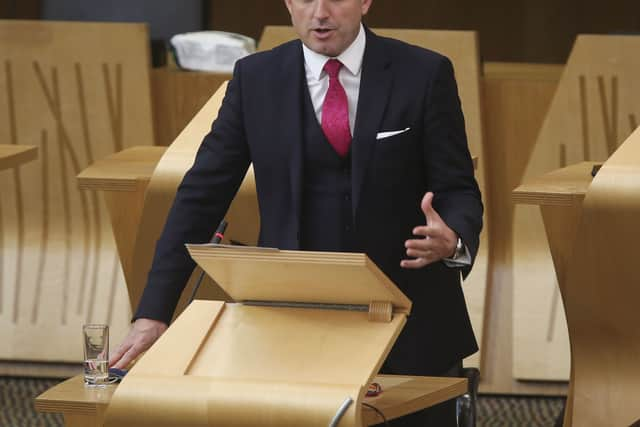
Responding to the official statistics, Scottish Liberal Democrats leader, Alex Cole-Hamilton, said: “By the age of two, children from the most deprived backgrounds are 2.6 times more likely to have a cause for concern about their development compared to children from the most affluent backgrounds.
“Detecting issues at an early age is so important. Without early intervention the gaps in development, health and attainment only get wider when children reach school.
“It’s why the Scottish Liberal Democrats have called for all two-year-olds to be entitled to free early learning and childcare, a nursery premium and extra support to be made available to parents during these early years.”
The report also noted the most common concerns in the 13-15 month age bracket were gross motor skills and speech, language and communication, with both at 5%.
And 6% of concerns noted in the 4-5 year review was speech-related and emotional and behaviour development.