
Portrait artist in residence at cancer centre describes ‘unique, uplifting’ work


A resident artist who draws patients undergoing treatment at a cancer care centre has described the “unique, intimate experience” he has dedicated nearly a decade to.
Simon Tolhurst, 55, said it is a “privilege” to be the portrait artist in residence for the Haematology Cancer Care University College London Hospitals (UCLH) Charity, spending every Thursday since 2013 volunteering to create A4 drawings of its patients and gifting prints of them afterwards.
Mr Tolhurst now works as a fundraising officer for UCLH Charity and told of the “fascinating” people he has met, as well as his aim to make an exhibition out of the 389 portraits he has collected over the last 10 years.
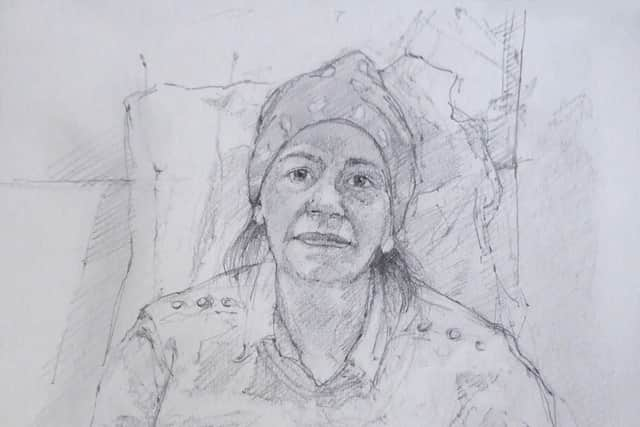
“There’s a roomful of people who are a little bit bored because they’re having to stay in one chair whilst connected to an IV treatment to have their chemo – and they’re very receptive to having someone to chat to and maybe making a drawing.
“I never know who I’m going to draw when I go in there, who I’m going to meet, what they do and what could pop up in the conversation.
“I don’t know of another situation where someone’s going into (that) environment and drawing people during treatments.
“I feel as though it’s a little bit unique for that.”
An artist all his life, Mr Tolhurst was drawn to portraits when he worked at a union building for the University of London and would draw students who sat for him.
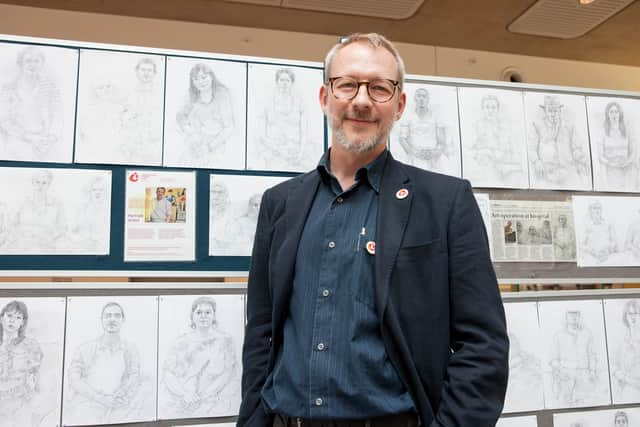
“I drew a gentleman, just before Christmas, where he was an inpatient, and I’d met him because he was donating a photograph to charity,” Mr Tolhurst said.
“We were chatting for a little while and he’s a really nice guy. And he was very, very ill at the time.
“But he was having something called Car T-cell treatment… And I went back each week to say hello – and he was getting better and better each week.

Mr Tolhurst’s artwork is mostly black and white pencil drawings – in order to be low impact in the clinical environment – of patients sat down, normally by themselves but often with a spouse or wider family members.
He mentioned once drawing a patient who was unable to have treatment because her blood pressure was too high.
“I said to her, ‘Well, posing can be quite relaxing, quite meditative. Shall we try and make the drawing and see what happens with that?’ And I think about 45 minutes into the drawing when the staff came back to take her blood pressure, she was back down within the treatable range,” he said.
“It was just brilliant and she was thrilled.
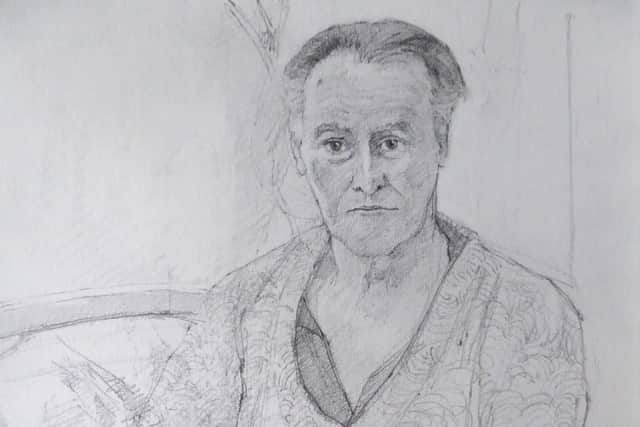
Mr Tolhurst admitted the emotional side of the role “still hits me every now and then” as he produces artwork that makes him feel close to the subject.
“I like the portrait to look back at the viewer and in order to do that, I have to ask the person posing for me to look back at me whilst making the drawing,” he said.
“And that eye contact is incredibly intimate; it’s something that we don’t do with strangers. But I really like that dynamic… You do feel quite close to people.”
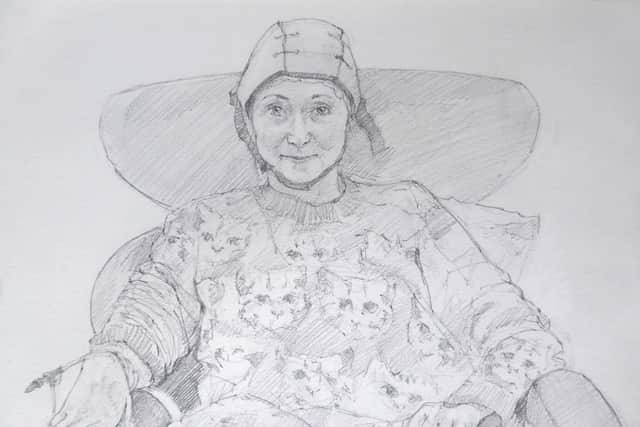
While he could not volunteer during the pandemic, he was asked to draw a series of hospital staff members via video call by the hospital’s arts and heritage team, a task he said was “wonderful”.
“It was nice to refocus on the staff,” he added.
“They’re doing an amazing job because it’s extremely precise what they have to do with the treatments.
“But at the same time, they’ve got to have that level of empathy and care and humaneness.
“It just feels like a very worthwhile use of this skill to be able to make accurate portraits in a busy environment, and it doesn’t cost me anything – it’s just time and pencils and paper.”