
Powerful earthquake rocks Myanmar and Thailand, killing more than 150 people
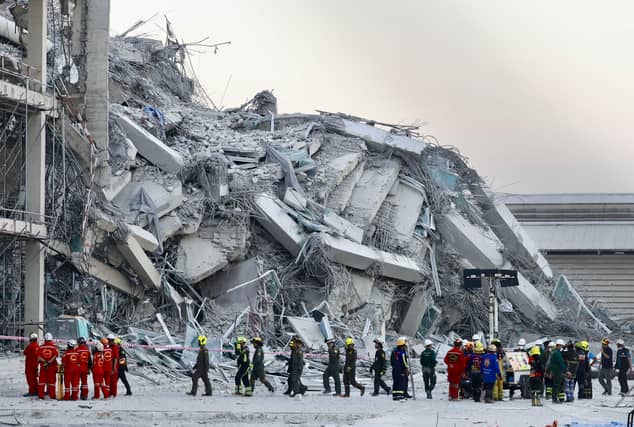

A powerful earthquake rocked Myanmar and neighbouring Thailand on Friday, killing more than 150 people and destroying buildings, a bridge and a dam.
At least 144 people were killed in Myanmar, where photos and video from two hard-hit cities showed extensive damage. At least eight died in the Thai capital, where a high-rise building was under construction collapsed.
The 7.7 magnitude earthquake, with an epicentre near Mandalay, Myanmar’s second largest city, struck at midday and was followed by a strong 6.4 magnitude aftershock.
Thailand’s defence minister Phumtham Wechayachai earlier said 90 people were missing at the site where a high-rise building under construction collapsed in the powerful earthquake.
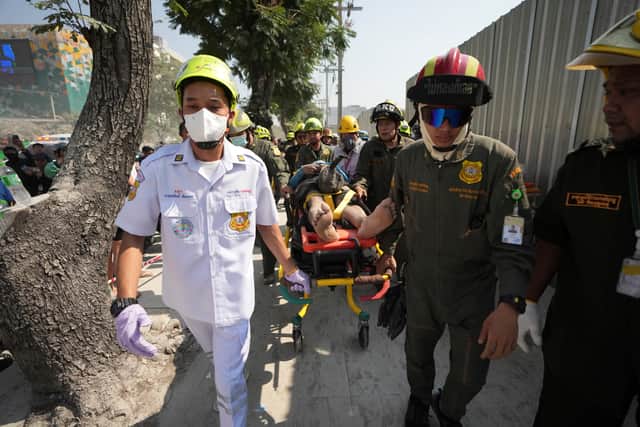
Seven people were rescued earlier on Friday from the collapsed building near Bangkok’s popular Chatuchak Market.
The full extent of the death, injury and destruction in Myanmar was not yet clear. Myanmar’s government said blood was in high demand in the hardest-hit areas, and videos from the country showed multiple collapsed houses and buckled and cracked roads.
The multi-story structure in Bangkok collapsed after the 7.7 magnitude earthquake struck at midday local time on Friday, sending a crane on top toppling to the ground and a massive plume of dust into the air.
A dramatic video circulated on social media showed the collapse of the building, which was under construction, while onlookers screamed and ran.
Police told The Associated Press they were responding to the scene, and had no immediate information on how many workers were on the site at the time of the collapse.
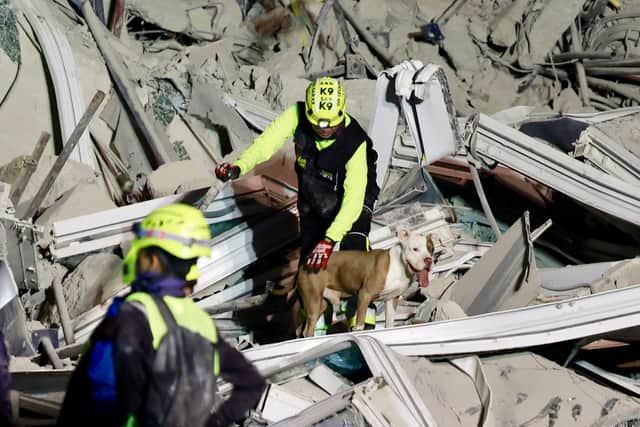
Rescuers said the rubble is still too unstable for them to try to find people possibly trapped beneath.
Thai Prime Minister Paetongtarn Shinawatra called an emergency meeting to assess the impact of the 7.7 magnitude earthquake.
“All of a sudden the whole building began to move, immediately there was screaming and a lot of panic,” said Fraser Morton, a tourist from Scotland, who was in one of Bangkok’s many centres shopping for camera equipment.
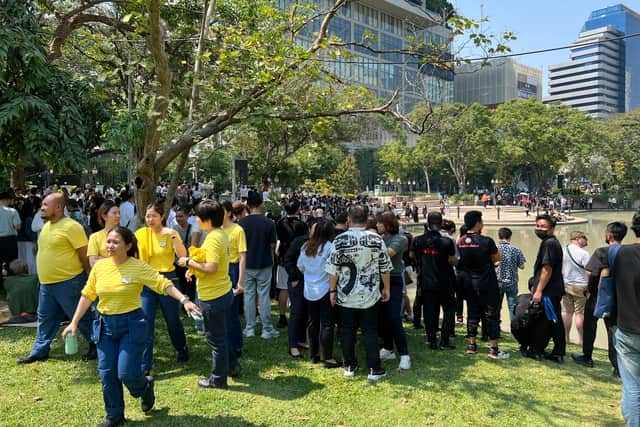
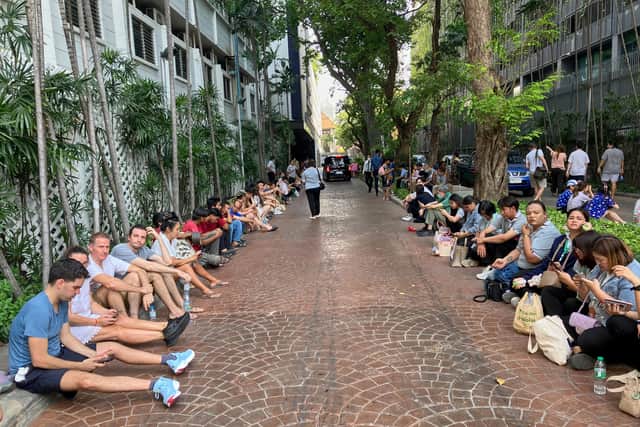
Like thousands of others in downtown Bangkok, Mr Morton sought refuge in Benjasiri Park, away from the tall buildings.
“I got outside and then looked up at the building and the whole building was moving, dust and debris, it was pretty intense,” he said. “Lots of chaos.”
Voranoot Thirawat, a lawyer working in central Bangkok, said her first indication that something was wrong came when she saw a light swinging back and forth. Then she heard the building creaking as it moved from the shockwaves.
She and her colleagues ran down 12 flights of stairs.
“In my lifetime, there was no earthquake like this in Bangkok,” she said.
Paul Vincent, a tourist visiting from England, was at a streetside bar when the quake struck.
“The next thing, everybody came on the street, so there was a lot of screaming and panicking, which obviously made it a lot worse,” he said.
As he came onto the street, he said he saw a high-rise building swaying and water falling from a rooftop pool.
The US Geological Survey and Germany’s GFZ centre for geosciences said the incident was at a shallow 6.2 miles, with an epicentre in Myanmar, according to preliminary reports.
A state of emergency was declared in six regions and states in Myanmar.
State-run MRTV television said the military-run government’s proclamation includes the capital Naypyitaw and Mandalay.
A second quake, with a magnitude of 6.4, shook the area 12 minutes later.
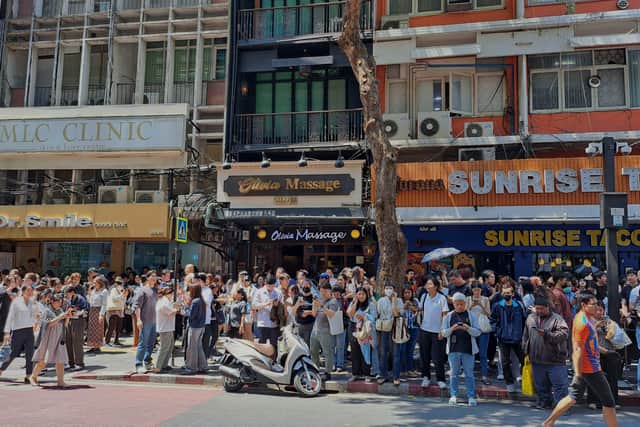
Alarms went off in buildings as the earthquake hit around 1.30pm local time, and startled residents were evacuated down staircases of high-rise buildings and hotels in densely populated central Bangkok.
They remained in the streets, seeking shade from the midday sun in the minutes after the quake.
The quake was forceful enough to send water sloshing out of pools, some high up in high-rises, as the tremor shook.
Thailand’s Department of Disaster Prevention said the earthquake was felt in almost all regions of the country.
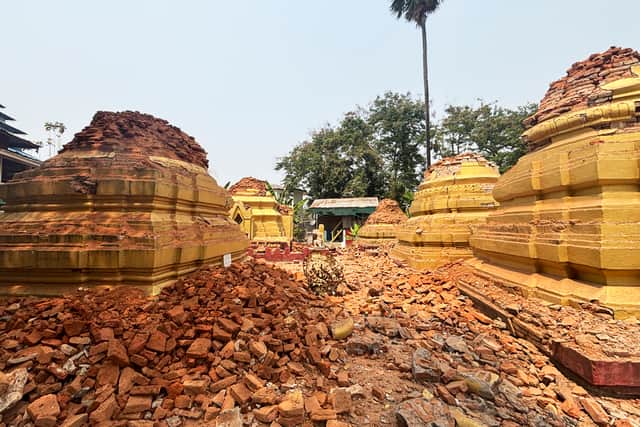
In the capital Naypyitaw, the earthquake damaged religious shrines, sending parts toppling to the ground, and some homes.
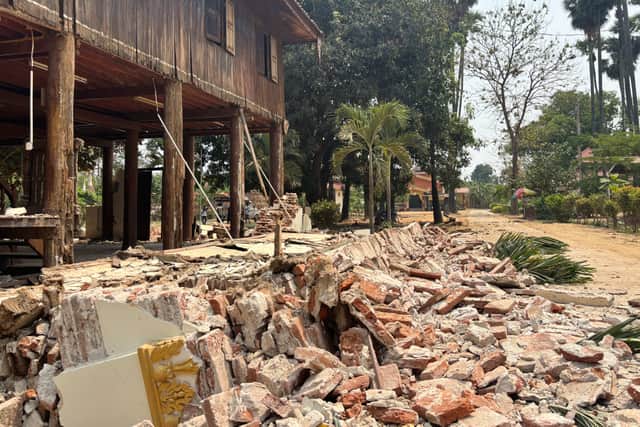
While the area is prone to earthquakes, it is generally sparsely populated, and most houses are low-rise structures.
In the Sagaing region just southwest of Mandalay, a 90-year-old bridge collapsed, and some sections of the road connecting Mandalay and Myanmar’s largest city, Yangon, were also damaged.
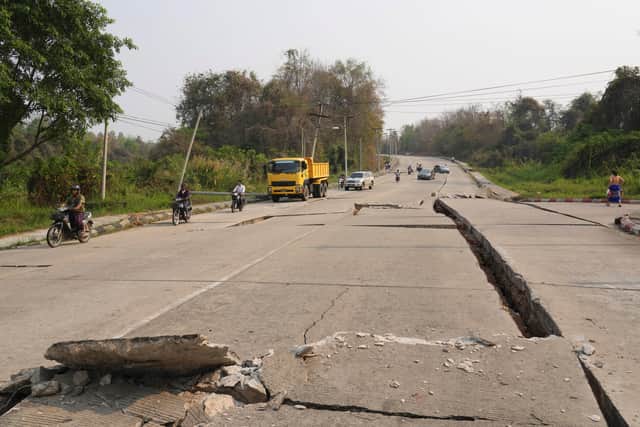
The Red Cross said downed power lines are adding to challenges for their teams trying to reach Mandalay and Sagaing regions and southern Shan state.
“Initial reports from the ground suggest the earthquake has caused significant damage,” the Red Cross said. “Information on humanitarian needs is still being gathered.”
Christian Aid said its partners and colleagues on the ground reported that a dam burst in Mandalay, causing water levels to rise in the lowland areas in the area.
“This disaster will have left people devastated and in need of drinking water, food and shelter,” said Julie Mehigan, head of Asia, Middle East and Europe for Christian Aid.
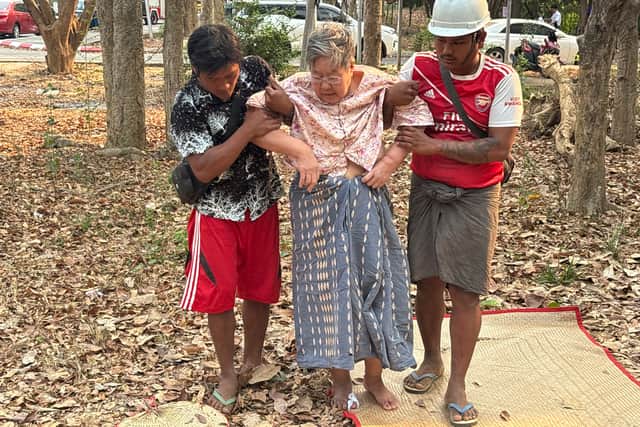
To the northeast, the earthquake was felt in Yunnan and Sichuan provinces in China and caused damage to houses and injuries in the city of Ruili on the border with Myanmar, according to Chinese media reports.
Videos that one outlet said it had received from a person in Ruili showed building debris littering a street and a person being wheeled in a stretcher toward an ambulance.
The shaking in Mangshi, a Chinese city about 100 kilometres (60 miles) northeast of Ruili, was so strong that people could not stand, one resident told The Paper, an online media outlet.
Pope Francis, who is convalescing after a five-week hospital stay for life-threatening double pneumonia, offered prayers to the victims of the earthquake.
“The pope has been informed of the disaster in Myanmar and is praying for the dramatic situation and for the many victims, also in Thailand,” the Vatican said in a statement.