
Prada buys Versace: How will the rival labels collaborate?
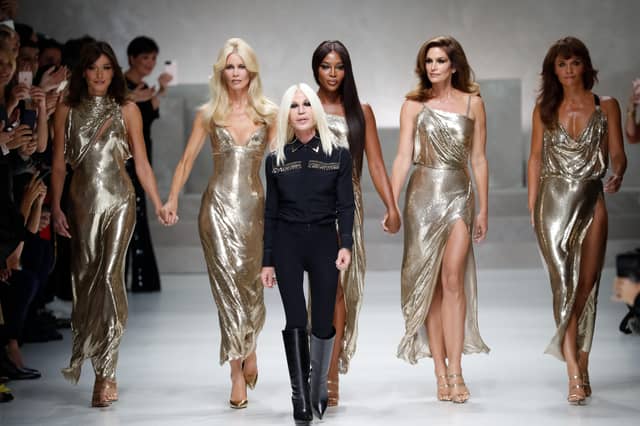

The Prada Group has announced that it has bought its smaller rival, Versace.
Prada acquired the Italian fashion house from Capri Holdings (who also own Jimmy Choo and Michael Kors) for €1.25 billion pending approval, following negotiations that began in February this year.
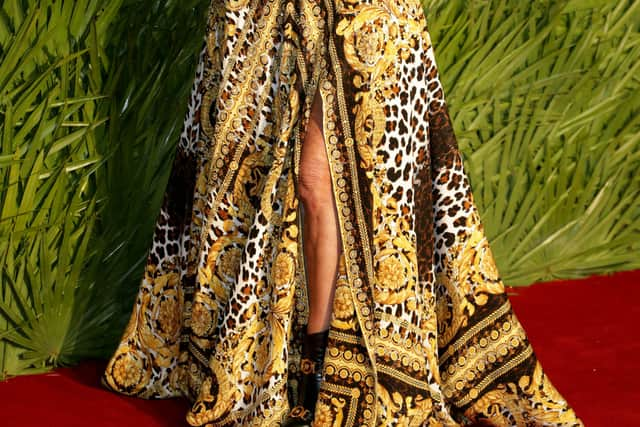
“We aim to continue Versace’s legacy celebrating and re-interpreting its bold and timeless aesthetic,” said Prada chairman Patrizio Bertelli.
While Prada intend to uphold Versace’s legacy, it’s difficult to see what this will do to Versace’s distinct identity.
Known for it’s maximal bold glamour, Versace has long been viewed as the more flamboyant Italian label when compared to Prada.
“Prada and Versace do sit on opposite ends of the aesthetic spectrum,” explains global fashion model, Kamile Spann, “one known for its quiet sophistication, the other for its sensuality.”
“But as a model who’s experienced both on the runway, I think there’s incredible potential in that contrast.”
Spann says the differing design ethos can undoubtedly co-exist: “In fact, the tension between minimalism and maximalism could spark a creative evolution,” she says, “a fresh, modern fusion that still respects each house’s identity.”
Upon Donatella Versace’s departure from the label, Dario Vitale was appointed as Versace’s new creative director – marking the first time the role has left the Versace family.
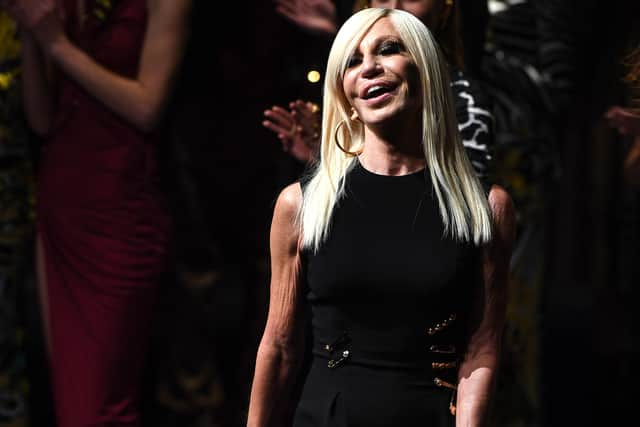
“If she stays on creatively remains to be seen, but I believe she’ll continue to shape the brand in some form.
“Even if her role evolves, her vision and legacy are too integral to be removed. She represents continuity and in fashion, that sense of lineage is just as important as reinvention,” she says.
Vitale joined Versace from Prada’s sister brand Miu Miu, where he worked from 2010, most recently serving as design director of ready-to-wear before leaving in January.
Miu Miu is known as the younger and somewhat more energetic version of Prada’s intellectualised minimalism, meaning Vitale’s years with the label position him well to take up the new post at Versace.
How Versace is seen today is largely down to it’s 2000s rebrand when Donatella took over – following the murder of her brother Gianni Versace in 1997.
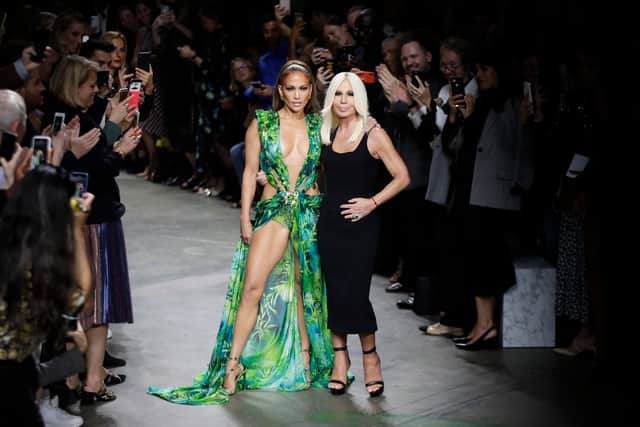

Both dresses were known for their daring sartorial designs, using cuts and silhouettes that had never been seen on red carpets before.
“Versace’s identity is iconic!” says celebrity stylist and fashion expert Oriona Robb, “you can spot it from a mile away.”
Robb says the key to transforming the brand is to preserve Versace’s essence while giving it room to evolve.
“If done right, this partnership could be the breath of fresh air Versace needs,” says Robb, “better infrastructure, shared resources and access to the kind of innovation Prada excels at.”
Prada has been under the creative control of Miuccia Prada since 1978, the granddaughter of Mario Prada who founded the business in 1913.
The label became known for it’s premium status symbol in the 1990s, and in 1996 Miuccia Prada had solidified the ‘ugly chic’ aesthetic that the fashion house was praised for.
The style initially confused customers by offering blatantly unsexy outfits, but Prada’s original take on the relationship between fashion and desire soon garnered mass mainstream attention.
Since then, Prada has been regarded as one of the most intelligent and conceptual designers.
“From a stylist’s lens, this [collaboration] could bring a more elevated construction to Versace’s opulence, maybe even open doors for more wearable pieces that don’t lose that signature drama,” says Robb.
As both fashion houses have been under the creation of one fashion icon for so long, Donatella Versace’s departure from her label and this collaboration has left many wondering whether it’s the end of an era for lone designers.
“There does seem to be a shift happening, fashion is becoming more collaborative – more strategic,” says Spann.
“With consolidation, we’re seeing a move toward powerful creative alliances rather than the singular voice of the so-called ‘genius’ designer.
“While there’s something undeniably romantic about the lone visionary, today’s landscape demands both creativity and business acumen,” she says, “I think we’re entering an era where vision is shared, not diluted.”
As for the future of Versace under Prada’s control, some are tentative to watch its transformation pan out, while others can’t wait to see what arises from this new industry power coupling.