
Profile: Who is Nigel Farage
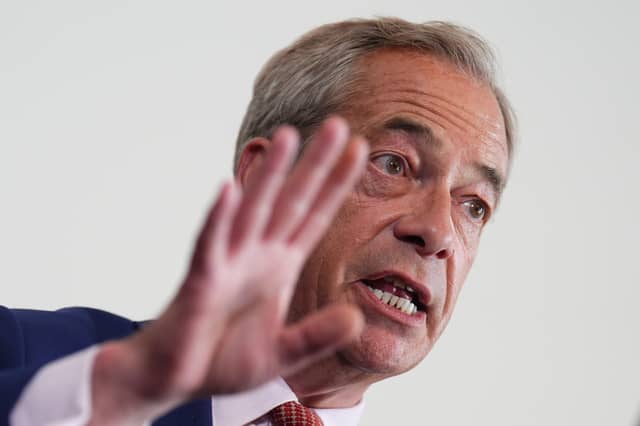

Nigel Farage may have stood – and failed – seven times to gain election as an MP, but he has nevertheless been one of the most influential British politicians of the post-war era.
Reform UK’s highest-profile figure initially said he was not standing in July’s General Election and would instead focus on Donald Trump’s second run at the White House in the US election in November, but in a U-turn on June 3 he announced he would stand to be an MP for the eighth time.
Without his rambunctious enthusiasm and relentless campaigning over the course of more than two decades, few doubt the country would ever have had the referendum which resulted in the momentous vote to leave the EU.
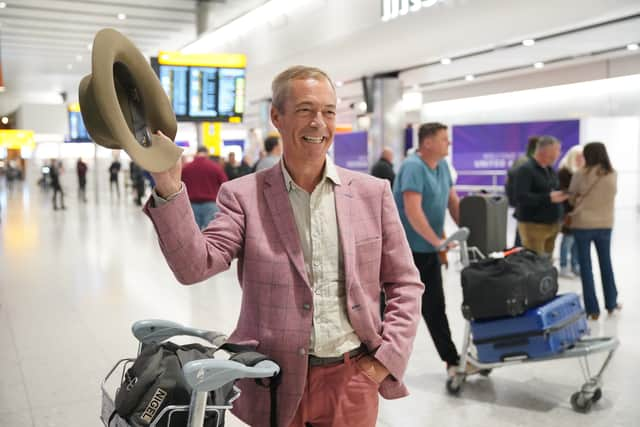
With a pint in one hand and a cigarette in the other, his blokeish bonhomie connected with a section of the electorate who felt forgotten by more conventional politicians.
For others, however, he is a figure of hate, a saloon bar philosopher and ‘little Englander’ whose views on immigration have seen him accused of being a borderline racist – or worse – a charge he has always fervently denied.
His re-emergence at the fore of Reform UK’s electoral push is for many Tories their worst nightmare amid fears he will cost them vital votes – and seats.
Others, however, see him as a potential saviour who could yet return to lead the party he left in 1992 over John Major’s signing of the Maastricht Treaty which established the modern EU.
Never shy of controversy, Mr Farage took delight in fuelling such speculation with his attendance at last year’s Conservative Party conference in Manchester where he was filmed partying with former home secretary Priti Patel.
His appearance in the Australian jungle on ITV’s I’m a Celebrity… Get Me Out of Here! for which he was reputedly paid a cool £1.5 million, further raised his profile, introducing him to a new generation of younger voters.
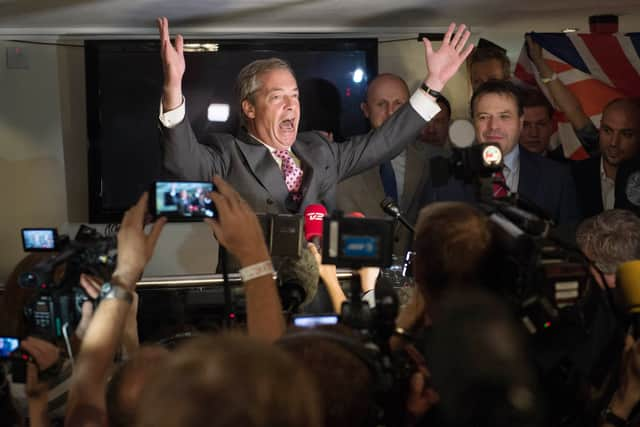
His much-publicised friendship with Mr Trump – who broke with protocol to urge Theresa May to make him British ambassador to the US – has been a further red rag to the “liberal establishment” he so loathes.
From his days as a schoolboy at fee-paying Dulwich College, Nigel Farage has always enjoyed undermining authority and tweaking the noses of the establishment.
His professed admiration for Enoch Powell, whose infamous “Rivers of Blood” speech was blamed for inflaming racial tensions in the 1960s and 1970s, dismayed some members of staff.
But when one teacher objected to his appointment as a prefect, her concerns were dismissed by the deputy head who said the teenager was well-known for provoking people “especially left-wing English teachers” with “no sense of humour”.
The son of a stockbroker, on leaving school Mr Farage followed his father into the City, becoming a commodities trader.
Politics, however, was calling. Initially a Conservative, in the 1990s he broke away to become one of the founding members of the UK Independence Party (Ukip), then known as the Anti-Federalist League.
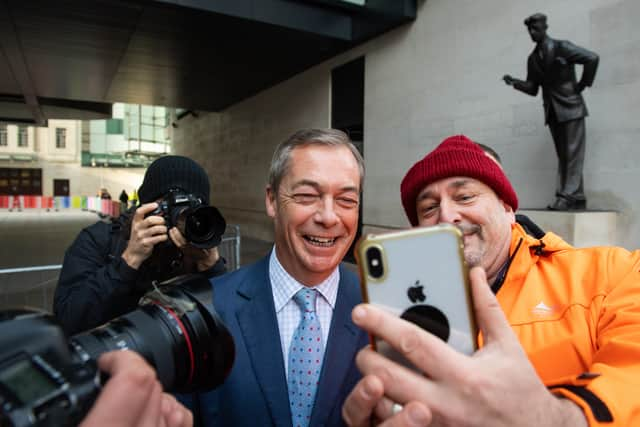
Undeterred, in 1999 he was elected to the European Parliament as MEP for South East England, a position which was to provide him with a platform – as well as crucial funding – to propagate his anti-EU agenda for the next two decades.
Elected Ukip leader in 2006, his talent for political invective made him a thorn in the side of the Brussels establishment, famously denouncing the new European Council president Herman van Rompuy as having the “charisma of a damp rag” and the appearance of “a low-grade bank clerk”.
At home, comments about “open door” immigration policies, rail journeys across London where the passengers spoke only foreign languages or concerns about groups of Romanians moving in as neighbours proved more controversial, leading to accusations of racism which he always denied.
His political career was almost cut short on election day 2010 when the light aircraft he was travelling in became entangled in the Ukip banner it was towing, crashing into a field. Remarkably, he survived while suffering broken ribs and a punctured lung.
While Ukip failed to take any seats, the election nevertheless proved to be a turning point, with the party capitalising on the unpopularity of the austerity policies of the Tory-Lib Dem coalition to record a series of local council gains, culminating in the 2014 European elections where it topped the poll in the UK with the most seats and the biggest share of the popular vote.
Its successes were instrumental in forcing David Cameron, who had once dismissed Ukip as “fruit cakes, loonies and closet racists”, to bow to demands for an in-out referendum on Britain’s membership of the EU.
It represented a remarkable personal triumph for Mr Farage who, at times, had appeared to be almost a lone voice in calling for UK withdrawal.
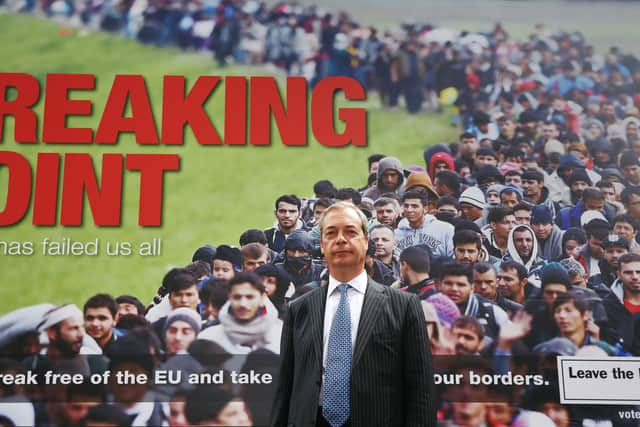
He nevertheless managed to stir controversy with Ukip’s “breaking point” poster, picturing a long queue of a immigrants, leading to fresh allegations he was trying to exploit anti-immigrant sentiment.
In the aftermath of the Brexit vote, an apparently exhausted Mr Farage announced he was quitting (for a third time) as Ukip leader declaring: “I want my life back.”
But as the party descended into infighting, amid claims of a sharp turn to the right, he dramatically announced he was returning to the political front line with the formation of the new Brexit Party (since renamed Reform UK).
The new grouping quickly picked up support, performing strongly in the 2019 European elections, but Mr Farage’s decision not to stand candidates in Tory-held seats in the subsequent general election helped ensure a landslide for Boris Johnson.
In 2021, he announced he was yet again stepping back from frontline politics, taking up a well-paid job as a presenter on GB News, while carefully leaving to door open for a return, taking the title of Reform UK’s “honorary president”.