
PSNI officers ‘never thought they would find Noah Donohoe in storm drain’


PSNI officers searching for Noah Donohoe “never” thought they would find the schoolboy in the storm drain tunnel where his naked body was eventually discovered.
A retired PSNI inspector described how his team carried out the search in order to rule out the possibility he might have entered the culvert in north Belfast.
The inquest into the death of the 14-year-old, which is being heard with a jury at Belfast Coroner’s Court, is in its 12th week.
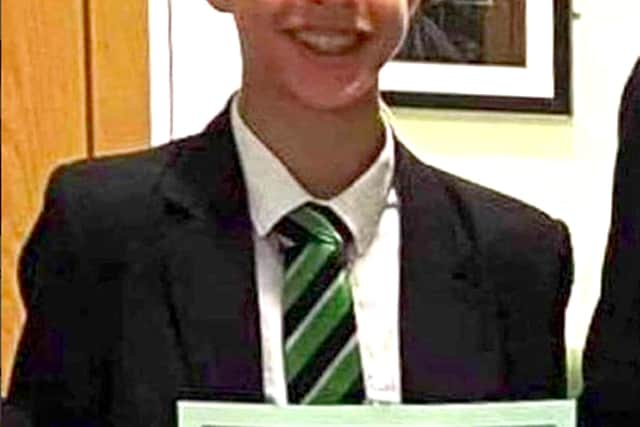
Noah, a pupil at St Malachy’s College, was found on June 27 2020 six days after leaving his home in south Belfast on his bike to meet two friends in the Cavehill area of the city.
A post-mortem examination found the cause of death was drowning.
Retired inspector Menary, who managed the PSNI hazardous environment search (HES) team, told jurors: “Our operation was to rule out any likelihood Noah was in or near the culvert.”
Donal Lunny KC, the barrister representing the PSNI at the hearing, asked Mr Menary about a statement given by a constable involved in the search and rescue efforts who said he was tasked with looking for human remains around or in the culvert.
Mr Menary said a “bad choice of words” had been used in the statement as “recovering human remains was never, ever an option, it was never our purpose”.
He said his team was “always going to” search the culvert “thoroughly to the very end” and were “never going to leave any trace of doubt” Noah might be in it.
Describing the conditions in the tunnel, Mr Menary said: “If you go beyond the entrance you would be in the darkness and totally wet and cold the whole time.”
He said: “Anyone would have to be in a hands or knees position to move”, and if anyone was naked and wet “you would go hypothermic very quickly”.
Discussing the challenges his team faced in searching the tunnel, he said issues included flowing water and a tidal influx, the potential for noxious and explosive gases, low water and air temperatures and debris including glass and stones.
He said there were risks associated with working underground including trips and falls and working in areas which were “pitch dark” and as narrow as 750mm.
Other precautions included having the same number above ground “dressed ready in rescue equipment” as there is below ground, and Mr Menary added “we also bring in an airline system” to assist if someone becomes trapped in a confined space.
Mr Menary said he was concerned “members of the public or journalists” may go into “these spaces” without equipment or training, describing them as “absolutely lethal”.
He said: “it doesn’t take that much gas to knock someone unconscious.”
The court heard how there is “probably not another” HES team better trained or equipped than the PSNI team, with Mr Menary adding “industry experts” would agree.
He said 18 months after Noah’s death, the force became the first in the UK to invest in a “confined space” drone.
Asked if there was anything his team could have done better, he said “there is never an operation you undertake when you think you did everything ‘perfectly'”, but added “the team did their very, very best”.
He said “maybe we could have done this a little quicker” in some sections.