
Public-sector workers ready for ‘prolonged’ industrial action, union says
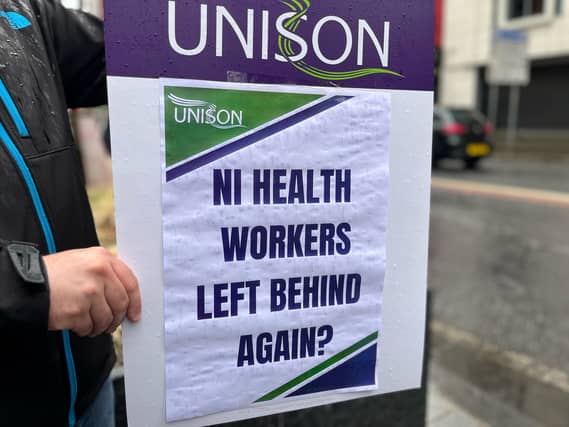

Public-sector workers in Northern Ireland are preparing for a period of “immense, serious and prolonged” industrial action if their demands are not met, a healthcare union leader has said.
A leader of the union representing civil servants also called for a general strike to reverse the cuts to public services in Northern Ireland.
In the absence of a devolved government, the budget for Northern Ireland was set by Secretary of State Chris Heaton-Harris, with senior civil servants estimating Stormont departments need hundreds of millions of pounds in extra funding to maintain public services at their current level this year.
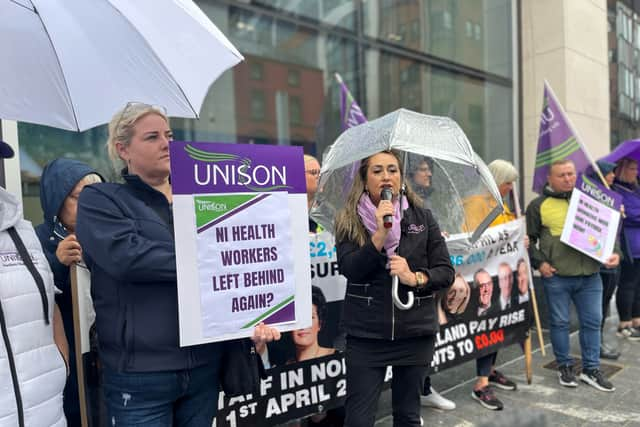
Stephanie Greenwood, Unison convener for health reps, told the protesters that if their members did not achieve pay parity with healthcare workers in the UK, they would be engaging in a strike on a level “never seen” before in September of this year.
“The message that the employer, the Secretary of State and our politicians need to hear today is that we are marching towards a series of industrial action in the autumn and the winter,” she said.
“Industrial action never seen like before. Our members are frustrated, our members are angry, our members will not be disrespected from this day forth.
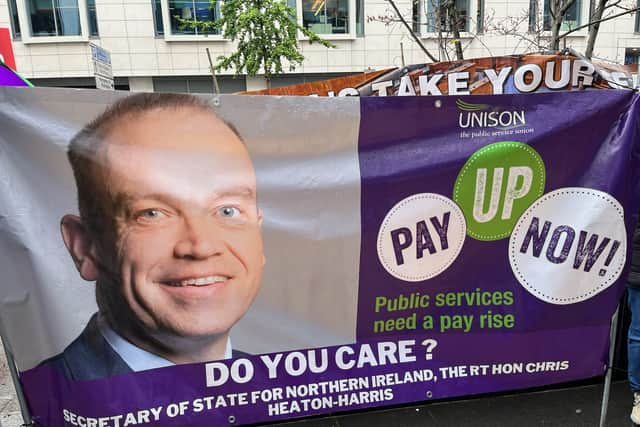
Unison is one of the UK’s largest trade unions, representing more than 1.3 million members, with 40,000 members in Northern Ireland.
The union encompasses health care workers including nurses and student nurses, midwives, paramedics and admin staff, as well as some workers in education.
Unison members in Northern Ireland are threatening strike action as they say NHS workers in the region are not receiving equal pay when compared to their counterparts in England and Wales.
Ms Greenwood said healthcare workers could not tolerate any more pressure on their current salaries.
“We are turning into a province of poverty and deprivation. Twenty-five years on from the peace agreement and where are we? We’re in a fragile peace. That peace is threatened by poverty.”
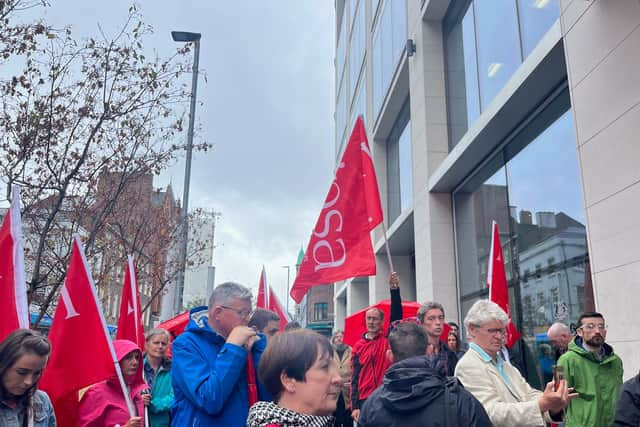
The union representing some civil servants in Northern Ireland, Nipsa, also attended the protest on Wednesday.
Permanent secretaries in the civil service have had to implement cuts across Stormont departments including healthcare and education as a result of the budget set by Mr Heaton-Harris and the absence of elected Stormont ministers.
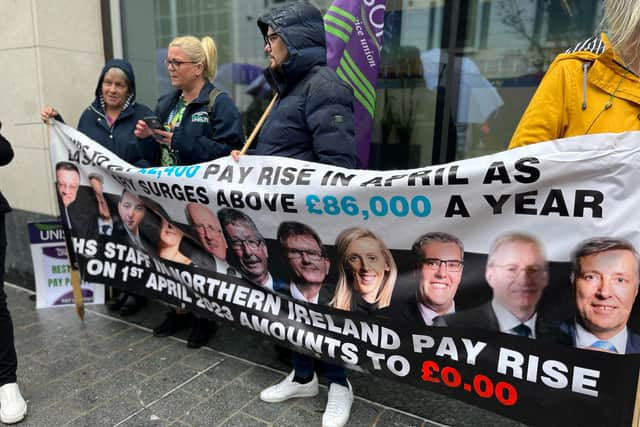
Nipsa also announced its intention to escalate industrial action in September, to reverse the cuts to public services as well as achieving increased pay for their members.
Carmel Gates, general secretary of Nipsa, called for a general strike to protect the public sector in Northern Ireland.
“As a public service union, first and foremost we want to see our members getting properly paid, but we also want to see the services that we work in protected,” she said.
“So, if we don’t have a needs-based budget, and that provides for decent pay awards, or protection of services, then we will be escalating our action in September.
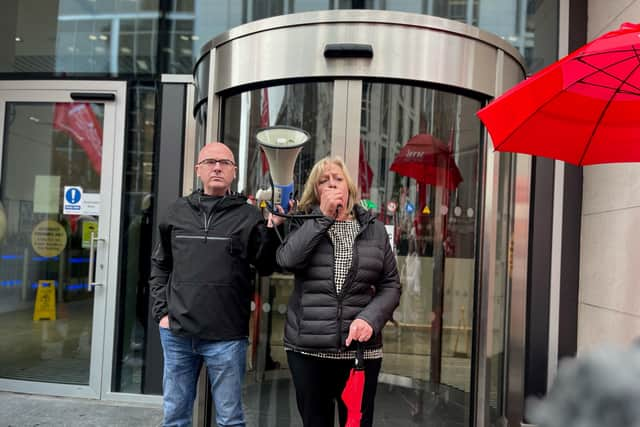
“In fact, I would like to see private-sector employees joining us too, I would like to see a general strike to really make the point that workers here have had enough. We’ve endured cuts for too long and we’re not enduring them any longer.”
Ms Gates also said that as a result of the lack of devolved government and the budgetary constraints, civil servants were being asked to take action that went against their “moral compass”.
“We’re here to say civil servants deserve better. They’ve endured all this time without an assembly, they’ve been the ones who are sticking their neck out,” she said.