
Putin takes co-pilot’s seat during flight of nuclear-capable bomber
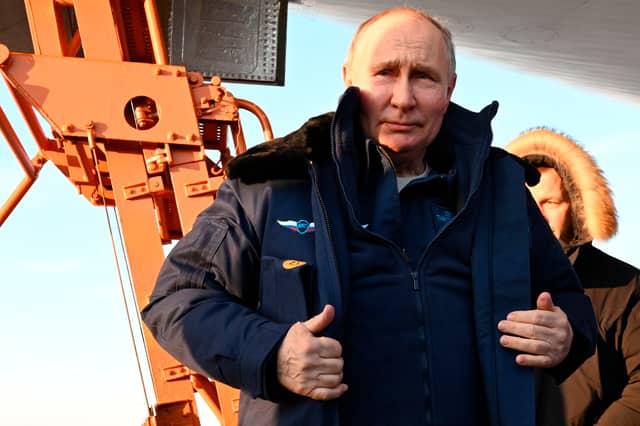

Russian President Vladimir Putin has taken the co-pilot’s seat in a nuclear-capable strategic bomber on a flight that appeared to be aimed at bolstering his image ahead of an election next month he is all but certain to win.
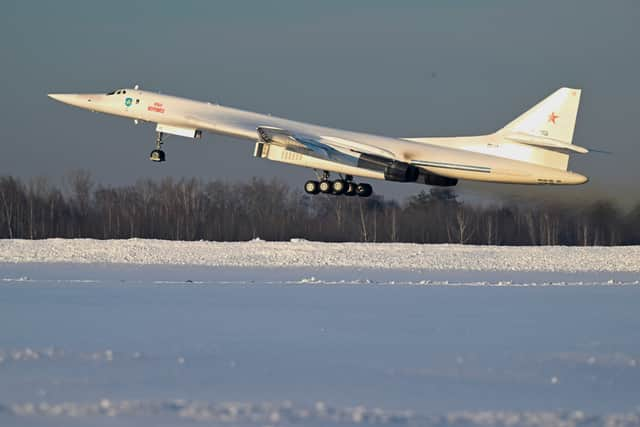
Mr Putin’s 30-minute flight in a Tu-160M supersonic strategic bomber also seemed to be intended to send a reminder of Russia’s nuclear might amid soaring tensions with the West over fighting in Ukraine.
Mr Putin, 71, who is running as an independent candidate, relies on a tight control over Russia’s political system that he has established during 24 years in power.
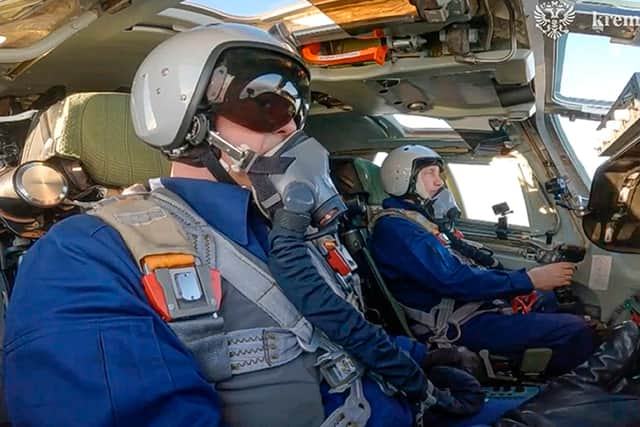
On Thursday, Mr Putin, clad in a flight suit, boarded the warplane at a snow-covered airfield of an aircraft-making plant in the Volga River city of Kazan that has built the heavy bombers since the Soviet times.
The plant has received state orders to produce a modernised version of the Tu-160 bomber that first flew in the 1980s and was code-named Blackjack by Nato.
The aircraft Mr Putin flew was one of the first such revamped bombers to be built, equipped with new engines and avionics and designated Tu-160M.
Thursday’s flight marked at least the third time he has entered the cockpit of a warplane. In 2000, he took a co-pilot’s seat in a Su-27 fighter to fly to Chechnya during separatist fighting there and in 2005 he co-piloted a Tu-160 during military drills.
As part of the Kremlin efforts to project an image of an action-loving and physically strong leader, Mr Putin also took a co-pilot’s seat in an amphibious plane, flew a paraglider and drove a racing car and heavy trucks.
He also drove a heavy truck to a meeting in Kazan on Thursday, one of a series of campaign trips ahead of the presidential election on March 15-17.
With prominent critics who could challenge him either jailed or living abroad and most independent media banned, Mr Putin’s re-election is all but assured. He faces a token opposition from three other candidates nominated by Kremlin-friendly parties represented in parliament.