
Quake recovery subdues water festival celebrations in Myanmar
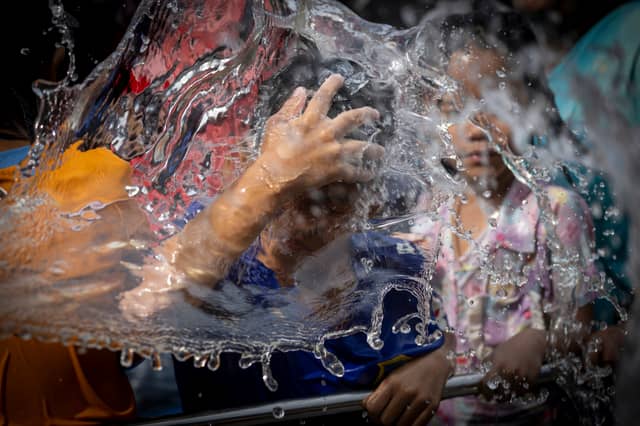

Several south-east Asian countries have kicked off their annual water festival holiday, but events in Myanmar are more subdued than usual in the wake of a devastating earthquake last month.
In Thailand, Laos, Cambodia and Myanmar, millions normally take part in a mix of raucous play with uninhibited splashing of water on friends and strangers alike, and sober ceremonies to show respect to one’s elders.
The holiday is an occasion for merrymaking during what is usually the hottest time of the year, when temperatures can creep above 40C.

In Myanmar, the holiday is called Thingyan. But this year, the country is struggling to recover from the 7.7 magnitude earthquake on March 28 that devastated its central heartland, killing more than 3,600 people and levelling structures from new apartment blocks to ancient pagodas.
Central Myanmar was shaken again on Sunday by a 5.5-magnitude earthquake in one of the biggest aftershocks since March 28.

Still, the holiday offers a brief respite from the grim struggles of daily life in one of the region’s poorer countries, and this is the first year Myanmar could celebrate Thingyan’s inclusion on the Unesco Representative List of Intangible Cultural Heritage of Humanity, an honour attained last December.
A few days after the quake, the military government announced this year’s festival would be observed peacefully in pursuit of traditional culture and would not include joyous singing and dancing, due to a nationwide grieving period.
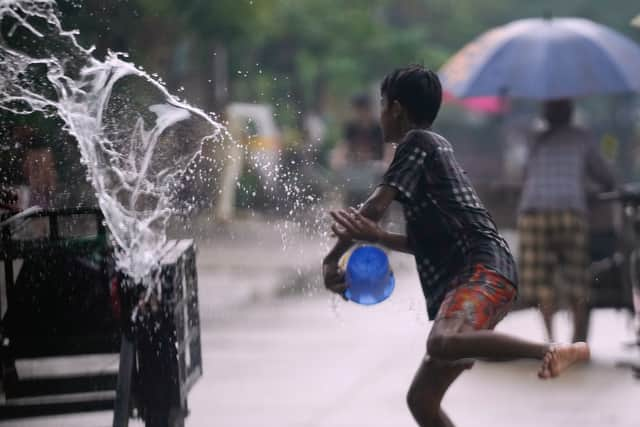
People’s Square, a major celebration spot in Yangon, will not host the festival this year, but a traditional charity feast will be held without music and dance, the state-run Global New Light of Myanmar newspaper reported on Thursday.
In neighbouring Thailand, where the holiday is called Songkran, it is expected to celebrate with revelry as usual. It sees a mass exodus of the workforce in the capital, Bangkok, return to their upcountry home towns, often extending what is officially a three-day holiday into an entire working week.
Foreign tourists join locals in water fights, especially in Bangkok’s Khao San Road backpackers district. Water pistols are merely small arms and it is not unusual to see huge buckets of water dumped on any convenient target. Moving vehicles serve as both platforms and targets for attacks.
The holiday is historically pegged to a seasonal movement of the sun, critical to largely agrarian societies. The water hijinks originated in olden days as a ceremony to welcome rainy season. A traditional ritual still practiced by many involves cleansing images of the Buddha and washing the hands and feet of elders.
Cambodia, where the holiday is called Choul Chnam Thmey, and Laos, where it is Pi Mai Lao, have similar celebrations, generally smaller in scale and less raucous than those in Thailand.