
Queen wanted coronation dress to reflect emblems from across the globe
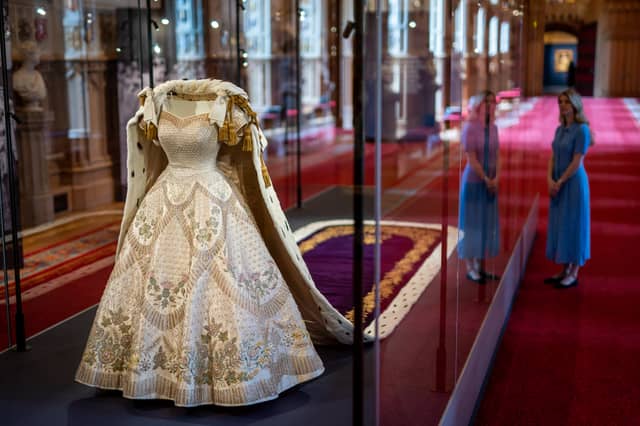

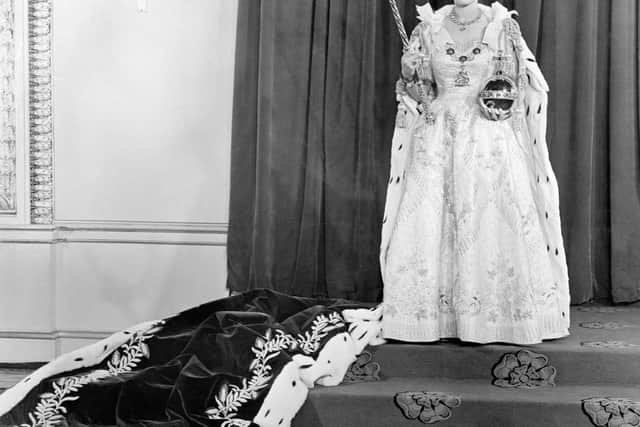
Queen Elizabeth II was adamant her historic 1953 coronation dress should represent countries from around the world over which she reigned.
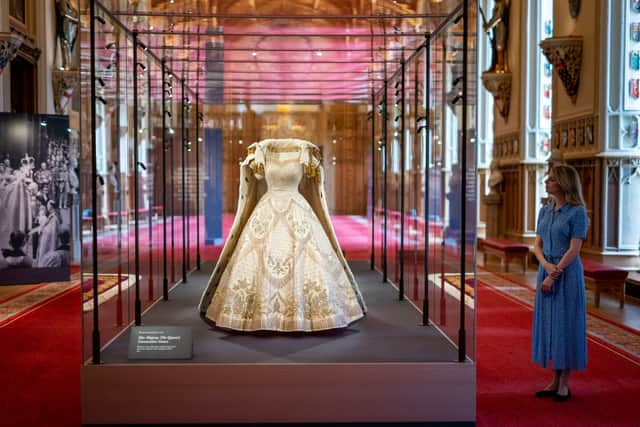
The richly embroidered satin dress, created by British couturier Sir Norman Hartnell, is regarded as one of the most important examples of 20th century design.
It features a lattice-work effect with an iconographic scheme of floral emblems in gold and silver thread and pastel-coloured silks.
Sir Norman said the Queen made clear she was unwilling to wear a gown bearing the emblems of all four British nations without those of the dominions where she was also monarch.
The design process began in October 1952, after Sir Norman was personally asked by the monarch, having previously designed her wedding dress almost exactly five years before.
He produced a total of nine sketches, with the Queen selecting the eighth but requesting that more colour be added rather than just silver embroidery.
Writing in his autobiography, Sir Norman said he had spent many days in seclusion in Windsor Forest coming up with the ideas.
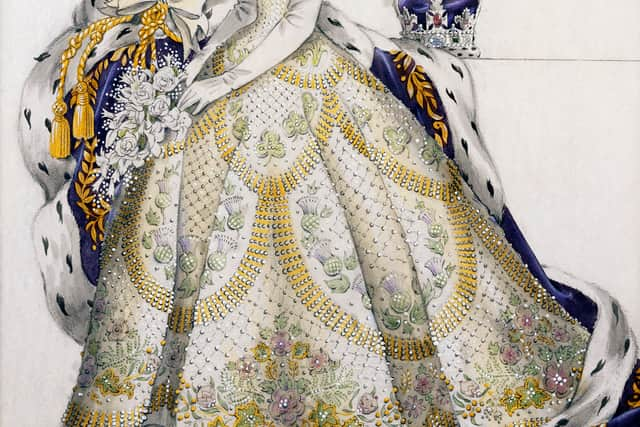
“I liked the last one best, but naturally did not express my opinion when I submitted these paintings to Her Majesty.”
Sir Norman later recounted how he had researched the four flowers of the United Kingdom; the Tudor rose for England, the thistle for Scotland and the Irish shamrock, but had been reprimanded for believing the Welsh emblem should be a daffodil.
“The leek I agreed was a most admirable vegetable, full of historic significance and doubtless of health-giving properties, but scarcely noted for its beauty.
“Could he not possibly permit me to use the more graceful daffodil instead? ‘No, Hartnell. You must have the Leek,’ said Garter, adamant.’”
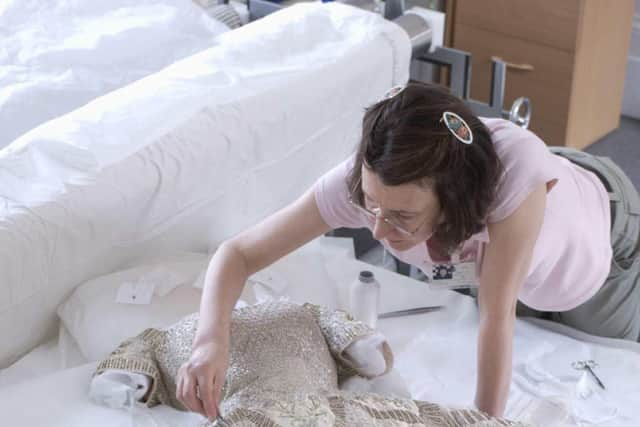
The Queen remained monarch of Canada, Australia and New Zealand for the rest of her life and a number of other Commonwealth realms, but South Africa, Sri Lanka (formerly Ceylon), and Pakistan later went on to become republics.
Elizabeth II was never queen of India, which became a republic before she acceded to the throne, but the country has remained part of the Commonwealth.
Silk for the dress was produced at Lady Hart Dyke’s silk farm at Lullingstone Castle, Kent, and was woven by Warner and Sons in Essex.
It took a team of 12 seamstresses, using 18 types of gold thread, 3,500 hours to complete the Queen’s embroidered cipher and the border of wheat ears and olive branches, which symbolise prosperity and peace.
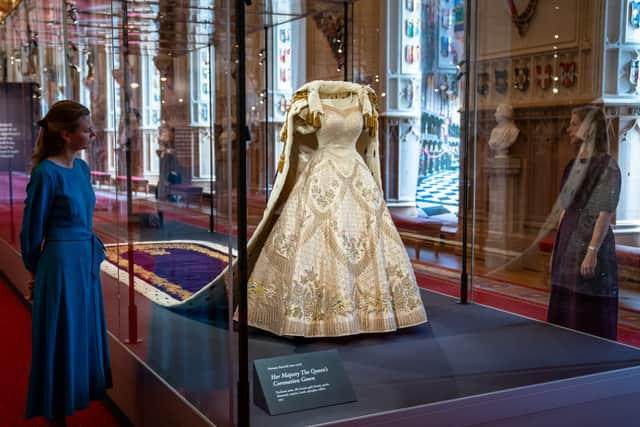
The Queen went on to wear the dress during receptions at Buckingham Palace and the Palace of Holyroodhouse as well as for the Openings of Parliament in New Zealand, Australia and Ceylon in 1954, ensuring that it was seen across the Commonwealth.
The historic item now forms part of the Royal Collection, but was made available for the public to view in July last year, to celebrate the Queen’s Platinum Jubilee.