
Queen’s cause of death given as ‘old age’


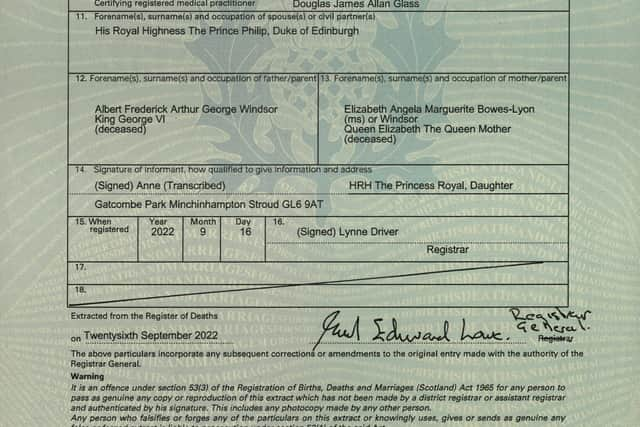
The Queen, the nation’s longest-reigning monarch, died from old age, her official death certificate has revealed.
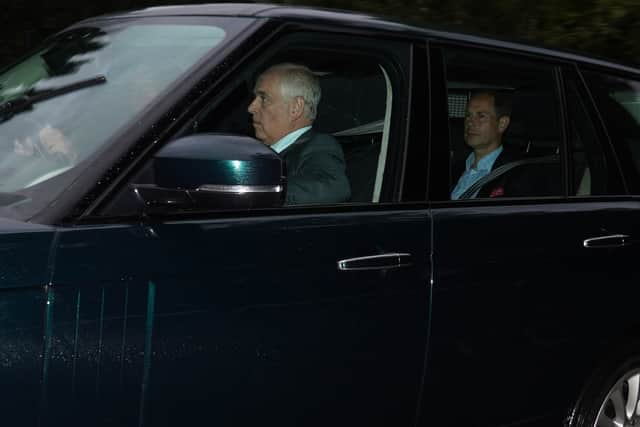
The Princess Royal has already disclosed she was with her mother during her last moments but the document confirmed what was suspected on the day – some of the late monarch’s children and grandchildren tried in vain to be at her bedside.
The certificate released by National Records of Scotland noted the time of the Queen’s death on Thursday September 8 as 3.10pm at Balmoral.
The Duke of Sussex travelled separately and was driven through the gates some time later and the Queen’s death was announced in the early evening.
It is not known when the King and his Queen Consort arrived at Balmoral but unlike other members of the royal family they were already in Scotland.
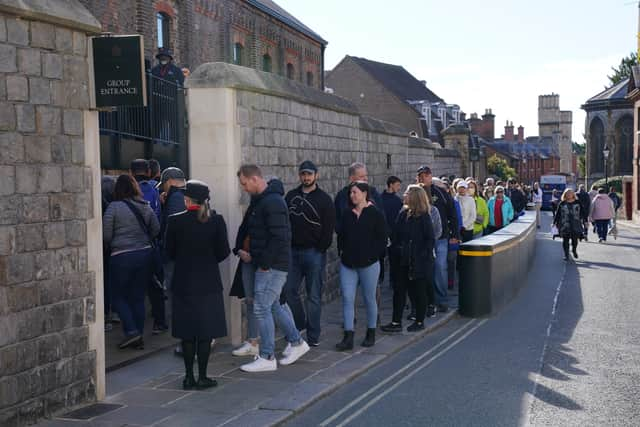
The death certificate was released on the day well-wishers were able to see the Queen’s final resting place, as Windsor Castle welcomed visitors for the first time since the monarch’s death.
When paying tribute to her mother, on the day her coffin returned to London ahead of lying in state, Anne revealed she was with the Queen at the end of her life.
The princess, who accompanied her mother’s coffin as it travelled from Balmoral to London, via Edinburgh, said: “I was fortunate to share the last 24 hours of my dearest mother’s life.”
Anne is named as the “informant” on the document and would have notified the local registrar of her mother’s death.
The death certificate lists the Queen’s full name – Elizabeth Alexander Mary Windsor – occupation, “Her Majesty the Queen”, date of birth, April 21 1926, and her marital status as widowed.

Dr Douglas Glass, who had the title Apothecary to the Queen and in 2019 acted as Charles’ physician when he made an official visit to Germany, certified the late monarch’s cause of death.
Old age is acceptable if the doctor certifying death has cared for the patient for a long time, was not aware of any disease or injury that contributed to death and had observed a gradual decline in the person’s general health and functioning.
The Queen had been experiencing sporadic mobility problems during the final period of her life and used a walking stick regularly in public.
The health development came after the head of state was secretly admitted to a private London hospital for “preliminary investigations” in October last year – her first overnight admission for eight years.

Platinum Jubilee celebrations were staged during the extended June bank holiday weekend but the Queen made just three brief appearances on Buckingham Palace’s balcony during the celebrations and attended a Windsor Castle event.
Following tradition the Queen was spending her summer break at Balmoral and a few days before she died performed one of her major duties of state and asked Liz Truss to form a Government and become her 15th prime minister.
The day before her death at the age of 96 the head of state pulled out of a virtual Privy Council meeting after doctors ordered her to rest.
On September 8, Buckingham Palace announced just after 12.30pm that the head of state’s doctors were concerned about her health and recommended she remain under medical supervision.
The Queen was laid to rest on September 19, following 70 years of service, after family, friends and the nation said a fond farewell to the late monarch.
For the woman who was never meant to be sovereign, the Queen fulfilled her pledge to serve nation and Commonwealth and came to earn the respect of many – from world leaders to the public.
Her grieving family walked behind her coffin throughout the long day of her funeral and burial, a simple but public tribute, and the emotion was clear to see on the face of Charles who travelled to Scotland soon afterwards where he has remained with Camilla.