
Rare case of cancer usually seen in adolescents claims 45-year-old’s life after ‘golf ball-sized’ lump found on shoulder
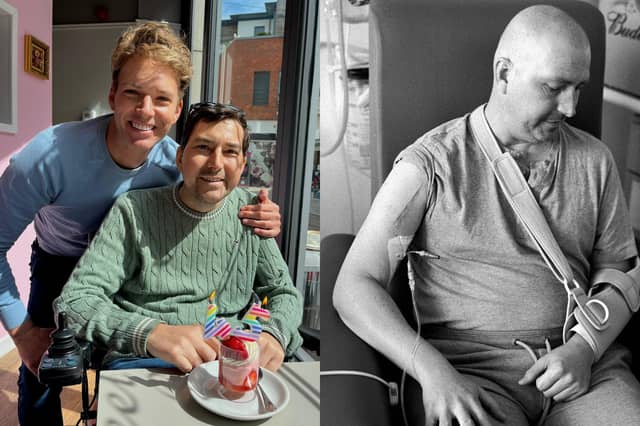

The partner of a 45-year-old who died with a rare cancer usually seen in adolescents after a “golf ball-sized” lump appeared on his shoulder said his life has been “completely smashed”.
Oliver Kirkham, 44, from Basingstoke, Hampshire, described his partner of 12 years, Gabor Kabacs, as an “active” individual who enjoyed trips away, long hikes and swimming.
But in January 2022 while visiting his family in Hungary, from where he originally came, his mother noticed a lump like a “little ball” coming out of his shoulder blade.
Gabor, an IT specialist, went to a local doctor who advised he seek further treatment on his return home to the UK. After going to Basingstoke Hospital, undergoing tests and having a biopsy on the lump, which grew to the size of a “golf ball”, he was diagnosed with a form of primary bone cancer, Ewing sarcoma, in March 2022.
The diagnosis came as a “complete shock” to the couple, especially as there are just 90 UK cases of the cancer per year and 80% of patients are aged 20 and under.
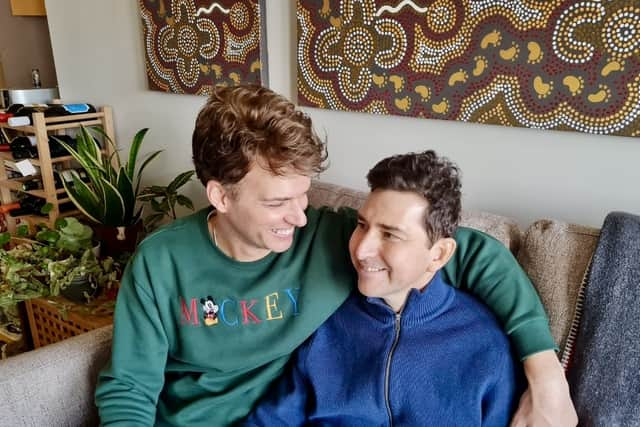
Gabor was given six months to live and placed in palliative care in December 2023. He died on May 2 2024.
His partner, Oliver, now hopes to raise awareness of Ewing sarcoma and to urge others in his position to take care of their mental wellbeing.
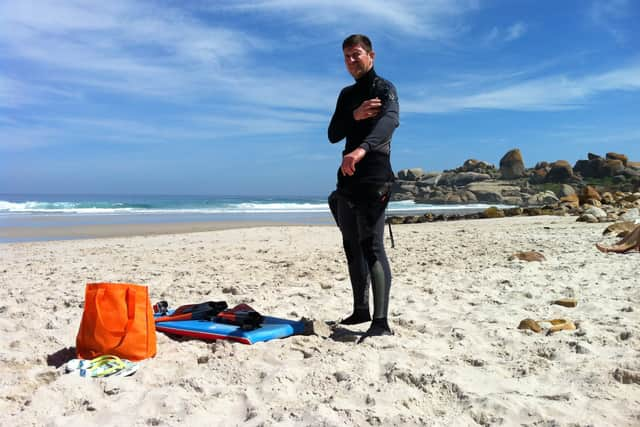
“Buying a property together, big trips away to travel, all of that just completely comes to a halt, an end.
“You put yourself second to cancer but you are just as important as the patient.
“If you’re not coping then you’re going to be no use to the person who does have cancer.”

The couple started living together in Winchester two years later, and then relocated to Basingstoke.
“Gabor was really active – we did loads of travelling together, lots of outdoor stuff and lots of hikes as well,” Oliver said.
In January 2022, Gabor paid a visit to see his loved ones and his mother noticed a lump protruding from his left shoulder blade.
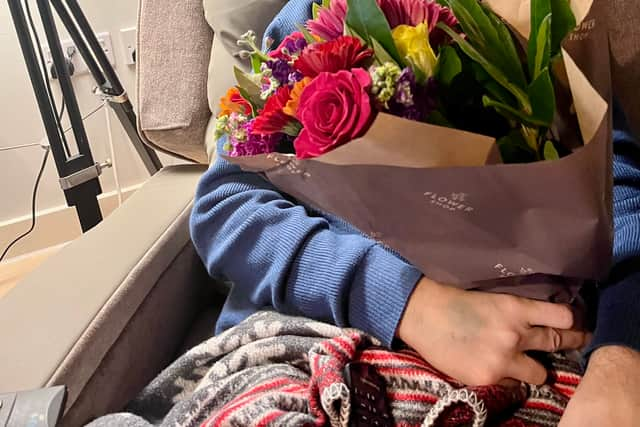
Gabor visited a local doctor in Hungary who advised he seek further treatment on his return home to the UK.
He went to Basingstoke Hospital, where he was given a sling to support his arm, and a biopsy and further scans were organised.
“The whole time we thought it was a sports injury, together with a cyst which may need draining,” Oliver said.

In March 2022, Gabor’s biopsy results were returned, which confirmed the presence of Ewing sarcoma, a form of primary bone cancer, in his left shoulder, and metastasis – the spread of cancer cells – in his right arm.
“It was a complete shock, he was told right from the start how rare it is for an adult,” Oliver said.
“You feel quite helpless really, to be hit with that.”
“We were quite angry at the start, thinking ‘why has this happened to us?’ or for Gabor, ‘why has this happened to me?'” Oliver said.
“Our doctor was really helpful though in explaining it was not something Gabor had done, it was just his genetics.”
Gabor was referred to the Nuffield Orthopaedic Hospital in Oxford, where he started four months of chemotherapy treatment in April 2022.

“Gabor was so brave, he was so fascinated and amazed at what they were doing,” Oliver said.
“The operation gave him a lot of hope, he wanted to keep going and get his life back together.”
In November 2022 Gabor started radiotherapy treatment and three months later in February 2023, his arm and shoulder were deemed to be cancer-free.
However, another test in May 2023 found the cancer had spread to his ribs and later his left hip, left humerus, right femur and his jaw.
Gabor started a new chemotherapy treatment plan but his doctors found it was “having no effect”.
In November 2023, Oliver said the cancer began “attacking” Gabor’s bones.

Gabor’s medical team told the couple in December 2023 there was no further treatment they could offer.
He was given six months to live and put in to palliative care at St Michael’s Hospice in Basingstoke, where he died on May 2 2024.
“I look back at everything that went on in those two years and you don’t really realise the trauma you are put through while still trying to keep real life going,” Oliver said.
“We were so fortunate to have the NHS and the hospice.

Oliver said “early detection” is vital and he urged others to “lean on” organisations and charities for support to avoid feeling “isolated”.
Having been Gabor’s carer, Oliver hopes those in similar positions look after their mental health.
“It’s about understanding how to manage your responsibility as a carer but also finding what recharges your batteries,” he said.
“Your life is going to change and it will change forever – that’s not something we want to face up to, but we have to.”