
Rare collection of medieval manuscripts digitised by National Library
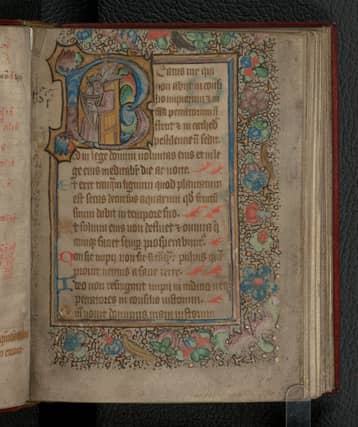

More than 200 manuscripts dating back as early as the 9th century have been digitised by the National Library of Scotland.
The collection boasts a 15th-century medical almanac, printed illustrations, a 12th-century manuscript of the Rule of the Knights Templar order, including advice on the “superfluity” of beards and moustaches, and a 15th-century psalter written and illuminated at Culross Abbey, Fife.
The work was made possible due to a generous donation from Alexander Graham.
- A 15th-century folded medical/zodiac almanac, which probably belonged to a doctor based in northern England. Folded up, it could be worn on the belt
- A selection of historical doodles showing rich period detail
- A 12th-century manuscript of the Rule of the Knights Templar order, including advice on the ‘superfluity’ of beards and moustaches
- A tiny 15th-century Book of Hours from Italy with lavish gold illumination
- An early 16th-century manuscript written and illuminated in Dunkeld
Due to the reformation in the 14th century, it is extremely rare to find documents from the period, particularly those used by the Roman Catholic Church.
Ulrike Hogg, manuscripts curator at the National Library, said: “This fascinating digitised collection is international in origin, though a large part of the volumes were written in Scotland.
“The survival rate of medieval Scottish manuscript volumes is generally low.

“It is difficult to estimate how many cultural treasures were lost during these times. The collection presented here includes a number of those fortunate survivors that have endured subsequent centuries.
“We’re delighted to make these extremely rare pieces of history publicly accessible online.”
Volumes produced in England, France, Italy and north-west Europe are also in the 240-piece collection.
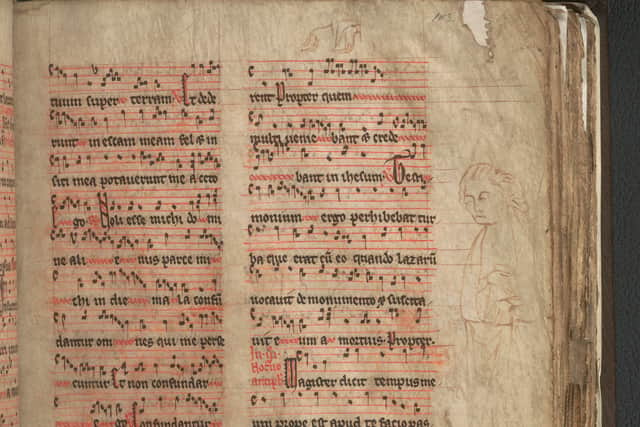
“The interests, tastes and knowledge of medieval scribes can be seen in these images, as well as the development of the medieval Scottish book hand and styles of illumination.
“The collection reveals much information on later owners of the manuscripts, who annotated them or added irreverent doodles as the volumes passed through their hands.”
The collection can be viewed at Early manuscripts – National Library of Scotland at www.nls.uk