
Riding motorcycle flat-track for the first time: How hard can it be?
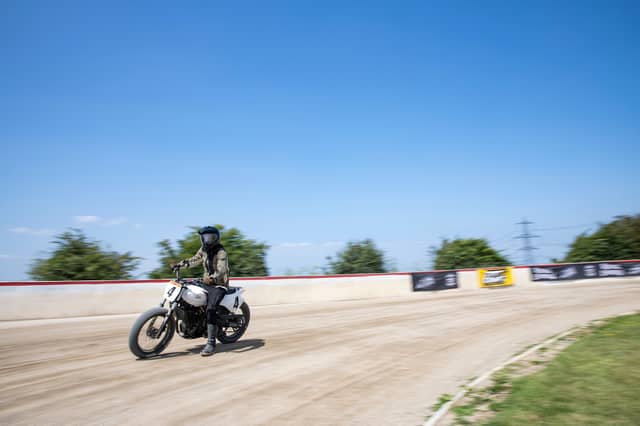

Flat-track originated in the United States back in the 1950s. However, while this racing series may trace its roots back to the USA, it has a formidable following here in the UK with dozens of locations across the country.
But what exactly is flat-track racing? Essentially, you’ve got custom-made motorcycles racing around an unpaved oval, battling it out to cross the finish line first. As the surface used is traditionally dirt, riders have to balance the bikes to ‘slide’ around the two main corners before accelerating through the straights.

Many of the most successful riders in flat-track have come to it from an early age, with childhoods spent testing the limits on dirt. But what if you’re new to the sport – is flat-track as easy as the professionals make it look?
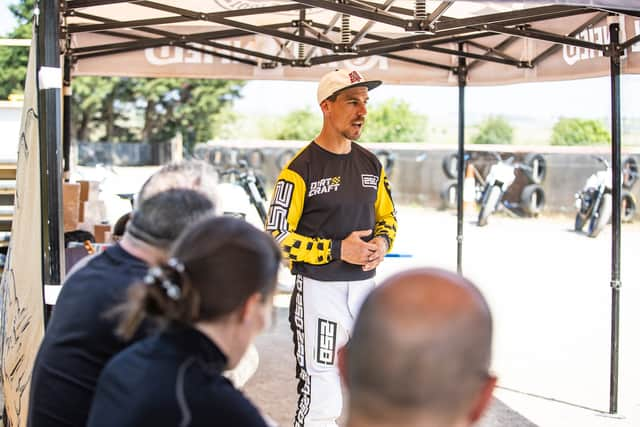
In this instance, that professional would be Gary Birtwistle, flat-track champion and owner of Dirt Craft, an outfit in specialises in expert motorcycle training and one which Royal Enfield partnered with to develop the Slide School in the UK.
It’s a blisteringly hot day at the Oval as I reluctantly get into my protective motorcycle gear. Others have mesh racing jerseys which I spot enviously, though my jacket, trousers, helmet and boots do help to add a little confidence as I head towards Gary’s first briefing.
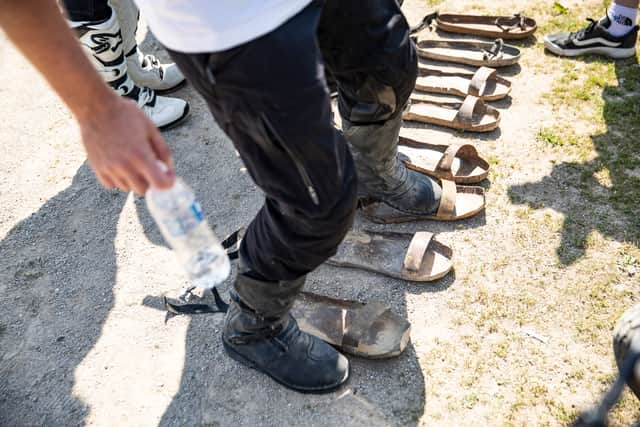
Gary highlights the importance of sitting closer to the handlebars than you would when riding on the road and also tells the group about body positioning and the lean angle of the bike, which both impact the type of slide you get and your ability to navigate the corners. An oval might seem like an easy shape to crack, but it’s far more complex with apexes to rival any decent racing track. We’re then fitted out with metal slide shoes. Looking like something from a medieval battlefield, they’re metal ‘sliders’ which fit over and lash to your regular motorcycle boots on your inside ‘leaning’ leg. You skim your foot along the ground when cornering for more stability – that’s the theory, anyway.

When I first get aboard the FT450, it’s all quite friendly, too. It’s a relatively low bike and those riser handlebars come towards you in an approachable manner. Of course, you quickly notice a difference – I instinctively reach for the front brake and grab nothing but air – and as I slowly roll out onto the dirt, the FT450 sounds noticeably louder than the standard bike.
My first session is like learning to ride a motorcycle all over again. The surface changes from section to section and it’s a real case in ‘bravery pills’ – you want to go quick enough to step the tail of the bike out, but because of years of road riding, it’s a disconcerting feeling. You want to straighten the bike up, but the nature of flat-track means that instead, you really should be leaning into it. There’s then the ferocious heat to deal with, but I’m less concerned about becoming a boil-in-the-bag rice and more focused on trying to get the FT450 to lean without sending me flying. The foot-sliding comes naturally, mind you, but I can only imagine that’s from a long time spent on mountain bikes.
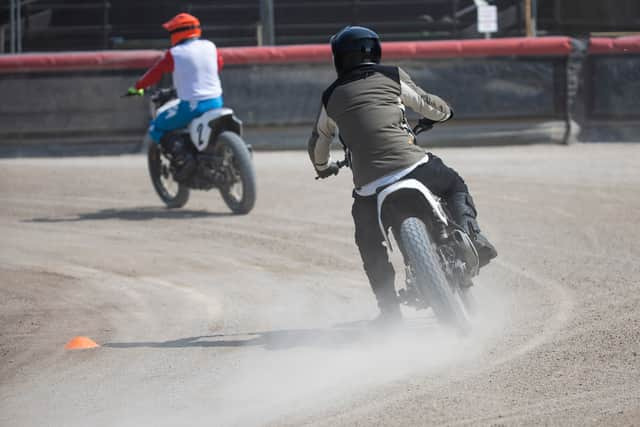
It’s in this session where things begin to click – a little, at least. The more you lean the bike, the easier it feels to slide and the less throttle you seem to need. The FT450’s low weight means I didn’t feel overburdened by too much physical ‘bike’ and, sitting up front, I started to feel a lot happier going more quickly. I’m by far and away one of the slowest of the group – I just didn’t want to be the one hitting the deck – but before long, I was finding my (sliding) foot and feeling a lot more comfortable. The rate of progression is fast, and I’m soon pushing harder and harder to make the bike slide – it’s a very intoxicating process.
By the third session, I’m starting to get a little overheated but I keep trying to lean the bike further and push a little quicker. Gary’s advice ringing in my ears, I attempt to keep the bike sliding with more lean angle and a little extra throttle and, on many occasions, I’m rewarded with a decent little ‘skid’, showing a marked improvement from the start of the day.
It’s such intense progress that before long, my brain feels pretty scrambled, but my adrenaline is a fever-pitch. But I’m taking away a whole host of skills and a newfound desire to become a full-time flat-tracker – though I think that may be a little way out for now. The Slide School drops you into the heart of the action, and the good news is that anyone can register to give it a crack – I’d thoroughly recommend it to anyone looking to level up their motorcycle skills.