
Riding through time and natural history on the new Canyon Spirit rail route
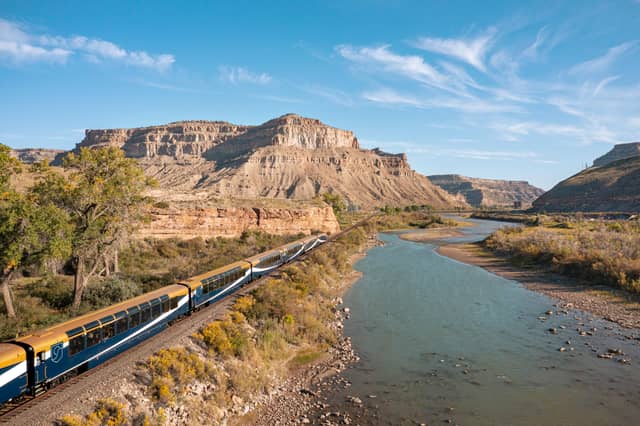

Rafters on the Colorado River have a cheeky way of greeting rail passengers.
As the majestic Rocky Mountaineer meanders through rugged canyons on a route renowned for spectacular scenery, my eyes are instinctively drawn to a more risqué sight above the shimmering water.

I am in the Southwestern United States to experience the expansion of one of the world’s great railway journeys.
Precisely when flashing bare buttocks at passing trains became a tradition here is unclear but anecdotal evidence suggests it was long before the Rocky Mountaineer first rolled through in 2021.
From April, the existing two-day, 378-mile Rockies to the Red Rocks service between Denver, Colorado and Moab, Utah will be available as a three-day option, extending an additional 218 miles to Salt Lake City.
My American adventure begins on Antelope Island. Accessed by a seven-mile causeway, the state park is surrounded by the vast Great Salt Lake which gave its name to Utah’s adjacent state capital, founded by Mormon pioneers, led by Brigham Young, in 1847.
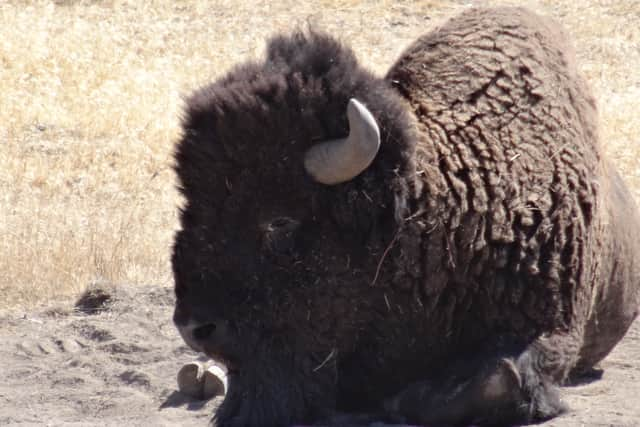
Burrowing owls peer across the prairies, while four pronghorn – colloquially known as American antelope but most closely related to giraffe and okapi – shelter from the intense sun under the umbrella of a Russian olive tree.
In the distance, a 500-strong herd of grazing bison sets the tone for an epic train trip with backdrops straight out of a John Wayne Western.
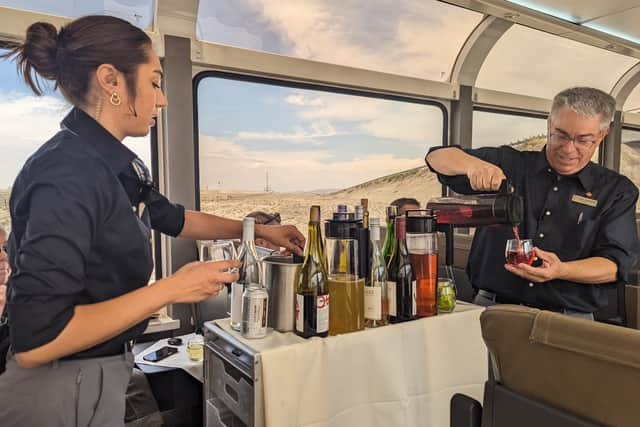
Life on board is luxurious and leisurely with a casual dress code and food and drink included.
Denverite Mike and fellow host Olivia Lopez, who hails from St Louis, Missouri, hand out mimosas for a welcome toast, while there is acknowledgment of us travelling through the traditional territories of the indigenous Ute, Arapaho and Cheyenne people.
Once clear of the suburbs, we steadily climb the dramatic switchbacks of the Gilluly Loops to Soldier Summit – named in honour of seven servicemen killed in an unexpected blizzard in 1861 – before dipping down into Castle Gate, where Utah-born outlaw Butch Cassidy robbed Pleasant Valley Coal Company in broad daylight in 1897.
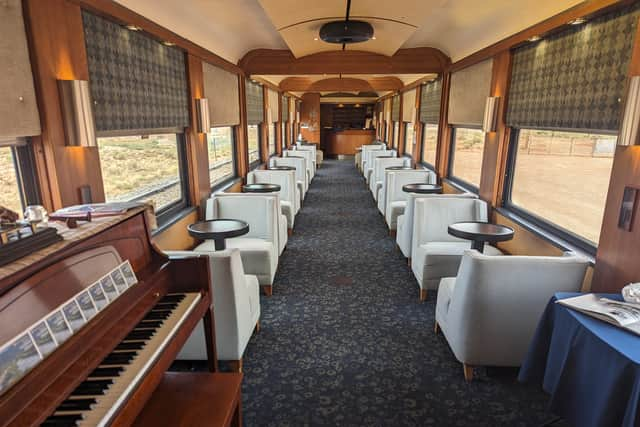
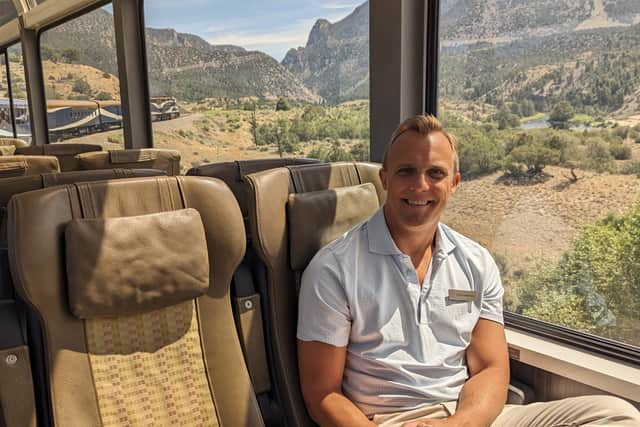
The energy of the whirlwinds contrasts the relaxed atmosphere inside the carriages. Seared beef tenderloin is served at my padded seat next to panoramic windows, while I later soak in the striking terrain sipping cocktails in the lounge.
Rocky Mountaineer launched as a private-sector business in 1990.
Founder Peter Armstrong initially relied on family and friends working in rented tuxedos after taking over operation of the special daylight tourist services in his native Canada from the government-owned Via Rail.
The company remains a family affair. Peter’s son Tristan, who grew up chasing lost luggage and cleaning trains, was appointed chief executive in 2023. His daughters Ashley and Chelsea are board members.
After passing through Green River, a Cold War missile launch site, we arrive into Moab in mid afternoon.
The quintessential Wild West outpost and modern-day outdoor adventure playground was put on the map in the 1950s when Texan geologist Charlie Steen’s discovery of uranium sparked a mining boom.

American author and one-time national park ranger Edward Abbey described Archers’ arid landscape as being as “naked, monolithic, austere and unadorned as the sculpture of the moon”. It is difficult to disagree.
The next morning I gaze in awe at only a handful of more than 2,000 natural arches formed over millions of years through erosion and the movement of underground salt beds.
Hollywood directors have also been seduced by the distinctive reddish-orange sandstone shapes. Steven Spielberg’s Indiana Jones And The Last Crusade and Ridley Scott’s Thelma & Louise are among the films shot in what was formerly a cattle ranch.
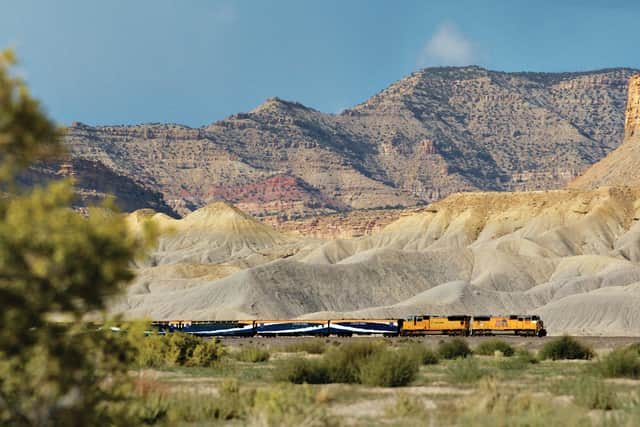
Completing the 194-mile middle leg in around five hours, we chug into Glenwood Springs for a second overnight stop.
Nestled in the foothills of the Rockies, around 40 miles north-west of the exclusive ski resort of Aspen, the spa city has a reputation as a wellness destination.
In late evening I bathe in geothermal hot springs in the shadow of the Colorado Hotel where President Theodore Roosevelt was a frequent guest and gangster Al Capone also stayed.
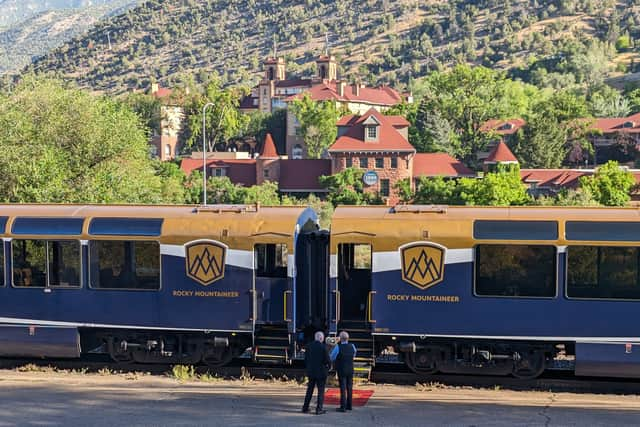
I hike up to his grave in Linwood Cemetery early the next day before leaving behind the resort’s sulphurous smells as the train snakes into the glorious, sun-soaked Glenwood Canyon.
Some of the standout moments of the trip come with my head out of open windows in the vestibules.
Bald eagles soar, a nimble bighorn sheep balances on steep rocks and skittish mule deer sporadically appear along the riverbank.
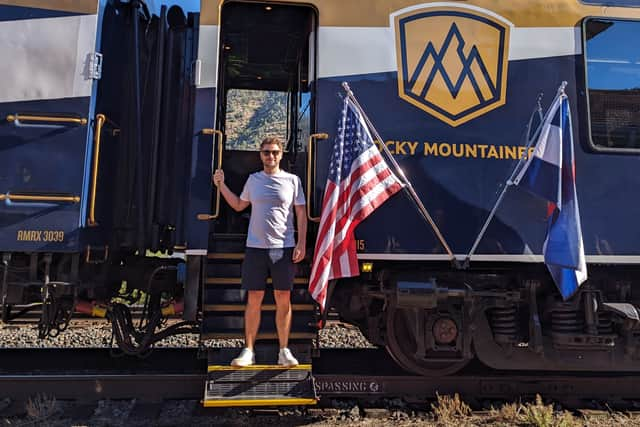
Crossing the Continental Divide, which separates rivers which flow west to the Pacific Ocean from those coursing east, the train twists and turns, like a blue thread lacing granite.
Thirty hand-blasted tunnels swallow and spit us out on to ledges overlooking pine valleys during the gradual descent into downtown Denver.
“There’s something about the romance of the rails that really resonates with all of us,” CEO Tristan tells me earlier that day as we curve alongside the river flanked by red cliffs.

As if on cue, four rafters simultaneously turn, drop their shorts and bend slightly forwards. “Oh there you go, a full moon salute right there,” laughs Tristan.
Momentarily mesmerised by the least photogenic view of the last three days, I contemplate my 596-mile voyage across the Old West.
An unforgettable railroad adventure – with cracking scenery – is on track to become even greater.
How to plan your trip
Launching in April 2026, Canyon Spirit’s three-day Rockies to the Red Rocks journey is available to book now and costs from £1,599 per person, including hotel accommodation in Moab and Glenwood Springs, and meals onboard. Visit thecanyonspirit.com.
Direct flights to Salt Lake City and Denver are available from London Heathrow.