
Rio’s flamboyant Carnival parade is back after the pandemic


Colourful floats and flamboyant dancers have been delighting tens of thousands jammed into Rio de Janeiro’s Sambadrome, putting on a delayed Carnival celebration after the pandemic halted the dazzling displays.
Rio de Janeiro’s top samba schools began strutting their stuff late on Friday, the first evening of the two-night spectacle.

“These two years were horrible. Now we can be happy again,” Ms Mello said as she was about to enter on Friday night wearing a black and white costume made of shells that barely covered her body.
The Sambadrome has been home to the parade since the 1980s and is a symbol of Brazil’s Carnival festivities. During the pandemic, it was a shelter for more than 400 homeless people and also served as a vaccination station.
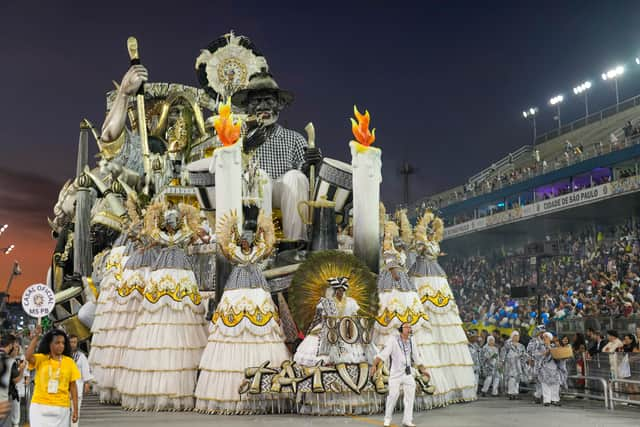
Entire communities rally around the competing samba schools, whose shows are not only a source of pride but also employment since preparations require countless seamstresses, welders, costume designers and more. There are months of rehearsals for dancers and drummers so participants can learn the tune and the lyrics for their school’s song. The pandemic upended these samba schools’ way of life for two years.
Sao Paulo also kicked off its Carnival parade on Friday evening. Both cities’ parades usually take place in February or March, but their mayors in January jointly announced they were postponing Carnival by two months due to concerns about the proliferation of the Omicron variant.

Rio authorities said earlier this week those attending the parade would have to show proof of vaccination, but media reports showed that attendees had no trouble getting tickets or entering the Sambadrome without showing the required documents.
A seat in the bleachers cost about £39, and the most expensive seats can cost more than £980. Going out in one of the samba schools costs a lot for tourists, but it is often free for people who are involved with the parade all year round, like 66-year-old Juciara do Nascimento Santos. She was among the revellers starting this year’s parade with the Imperatriz Leopoldinense samba school.
“We had to take care of ourselves during this time so we could be here today celebrating life,” said Ms Santos, who has paraded with Imperatriz Leopoldinense since 1984. This time she was in the section of the baianas, often reserved for the oldest women of each samba school. Many of these samba schools reported they lost many of their baianas to the virus.
For those unwilling to shell out for the price of admission, there were street parties across Rio — despite City Hall denying authorisation for them to take place, citing insufficient time to prepare. Some organisers could not care less, arguing that celebrating Carnival wasn’t contingent on authorities’ consent, and partiers hit the streets in force.