
Russia vastly and deliberately undercounted dam flooding deaths, probe finds
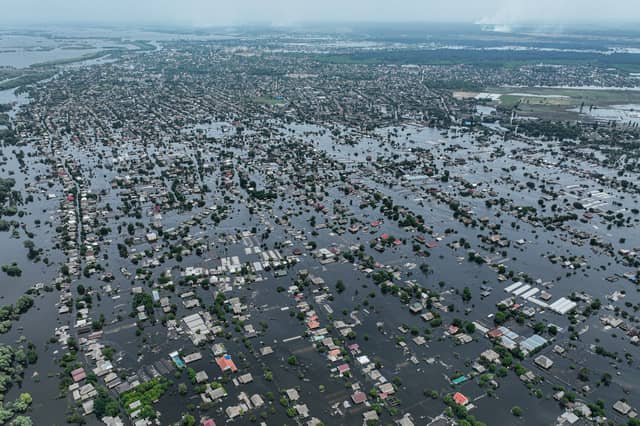

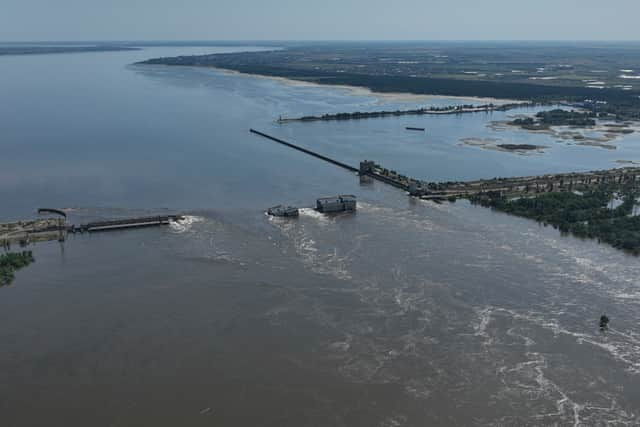
An investigation has found that Russian authorities vastly and deliberately undercounted the dead in one of the most devastating chapters of the 22-month war in Ukraine – the flooding that followed the destruction of the Kakhovka Dam in the southern Kherson region.
Russia said 59 people drowned after the catastrophic explosion in the territory it controls in June.
But The Associated Press has determined that the dead number in the hundreds, at least, in the town of Oleshky alone.
They are also said to have threatened health workers when they defied orders.
Many Oleshky residents and health workers declined to speak, fearing reprisal. The AP’s investigation is based on the accounts of those who did.
The probe found that in the critical first hours after the dam collapse on June 6, occupation authorities downplayed its consequences, leading many Oleshky residents to believe they would not be affected. This later contributed to the high death toll.
Health workers said they believe 200 to 300 people died in the town. Many are still missing, their bodies likely still trapped in homes.
A volunteer said she, her husband and two neighbours picked up at least 100 bodies during the floods.
These were taken to the central cemetery in Oleshky and buried in graves 3ft deep.
The volunteer was later threatened by Russian occupation authorities and forbidden from collecting bodies.
A nurse at the Oleshky District Multidisciplinary Hospital, the city’s main primary health centre, said she saw the flood waters rise towards her home the afternoon of June 6 as she was walking her dog.
Chaos ensued as volunteers began rescuing people using their own resources. For the first three days, occupation authorities were nowhere to be seen, local residents, volunteers and health workers said.
Many sought help from health workers in the hospital where the nurse, who gave her name as Svitlana, worked, which by that time had become a refuge for those forced out from flooded areas.
The dead began appearing. Bloated bodies were seen floating. As waters receded allowing residents to check on relatives, more were found trapped in the mud under collapsed homes.
Health workers also said occupation authorities returned around June 9, three days after the flooding.
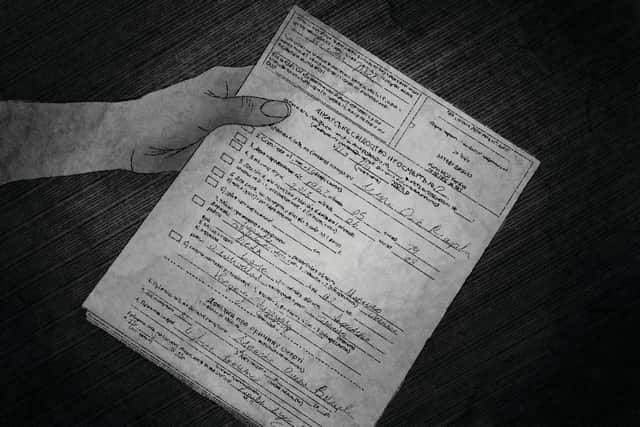
They came with strict orders prohibiting doctors in the hospital from issuing death certificates for drowning victims – but not for those who died of natural causes.

Doctors were permitted to issue death certificates, and did so in Russian and secretly in Ukrainian to keep Kyiv’s records up to date.
By prohibiting doctors from issuing death certificates for the drowned, occupation authorities essentially took away doctors’ authority and ability to document the number of dead.
Svitlana, who oversaw record-keeping for the drowned, said Russian police verbally issued the order, and did not provide an official written statement.
Police came to the hospital daily to copy the hospital’s death certificates, making sure none were for drowning victims.
Those with dead relatives were told to go to forensic centres in other districts, where doctors selected by occupation authorities were responsible for signing death certificates. The bodies could not be buried without the document.
Residents and health workers were told to call police if they saw a dead body. Trucks belonging to the Russian state emergency service arrived to collect them and take them to the forensic centres.
Those with no-one to claim them were never seen again.
The Associated Press was able to confirm the location of at least one in the yard of the Orthodox Pokrovska Church in the centre of Oleshky, and the identity of one man buried there, Yurii Bilyi, a TV repairman.
Mr Bilyi was recognised by a municipal worker who dug his grave and later told Svitlana. Mr Bilyi’s burial was recounted to his daughter, Anastasiia Bila, who is now in the western Ukrainian city of Lviv. Her uncle told her the grave was doused with chlorine and a priest said a prayer.
It is unknown how many bodies were buried with Mr Bilyi. Ms Bila said her uncle did not offer a precise number.
He is now living under occupation and did not respond to questions from the AP.
While several people interviewed referred to more mass graves than the one where Ms Bila’s father was buried, the AP was unable to determine the precise number of such graves or how many people were buried in them.
Svitlana, the nurse, said the evidence is still hidden in Oleshky: documents detailing the dead, plots where they are buried, photos, and the death certificates collected in secret.