
Russians besiege Ukrainian ports as armoured column stalls
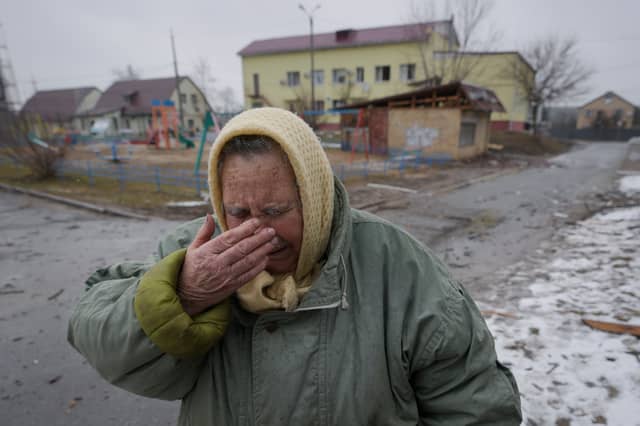

Russian forces have laid siege to two strategic Ukrainian ports and pressed their bombardment of the country’s second-biggest city, while the huge armoured column threatening Kyiv appeared to be stalled outside the capital.
Moscow’s isolation deepened, meanwhile, when most of the world lined up against it at the United Nations to demand it withdraw from Ukraine.
And the prosecutor for the International Criminal Court opened an investigation into possible war crimes in Ukraine.
Russia reported its military casualties for the first time since the invasion began last week, saying nearly 500 of its troops have been killed and almost 1,600 wounded.
Ukraine did not disclose its own military losses but said more than 2,000 civilians have died, a claim that could not be independently verified.
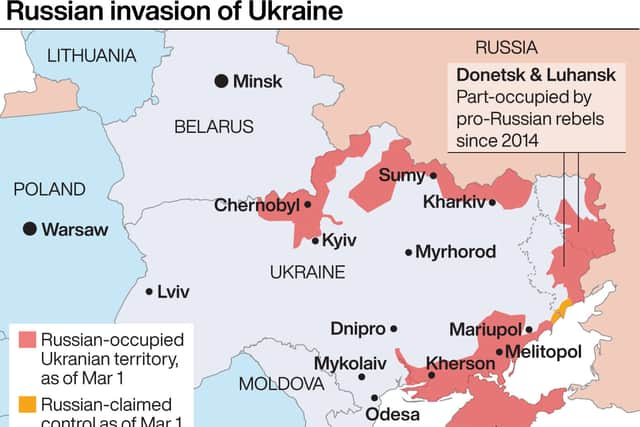
With fighting going on on multiple fronts across the country, Britain’s Ministry of Defence said Mariupol, a large port city on the Azov Sea, was encircled by Russian forces, while the status of another vital port, Kherson, a Black Sea shipbuilding city of 280,000, remained unclear.
Russian President Vladimir Putin’s forces claimed to have taken complete control of Kherson, which would make it the biggest city to fall yet in the invasion.
But a senior US defence official disputed that.
“Our view is that Kherson is very much a contested city,” the official said.
“We cannot even take the wounded from the streets, from houses and apartments today, since the shelling does not stop,” he was quoted by the Interfax news agency as saying.
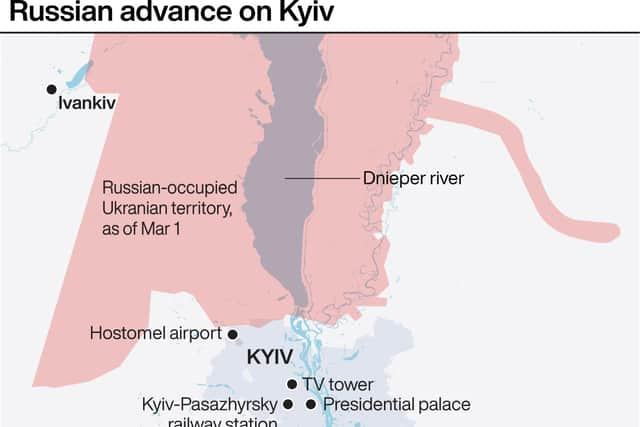
Meanwhile, the senior US defence official said the immense column of hundreds of tanks and other vehicles appeared to be stalled roughly 25 kilometres (16 miles) from Kyiv and had made no real progress in the last couple of days.
The convoy, which earlier in the week had seemed poised to launch an assault on the capital, has been plagued with fuel and food shortages and has faced fierce Ukrainian resistance, the official said.
On the far edges of Kyiv, volunteer fighters well into their 60s manned a checkpoint to try to block the Russian advance.
“In my old age I had to take up arms,” said Andrey Goncharuk, 68.
He said the fighters needed more weapons, but “we’ll kill the enemy and take their weapons”.
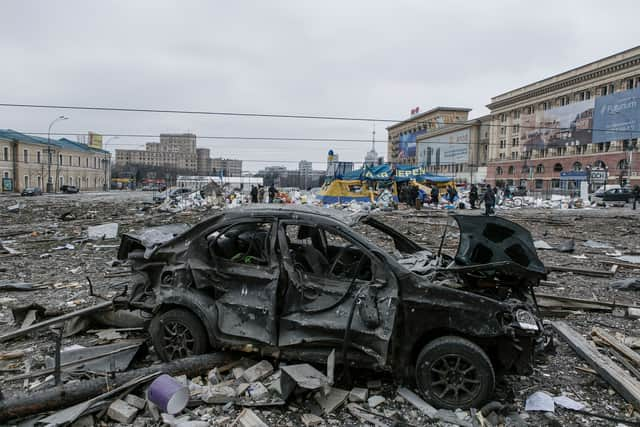
Russia also pounded Kharkiv, Ukraine’s second-largest city with about 1.5 million people, in another round of aerial attacks that shattered buildings and lit up the skyline with balls of fire.
At least 21 people were killed and 112 injured over the past day, said Oleg Sinehubov, head of the Kharkiv regional administration.
Several Russian planes were shot down over Kharkiv, according to Oleksiy Arestovich, a top adviser to Ukrainian President Volodymyr Zelensky.
“Kharkiv today is the Stalingrad of the 21st century,” Mr Arestovich said, invoking what is considered one of the most heroic episodes in Russian history, the five-month defence of the city from the Nazis during the Second World War.
From his basement bunker, Kharkiv mayor Igor Terekhov told the BBC: “The city is united and we shall stand fast.”
Russian attacks, many with missiles, blew the roof off Kharkiv’s five-storey regional police building and set the top floor on fire, and also hit the intelligence headquarters and a university building, according to officials and videos and photos released by Ukraine’s State Emergency Service.
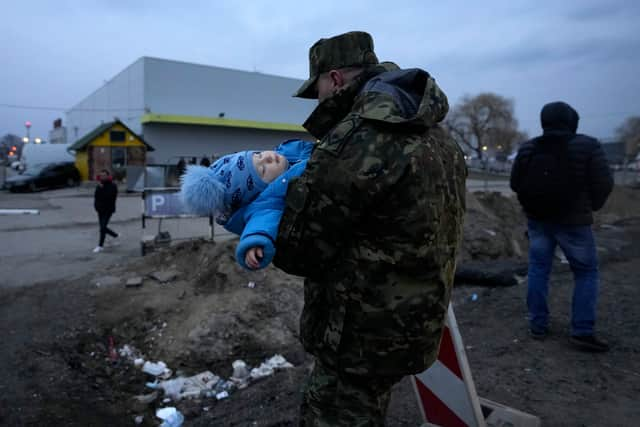
Seven days into Russia’s invasion, the UN said more than 870,000 people have fled Ukraine in a mounting refugee crisis on the European continent, while the head of the UN nuclear watchdog agency warned that the fighting poses a danger to Ukraine’s 15 nuclear reactors.
Rafael Grossi, of the International Atomic Energy Agency, noted that the war is “the first time a military conflict is happening amid the facilities of a large, established nuclear power programme”, and he said he is “gravely concerned”.
“When there is a conflict ongoing, there is of course a risk of attack or the possibility of an accidental hit,” he said.
Russia has already seized control of the decommissioned Chernobyl power plant, the scene in 1986 of the world’s worst nuclear disaster.
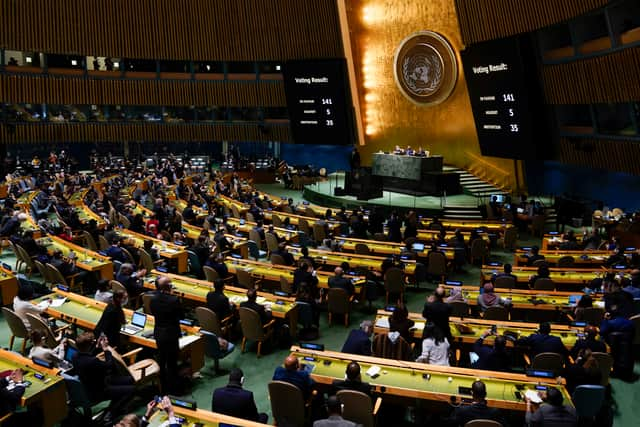
The vote was 141 to 5, with 35 abstentions.
Assembly resolutions are not legally binding but can reflect and influence world opinion.
The vote came after the 193-member assembly convened its first emergency session since 1997.
The only countries to vote with Russia were Belarus, Syria, North Korea and Eritrea. Cuba spoke in Moscow’s defence but ultimately abstained.

He added: “The crimes are so barbaric that it is difficult to comprehend.”
A large explosion shook central Kyiv on Wednesday night in what the president’s office said was a missile strike near the capital city’s southern railway station.
There was no immediate word on any deaths or injuries.
Thousands of Ukrainians have been fleeing the city through the sprawling railway complex.
A spokesman for the Russian Defence Ministry, Major General Igor Konashenkov, released his side’s military casualty figures, disputing as “disinformation” reports of much higher losses.
Ukraine’s leader claimed almost 6,000 Russian soldiers have been killed.
Russia also ramped up its rhetoric.
Foreign minister Sergei Lavrov reminded the world about the country’s vast nuclear arsenal when he said in an interview with Al-Jazeera that “a third world war could only be nuclear”.
In the northern city of Chernihiv, two cruise missiles hit a hospital, according to the Ukrainian UNIAN news agency, which quoted the health administration chief, Serhiy Pivovar, as saying authorities were working to determine the casualty toll.
In other developments:
– The price of oil continued to soar, reaching 112 dollars per barrel, the highest since 2014.
– Russia found itself even more isolated economically as Airbus and Boeing said they would cut off spare parts and technical support to the country’s airlines, a major blow. Airbus and Boeing jets account for the vast majority or Russia’s passenger fleet.
Kremlin spokesman Dmitry Peskov acknowledged the global economic punishment is unprecedented but said Moscow had been prepared for all manner of sanctions.
“We have experience with this. We have been through several crises,” he said.