
Samuel Pepys’s fashion prints cast light on his attitudes after his diaries


The 17th century diarist Samuel Pepys’s collection of French fashion prints casts light on his attitudes to fashion in the period after he stopped keeping a diary, an academic has said.
The naval administrator kept a diary, giving a picture of the official and upper-class life of London, from 1660 to 1669.
Less is known about the second half of his life, up to his death in 1703 aged 70.
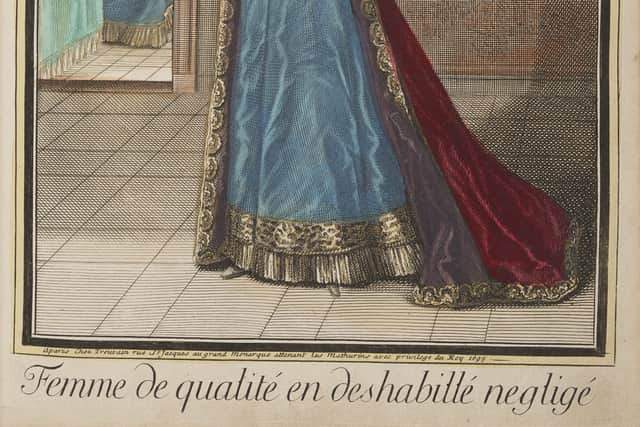
Ms Avidon, a PhD researcher at Christ’s College, said: “Pepys stopped writing his diary just as his career was taking off.
“It’s really challenging to access Pepys’s later life.
“These prints provide a unique opportunity to consider his attitudes to fashion in this period.”
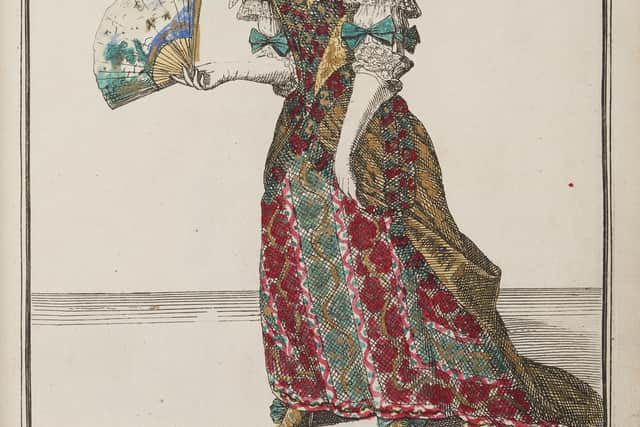
In research, published in the journal The Seventeenth Century, eight images from the collection are published for the first time and Ms Avidon links one of them to an episode in Pepys’s diary.
In 1669, Pepys wrote that he was “afeared to be seen” in a summer suit he had just bought “because it was too fine with the gold lace at the hands”.
Finally he plucked up the courage but a socially superior colleague spotted him in the park and told him the sleeves were above his station.

Pepys learnt a lesson that day but this did not put him off fashion.
He went on to buy a print entitled Habit Noir (evening wear) which shows an elite Frenchman proudly showing off very similar lace cuffs as well as plentiful ribbons.
“Pepys would have seen this outfit as pretty risky,” Ms Avidon said.
“This was for a French courtier, and was probably well beyond his budget.
“But Pepys probably did own suits with these kinds of ribbon loops, just not so many as this.

She continued: “Pepys felt he had to walk a really fine line, especially early in his career.
“His father was a tailor, his mother a washerwoman, and throughout his life Pepys was profoundly worried about how he was perceived and took steps to manage his image.
“The diary shows his anxieties as a young adult.
“The prints show that his determination to prove himself, using clothes and cultural capital, continued throughout his life.”
Pepys rose to be the Chief Secretary to the Admiralty in 1673 and was first elected as an MP in 1679.
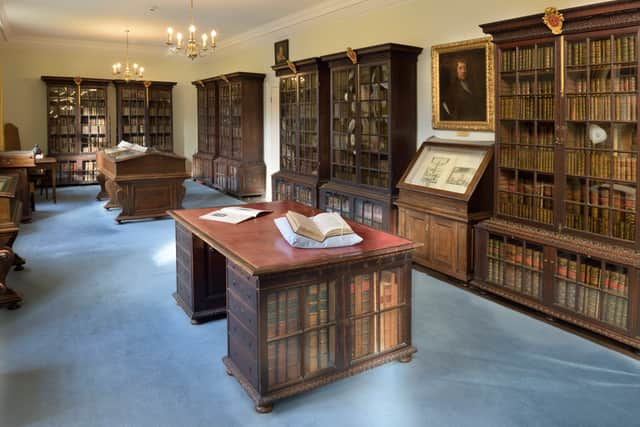
But as Pepys expanded his print collection, he was part of a network of gentleman scholars linked to the Naval Office and Royal Society.
“He started to use fashion to solidify his social position and demonstrate his cosmopolitan tastes,” Ms Avidon said. “But collecting fashion prints was also a way to cement intellectual relationships and maintain his scholarly reputation.”
Ms Avidon continued: “I went into this research with a lot of reservations about Pepys, I didn’t like him.
“But the prints offer a much more nuanced picture of him, a more human picture.
“He was fallible and anxious and his actions in response to that anxiety feel quite familiar today.”
French clothes were often viewed in England as being scandalously excessive as they combined luxury silks with over-the-top trim and lace, and huge statement accessories.
“Pepys had a French wife, was friends with French merchants and had a keen interest in French culture,” Ms Avidon said.
“But Pepys also ridiculed people returning from France wearing over-the-top French fashions and he had a preoccupation with French elites being frivolous.
“Pepys felt under pressure to maintain the moral high ground, not just by wearing clothes appropriate for his own social station but also to uphold what was appropriate for his country, morally and economically.”