
Scottish Fire and Rescue Service ‘in crisis’, new report suggests


Scotland’s fire service is in “crisis” according to a new report, which found that low morale, underinvestment and budget cuts are impacting severely on firefighters’ ability to respond effectively to serious and life-threatening incidents.
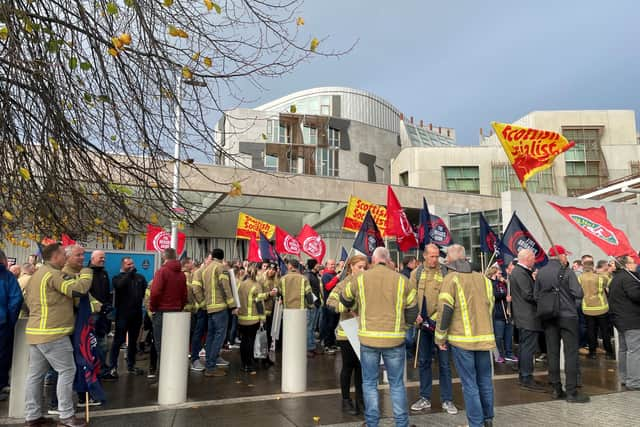
Set to be released by the Fire Brigades Union (FBU) on Wednesday at the Scottish Parliament, the report titled Firestorm assessed the challenges faced by the Scottish Fire and Rescue Service (SFRS).
It identified serious concerns with the situation in the fire service, with firefighters raising issues around response times, poor training, poor equipment and health concerns about fire contaminants.
One firefighter told the union that the SFRS had done “almost nothing” to combat the physical effects they experience as a result of fires.
“Patting yourself down with wipes after being exposed to a fire for hours just doesn’t cut it.”
Additionally, the report also pointed to the condition of buildings in the SFRS estate, with 14 having issues with crumbly reinforced autoclaved aerated concrete (Raac).
The report claims there has been “some” investment in equipment but compared with other parts of the UK, it says in Scotland this has been slow and partial.
One firefighter who was interviewed as part of the report said there was no personal issue respirators or adequate welfare facilities for larger incidents at their station.
Additionally, firefighters felt the training provided was inconsistent and inadequate, with trainees coming into fire stations (where they work on shifts known as watches) without having experience of “hot fire” training, which replicates the heat, smoke logging and conditions experienced in a variety of different fire settings.
Watch commanders also told the union they do not feel they have adequate or up to date qualifications to train their firefighters, with one reporting their breathing apparatus instructor certificate was 10 years old.
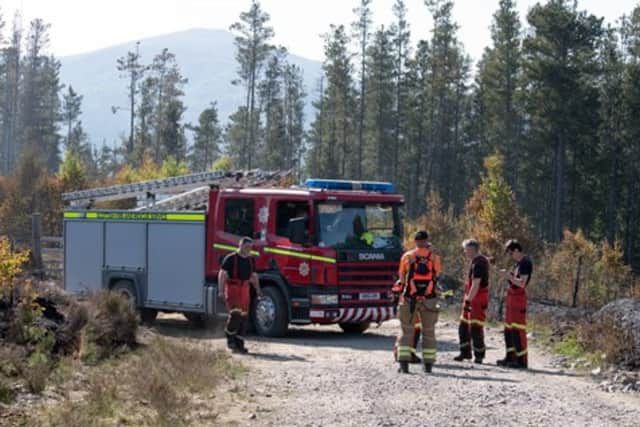
Recent incidents such as the Cannich wildfire near Inverness saw retained firefighters – who do not work for the fire service full time – working 14-hour shifts in difficult terrain and “blistering heat” to battle the fire.
The report also called for the pension age of firefighters to be lowered from 60 to 55 as some workers feel they are unable to work in the physically and mentally challenging operational role until they are 60.
It also called upon the service to look at redeploying firefighters who still wish to work within the service into support roles such as fire safety or in control rooms, rather than recruiting civilians into the roles.
The FBU is currently consulting members over taking strike action in opposition to the cuts the union said have been imposed by the Scottish Government.
A projected, five-year, flat cash budget, in place until 2027, has already removed 10 whole-time fire engines and 150 retained appliances are regularly unavailable due to significant recruitment and retention issues, the union said.
The SFRS announced that it will need to save a minimum of £14 million next year which could result in the loss of a further 339 firefighters and 18 fire engines, with more to come.
Scotland has lost 1,200 frontline firefighters since 2012, the union has previously claimed.
John McKenzie, Scottish secretary of the FBU, said the report paints a “damning” picture.
He said: “We cannot go on like this, our members and the public have had enough.
“If the Scottish Fire and Rescue Service is to meet the challenges of our times we need immediate and radical change and this report sets out what that should look like.
“Over the last decade we have been failed by political leaders who have tried to ignore this crisis. They cannot ignore us now.
“It is now up to the Scottish Government, the SFRS management and all political parties to respond positively to this report, reverse the cuts and help build a fire and rescue service that aspires to be world-leading.”
A Scottish Government spokesperson said: “Firefighters play a vital role in protecting communities and the Scottish Fire and Rescue Service (SFRS) has continued to deliver the high standard of services required to keep Scotland safe.
“Despite difficult financial circumstances due to UK Government austerity, we are providing SFRS with more than £368 million this year, an increase of £14.4 million on 2022-23.
“Whilst allocation of resources, along with recruitment and retention of firefighters, is an operational matter for SFRS, we are maintaining frontline services, with a higher number of firefighters in Scotland than other parts of the UK. Ministers will continue engaging with the FBU to discuss their concerns.”
Scottish Conservative deputy justice spokesperson Sharon Dowey MSP said: “Brave and hardworking firefighters are doing their job with one hand tied behind their back and are beyond breaking point.
“SNP ministers must finally step up and deliver the funding our fire service needs, before the catastrophic consequences of not doing so are keenly felt.”
Chief officer of the Scottish Fire and Rescue Service Ross Haggart said: “We note the publication of the FBU report and specifically of concerns highlighted of behaviours which fall beneath our high standards. We have a zero tolerance approach to bullying, harassment and discrimination and the safety and wellbeing of staff is paramount.
“We must modernise to ensure we are best placed to meet the changing risk and demand we face, while also addressing our ongoing financial challenges. Any permanent changes will only be made following full engagement and consultation with all our stakeholders, including the Fire Brigades Union.
“We will take time to give full and proper consideration to the contents of this report and continue to work with all representative bodies, including the FBU, on potential impacts of any future savings and identify potential areas for improvement.”