
Scottish island gives scientists ‘head start’ for examining rocks from Mars
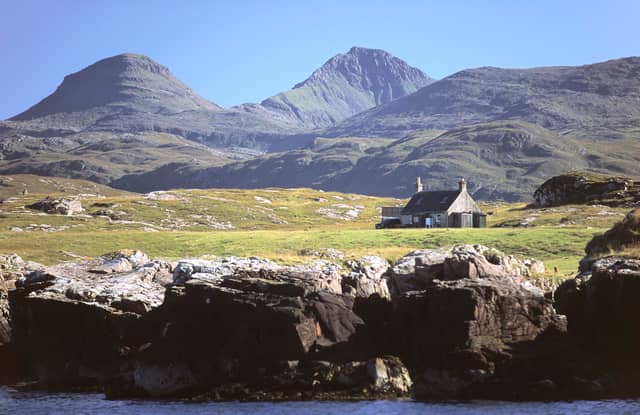

Scientists say studying ancient rocks from the Scottish island of Rum will give them a “good head start” as they prepare to examine Martian samples.
As part of their preparations, rocks from around the world that are similar to those from the red planet are being collected – with Rum the only UK site that samples have been taken from.
Scientists say the mineralogy and chemistry of the rocks from the Scottish island are similar to those on Mars.
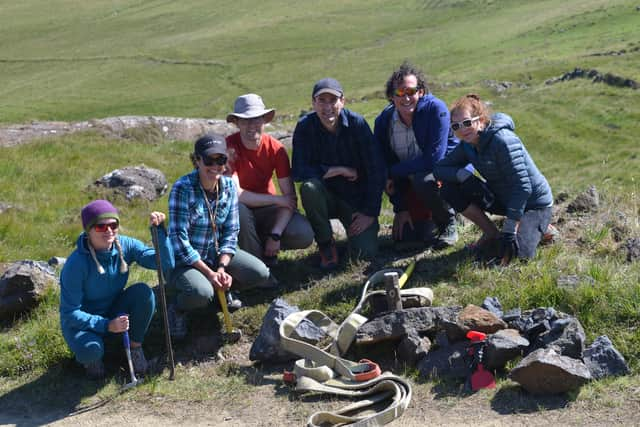
A group of scientists from the NatureScot National Nature Reserve (NNR) have this week been collecting samples from Rum, which is the largest of the Small Isles in Scotland’s Inner Hebrides.
It is part of the Mars Sample Return Campaign by Nasa and the European Space Agency, which is bringing together samples from across the world that are believed to be comparable to rocks from Mars that are scheduled to be brought to Earth in 2033.
Intensive study of the samples from Rum and other sites will then help scientists understand what methods of testing and analysis will be best deployed on the Martian rocks – which could yield information about the evolution of the planet, including the potential for past life.
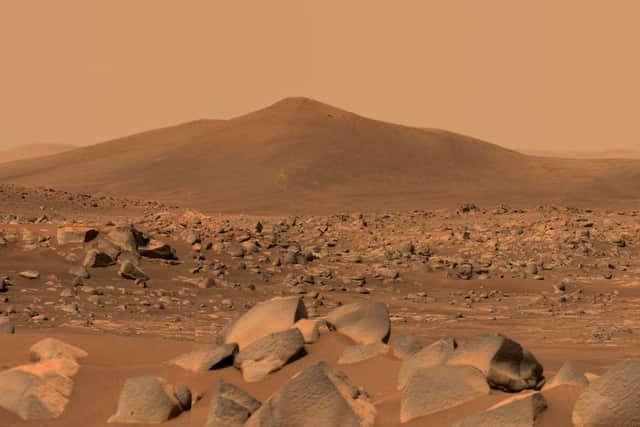
Dr Hallis said: “These Rum rocks are an excellent comparison to a specific geologic unit on Mars – the igneous Seitah Formation within the Jezero crater – which is characterised by the mineral olivine, and which the Nasa Perseverance Rover explored and sampled.
“Not only is the mineralogy and chemistry similar, but the two rocks appear to have a similar amount of weathering.
“This seems strange when we think how wet and warm Rum is compared to present day Mars, but billions of years ago when the Seitah Formation crystallised on Mars the difference in environment would not have been so pronounced.
“At this time Mars was much wetter and warmer, with a thicker atmosphere that may even have produced rain – though not as much as we get in Scotland.
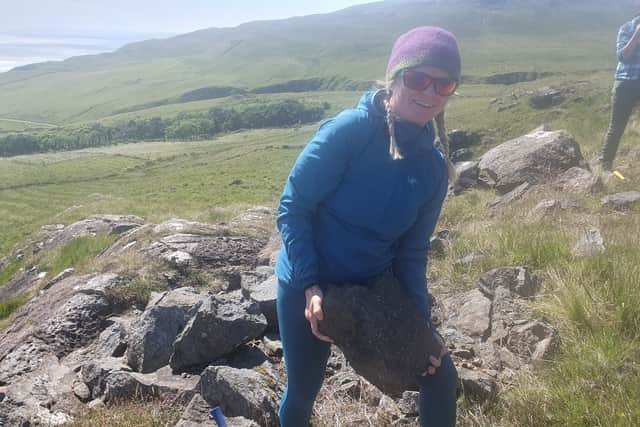
“The rocks on Rum are younger geologically than those that have been collected on Mars by Perseverance, but their exposure to the Scottish elements has produced roughly the same amount of weathering as was produced in the Seitah Formation during Mars’s early wet and warm climate.
“Because of all these similarities, analysis of the Rum rocks should give us a good head start and help the samples from the red planet achieve their full potential when they are returned to Earth.”
Prof Bridges, from Space Park Leicester, said: “The Rum rocks we collected will undergo the same types of analysis and in the same stringent conditions of laboratory cleanliness and protection as the Perseverance rover drill cores so that the science community is ready for the returned Jezero samples.”
Dr Schmidt said it is “very exciting to see rocks like those we encountered on Mars in the field on Earth”.
Lesley Watt, NatureScot’s Rum NNR reserve manager, said: “With its extinct volcanoes and dramatic mountains, Rum has always been one of the best places to discover Scotland’s world-class geology, but we didn’t quite realise that the rocks here were of interplanetary significance as well.
“It has been fascinating to learn more about the Nasa/ESA mission, and really exciting for the island to play a small part in this truly historic endeavour to find out more about Mars.
“We hope it will add yet another element of interest for visitors to this special place.”