
Segregation in NI is ‘obscene’ 25 years on from Good Friday Agreement – activist


Segregated housing and education is ‘obscene’ 25 years on from Good Friday Agreement, the leader of a community activist group has said.
More than 90% of schools in Northern Ireland are still segregated by religion.
David Holloway, the director of Community Dialogue, commented on segregation in schools when giving evidence to the Northern Ireland Affairs committee on Tuesday.
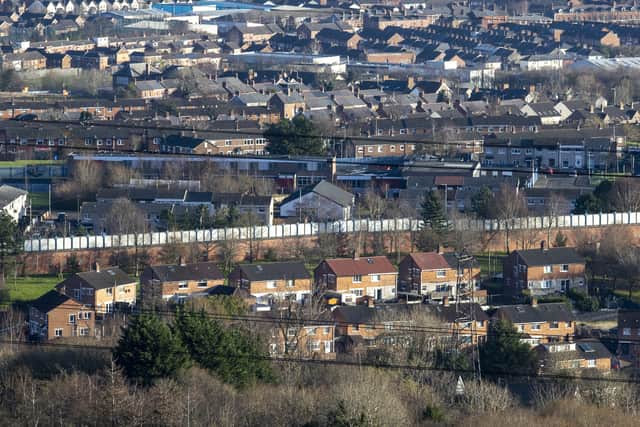
“Segregating housing, interface barriers/peace walls and segregating education are today, I would say actually, obscene,” he said.
“Inappropriate for a modern, Western European, kind of liberal, very affluent by world standards, democracy, no longer appropriate.
“Nevertheless, we live in a democracy. Desegregating housing cannot be forced. Desegregating education cannot be forced. Peace walls come down only with consultation and consent of the communities on either side.”
Community Dialogue, which was formed in 1997, encourages local people to engage with the creation of the Good Friday Agreement and has continued to host projects aimed at fulfilling the Agreement’s promises.
Mr Holloway also spoke on how economic divisions continue to prevent peace-building initiatives 25 years later after the Good Friday Agreement.
“In our dialogues over 20 years on contentious issues with primarily marginalised, ill-educated, misinformed, deprived of opportunity citizens, the absence of this elusive peace dividend is and continues to be, a recurring theme and a source of resentment,” Mr Holloway said.
“We did the fighting. We did the suffering. We agreed the deal and you got the benefit.
The peace dividend refers to the idea that a region will economically benefit from the end of violent conflict.
Mr Holloway stated that marginalised communities have not shared in the peace dividend which has affected the implementation of the peace process in these communities.
“There has, I doubt anybody would disagree, been an absolute failure to formally and seriously address the needs of marginalised communities, to actually address them, as part of shared, reconciled, peaceful, future building,” he said.
Conservative MP Simon Hoare, chair of the committee, claimed class divides can impact the ability for nationalist and unionist communities to have the shared world view envisioned by the Good Friday Agreement.
“The excluded, voiceless, nationalist working class and the excluded, voiceless, unionist loyalist working class also share a view which is ‘what has the Good Friday Agreement ever done for us? We do not see a demonstrable, tangible change in our lives’,” Mr Hoare said.
He added: “So the language of bitterness and hostility and the unshared vision is the default position.
“Isn’t that the elephant in the room? That there hasn’t been enough focus on the ‘prosperity for all’ bit of the agenda.”
On Tuesday the committee sat in Belfast and heard evidence from leaders of community groups and foundations as part of their investigation into the effectiveness of the institutions of the Good Friday Agreement.