
Seven key moments from NatWest chairman’s call with reporters


In a call with reporters on Friday, NatWest chairman Sir Howard Davies was asked about the actions of the bank, and its subsidiary Coutts, when closing the account of former politician Nigel Farage.
In a 40-minute discussion he was asked about the board’s initial decision to back chief executive Dame Alison Rose, whether he should resign, and if Mr Farage will get his account back.
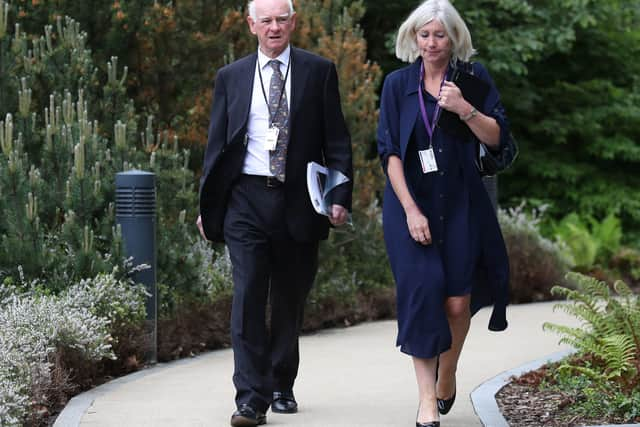
– On why the bank closes accounts
“Almost all of the accounts that are closed are for financial crime reasons, when the bank has reason to suspect that the account is being used for purposes which are unlawful,” Sir Howard said.
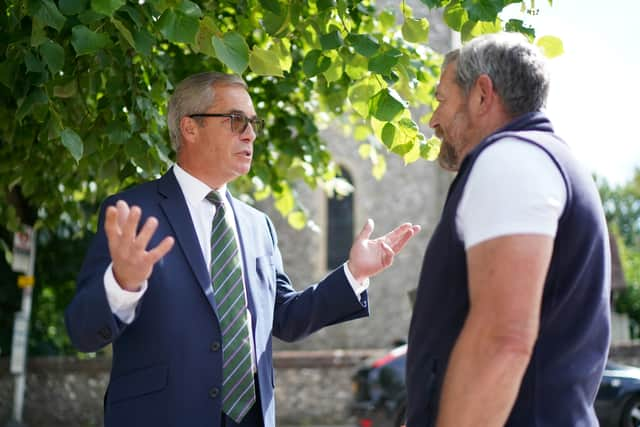
– On whether Mr Farage will get his Coutts account back
Sir Howard was asked: “Will Mr Farage get his account back at Coutts or at NatWest, I know one was offered there (at NatWest)?”
Sir Howard said: “It isn’t appropriate for me to talk about the status of his accounts, whether at Coutts or at NatWest. I really should not and will not do that.
– On why the board first backed boss Dame Alison Rose, then U-turned
On Tuesday chief executive Dame Alison Rose said she had been the source of a BBC story which disclosed personal details about Mr Farage’s bank account.
She apologised for her actions, but the board said she would stay and had its confidence.
But in the early hours of Wednesday the board reversed this position, and Dame Alison left.
Sir Howard said: “We made that (first) decision based on careful assessment of the upsides and the downsides of doing so, bearing in mind our responsibility ultimately to shareholders but also to other stakeholders.
“We believe that was a rational decision to make at the time.
“However, the reaction, the political reaction to that, was such that Alison and I then concluded, and the board supported the view, that her position was then untenable.
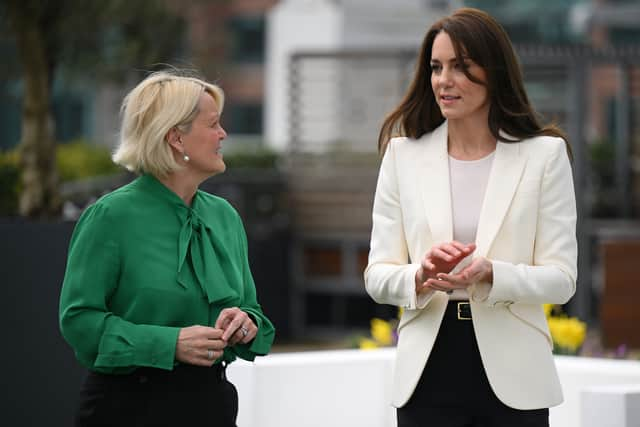
– On whether Dame Alison Rose could have stayed on
“Theoretically it would have been possible. But I and Alison concluded that would just be too difficult and that maintaining the position of the bank and her authority in the bank would just be too much of a struggle,” Sir Howard said.
“I clearly regret the way things have turned out. We’ve lost a great leader as a result, but I now have to look forward.”
– On Government interference
“The Government in the normal way during my eight years here has not interfered with commercial decisions in this bank,” Sir Howard said.
“And indeed, I’m grateful to them for that. They have allowed us to manage the bank in a way that is in the interest of all the shareholders.

– On whether he should resign, and on the board’s culpability
“The situation is that we’ve got a search for a chair replacement under way which is a completely planned process, and my assessment, and indeed that was supported a day or two ago by the economic secretary, that the right course is to let that process continue,” Sir Howard said.
He added: “There are two underlying questions here with which the bank has been criticised.
“One is the handling of Nigel Farage’s accounts and there the board was not involved as indeed it should not have been.
“The second was the way in which that information was discussed with a journalist and again, the board was absolutely not involved in that.
– On new proposals from the Government, and potential pitfalls
“There’s been a sensible discussion with the economic secretary about how the rules and guidance and possibly law may be changed,” Sir Howard said.
“I have to say I have some sympathy with the idea that some greater clarity would be helpful in this. I think we’d actually welcome that.”
He added: “As for the risks, and I think the Government’s well aware of it, one is that you could, if you are tougher about circumstances in which accounts can be closed, make it somewhat easier for potential criminals, because you can’t close (their accounts) quite as quickly.”