
Shailene Woodley on coming eye to eye with an elephant for Planet Earth III
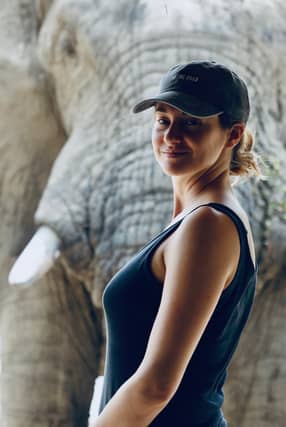

Sending a Hollywood actor into what’s known as the ‘Dead Heart of Africa’ sounds like the plot of a nail-biting blockbuster. But when Shailene Woodley was offered the opportunity to join BBC filmmakers in largely off-limits Central African country Chad, she seized the opportunity knowing she might “never get another chance”.
Lost luggage and armed convoys didn’t faze the intrepid 31-year-old, whose latest role is as official ambassador for Planet Earth III. Footage from her time spent in the country, following the remarkable story of communities reversing a devasting trend for ivory poaching, will air in the Deserts & Grasslands episode on Sunday November 5 at 6.15pm, BBC One.
A committed climate activist, Woodley has a deep passion for the natural world and urges all of us to get onboard and make a difference.
Here, she talks about her experience during filming.
Few people have even heard of Chad. What were your first impressions?
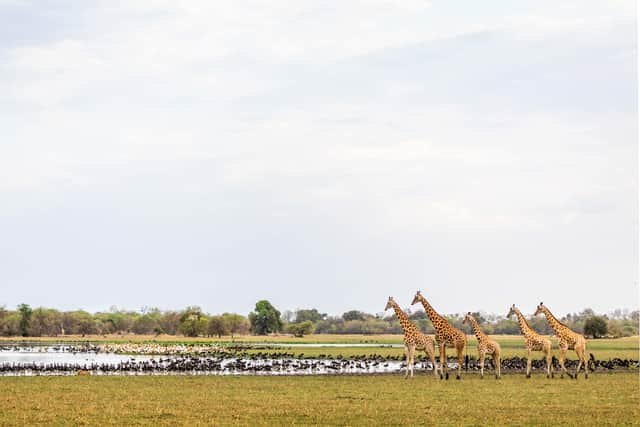
“From the minute we landed in the middle of Zakouma National Park by plane and we got in a truck heading towards our camp, we saw hundreds of species in a 30-minute drive,” says Woodley. “On safari, you’re lucky if you see a few different animals, but there were hundreds of birds, insects and mammals. It was so overwhelming.”
What was it like sleeping in the wilderness?
What was your closest animal encounter?
“Looking directly into an elephant’s eye. I remember thinking he was choosing to trust us in that moment. It felt very conscious and decided and that was something I couldn’t have anticipated, and something that you can’t argue. Having a language of love between two different species felt magical. There’s no other word for it.”
Did your experience in Chad change your opinion of nature documentaries?
“I’m always in awe of nature documentaries. I enjoyed the previous Planet Earth and Blue Planet series. But to actually see the team out in the middle of the bush for hours on end completely by themselves, in a world where there are lots of natural and human threats, was something else. When someone dedicates their life, soul, time and energy to the natural world, I’m in constant awe. That is what BBC does with the natural history unit.”
There’s a big focus on conservation in the series. What can viewers do to protect the world around us?
“It really has to start from making a conscious choice about how you want to show up in the world – trying to live with a little more love, a little more kindness, a little more softness. I’m still learning how to be all of those things.
At what age did you start worrying about the environment?
“I grew up in Los Angeles, where we have the Santa Ana winds [hot and dry winds from the desert, creating critical fire weather conditions]. I was walking across my high school quad and the students’ post lunch trash was swirling up with leaves and pine needles. It affected me as a little 14-year-old. It didn’t make sense. That was the first time that I really felt like I had to do something about it and say, ‘Hey, I care’. We have to recognise that without nature we couldn’t exist.”
It’s easy to engage with megafauna on safaris, but how can regular people in cities connect with the natural world?
“Nature doesn’t have to be big. It can be an ant walking across your kitchen counter. It can be the eyes of your lover. It can be a tree in a sidewalk. If we distil that down to its simplest form, we ourselves are nature, so if I’m not treating myself with self-love and self-worth and kindness then it’s going to be difficult for me to empathise with the natural world.”
What did you learn from your time in Chad?
Finally, what are your thoughts on Sir David Attenborough?
“We don’t really have many people with massive legacies. He has a devotion to education, not in a preachy way, but in a really generous, encouraging and empowering way. When I was younger and watching the shows, I wasn’t really thinking so much about David Attenborough, as much as I was thinking about the programme as a whole. It takes hundreds of people behind the scenes to make each episode. But there is something very warm and inviting about him that’s remarkable. He’s given his entire life to help progress this planet. In a lot of ways, he’s truly a hero.”