
Shinzo Abe’s party vows to finish his work after big win in parliamentary vote


Former Japanese prime minister Shinzo Abe’s party has vowed to use its sizable victory in a parliamentary election to achieve his unfinished goals, including strengthening the military and revising the country’s pacifist post-war constitution.
The governing Liberal Democratic Party and its junior coalition partner Komeito secured a majority in the parliament’s upper house in elections on Sunday that took on new meaning after Mr Abe was assassinated while campaigning on Friday in a crime that shook the nation.
The result means current Prime Minister Fumio Kishida could rule uninterrupted until a scheduled election in 2025 and allows him to work on long-term policies, but the constitutional amendment would still face an uphill battle.
Mr Kishida welcomed the victory but acknowledged the need to unify the party without Mr Abe, who even after resigning as prime minister in 2020 remained a force in the party and national politics.
“Because we’ve lost a great leader, undeniably we could be affected in many ways,” Mr Kishida said. “Our party must unite as we face difficult issues.”
He said the response to the Covid-19 pandemic, Russia’s invasion of Ukraine and rising prices would be his priorities, but he also vowed to push for reinforcing Japan’s national security and amending the constitution, which only allows the country’s military to act in self-defence.
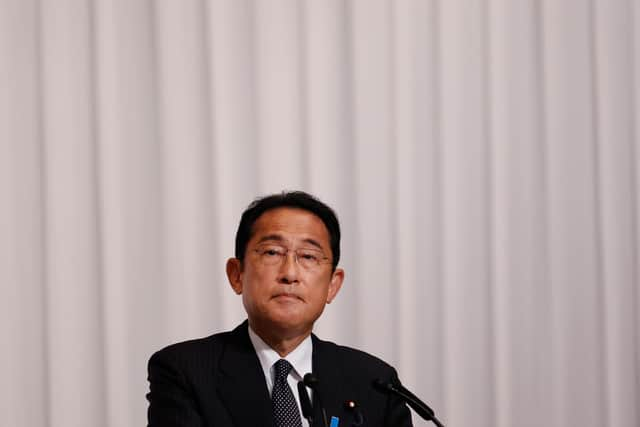
“We will inherit his will and tackle the issues he had to leave unachieved,” Mr Kishida said.
To propose a constitutional amendment, both houses of parliament need to support it by a two-thirds majority. Sunday’s vote gave the LDP-led coalition and two opposition parties open to a charter revision that margin in the upper chamber of parliament.
Alone, the governing coalition now has 146 of the house’s 248 seats. All four parties together control 179. That group of four parties also has the necessary seats in the more powerful lower house.
Mr Abe, who stepped down as prime minister two years ago, citing health reasons, said at the time he regretted leaving many of his goals unfinished, including revising the constitution.
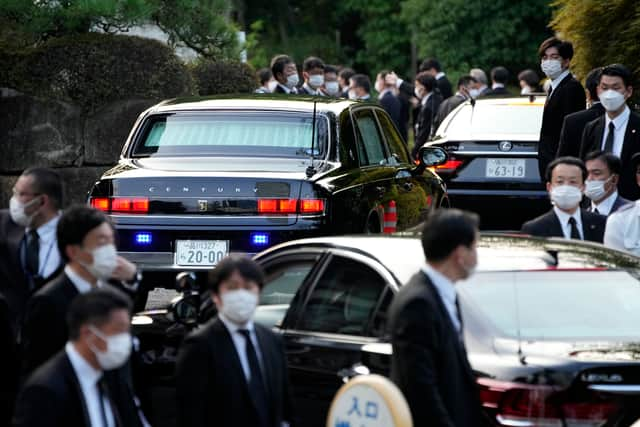
On Monday evening, a wake was held for him at a Buddhist temple in central Tokyo where Mr Kishida and top former and current political leaders, as well as ordinary mourners, paid tribute.
Japan’s longest-serving political leader, Mr Abe was the grandson of another prime minister and became the country’s youngest leader in 2006, at the age of 52. That stint in office abruptly ended a year later, also because of his health.
He returned to the premiership in 2012, vowing to revitalise the nation and get its economy out of its deflationary doldrums with his “Abenomics” formula, which combines fiscal stimulus, monetary easing and structural reforms.
He won six national elections and built a rock-solid grip on power.