
Short-sighted woman assumes debilitating headaches mean she needs new glasses but discovers she has multiple sclerosis
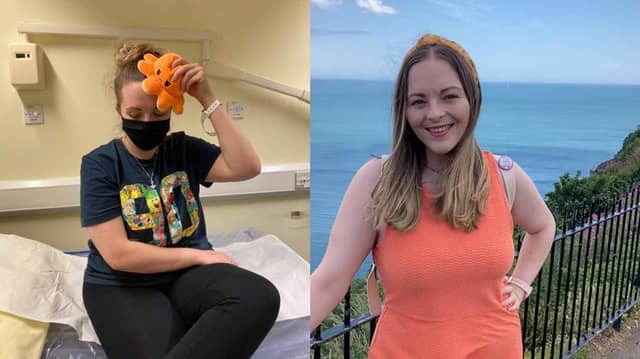

A short-sighted woman who assumed her persistent and debilitating headaches meant she needed stronger lenses was shocked when she discovered she had multiple sclerosis.
Prescribed glasses when she first experienced headaches, aged 15, ever since, Lauren Percival, 29, had found any recurrence meant she needed a new pair.

Referred to the nearby Torbay Hospital, soon after Lauren, of Torbay, Devon, had it confirmed that she had MS – a lifelong condition affecting the brain and spinal cord – saying: “It came as a complete shock.
“I never expected to be diagnosed with something like MS.
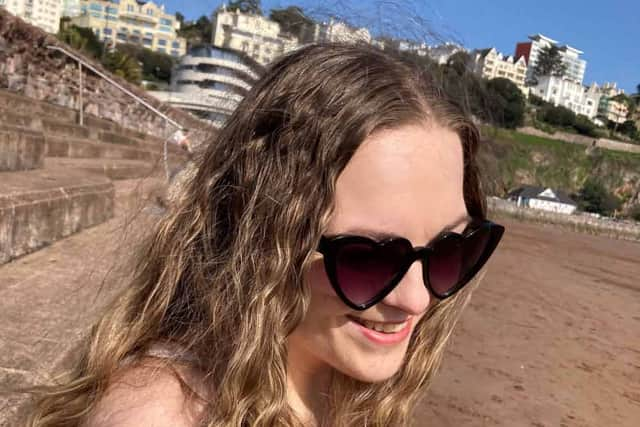
She added: “Since then, I have always assumed any recurrent headaches were linked to needing a new prescription for my lenses.
“Over time, though, my headaches have got progressively worse to the point where I can’t work at the moment, as the pain is too severe.”
Lauren, who lives with her boyfriend who she does not want to name, says everything reached fever pitch in November 2021, after she fainted.
She said: “I felt awful one evening, I was really faint and overheating.
“I vomited and ended up fainting. I went to bed and the next day, my headaches were even worse.
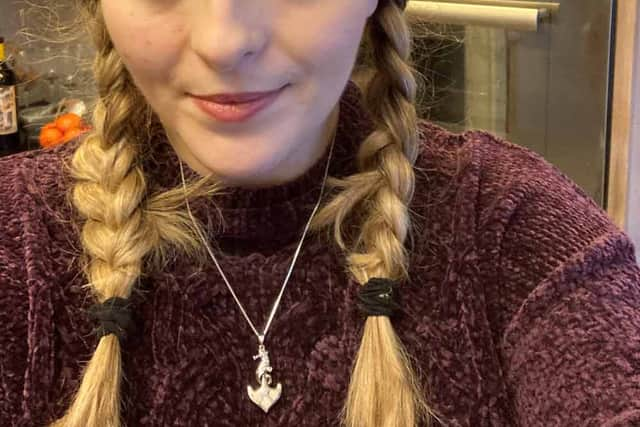
She added: “The light was hurting my eyes and I was also having balance issues and memory loss.”
Assuming she needed a new prescription, Lauren’s boyfriend helped her walk to their local Specsavers in Torquay.
She said: “They didn’t have any appointments available, but they booked me an emergency appointment for the next day, which was a Monday.”
She added: “When they couldn’t find anything to indicate I needed new glasses, but aware of how bad my headaches were, they did further testing on my retina.
“This flagged up that I have quadrantanopia, which refers to the loss of vision in one of the quarters of the visual field.

The following day at Torbay Hospital, she had everything from eye and blood tests to balance and coordination tests and a lumbar puncture, to collect spinal fluid for testing.
She said: “They couldn’t pin down what was wrong with me.
“They wanted to keep me overnight, but agreed to let me go home when I promised to return the following morning for an MRI scan.”
Lauren’s brain scan immediately identified an abnormality.
She said: “I could see there was some sort of smudge on my brain when I looked at the results and I was placed on a five-day course of high dose steroids, which seemed to ease my symptoms.”
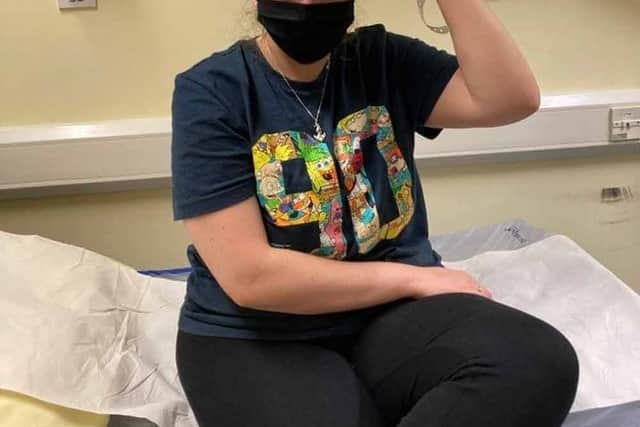
She said: “I was sent for more MRI scans in May – one on my brain and one on my spinal cord.
“There were two lesions, which is not what anyone wants to hear, but it was at that point that they made the diagnosis.”
Lauren was diagnosed with multiple sclerosis which, according to the NHS, can sometimes cause serious disability, although it can occasionally be mild.
She said: “I am due to start a disease modifying therapy, or DMT in the next few months which will involve self-administered injections at home.
“Doctors are monitoring my health before I start, which is routine, because the treatment could make me more susceptible to things like chest infections, colds, and flu-like symptoms.
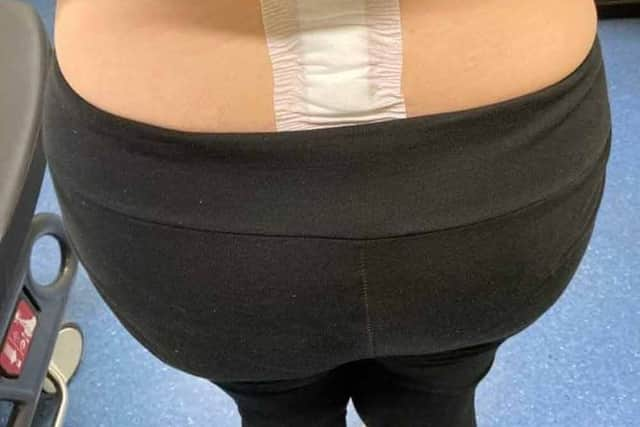
She added: “I have good days and bad days but I’m in a certain amount of pain every day.
“I struggle mostly with my peripheral vision, which affects my mobility, because I can very easily walk into something or someone not knowing they’re there. I struggle with double vision too.
“I don’t drive, but I wouldn’t be allowed to if I wanted to now.”
Still, Lauren says it is a relief to have a diagnosis.
She said: “Doctors think I went undiagnosed for three years.
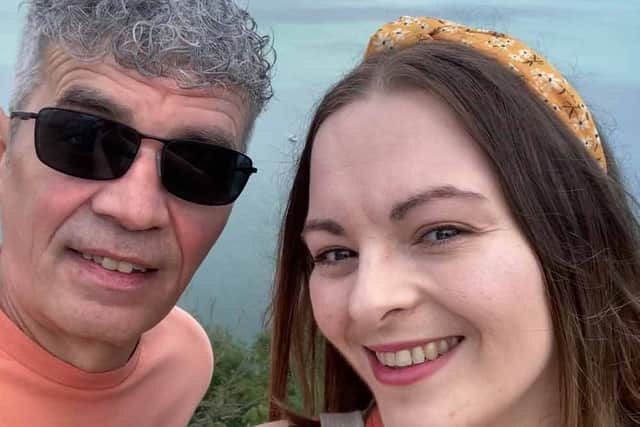
Lauren will always be grateful to her optician for spotting that something was wrong and is now keen to encourage more people to get their eyes checked.
She said: “It’s easy to forget just how important eye tests are.
“Opticians don’t just check your vision and, as in my case, they can flag up serious health problems.”
She added: “I’ve heard before that sight is the one sense people would want to keep if they lose all the others. It’s extremely important.
“I’m grateful to have been diagnosed when I was, as my MS could have progressed without me knowing.
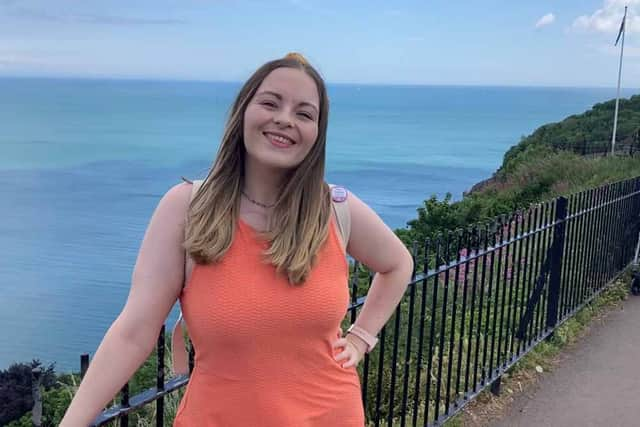
Simon Simmonds, Ophthalmic Director of Specsavers’ Torquay branch, confirms the importance of regular eye tests.
He said: “Lauren’s story shows the importance of eye tests, because optometrists are able to pick up the early signs of a person’s condition and refer them for treatment if required.
“It’s essential that people keep up with their regular eye-health checks, because not everyone realises that a sight test is more than just showing someone that they need a new prescription for their glasses or not.”