
Sick and wounded children begin crossing from Gaza to Egypt
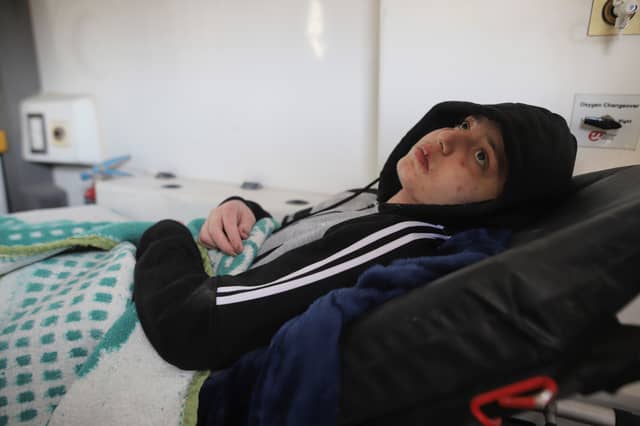

A group of 50 sick and wounded Palestinian children are travelling to Egypt for treatment through Gaza’s Rafah crossing – the first opening of the border since Israel captured it nearly nine months ago.
The reopening of the Rafah crossing represents a significant breakthrough that bolsters the ceasefire deal Israel and Hamas agreed to earlier this month.
Israel agreed to reopen the crossing after Hamas released the last living female hostages in Gaza.
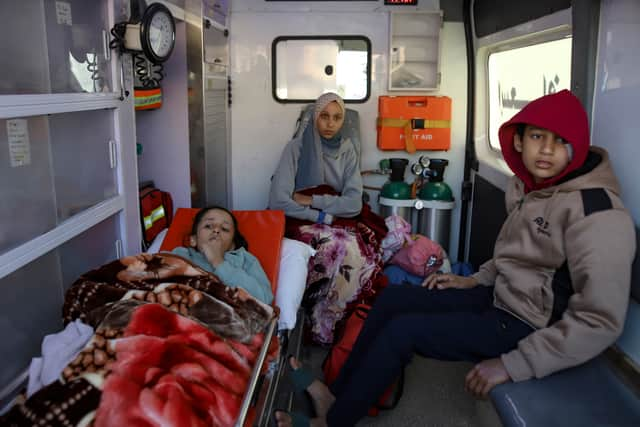
Zaher al-Wahidi, an official with Gaza’s Health Ministry, said 37 of the children had crossed into Egypt by Saturday evening.
The ministry said around 60 family members were accompanying the children.
The children are the first in what are meant to be regular evacuations of Palestinians through the crossing for treatment abroad.
“We urge for medical evacuations to be expedited through all possible routes. Thousands of lives depend on it,” World Health Organisation director-general Tedros Adhanom Ghebreyesus said on social media.
Over the past 15 months, Israel’s campaign against Hamas in retaliation for the militants’ attack on southern Israel in October 2023 has decimated Gaza’s health sector, leaving most of its hospitals out of operation.
Care for the population has been crippled, even as tens of thousands of Palestinians were injured by Israel’s bombardment and ground offensives.
Mohammed Zaqout, the director of hospitals in Gaza’s health ministry, said more than 6,000 patients were ready to be evacuated abroad, and more than 12,000 patients were in urgent need of treatment.
He said the small numbers set to be evacuated will not cover the need, “and we hope the number will increase”.
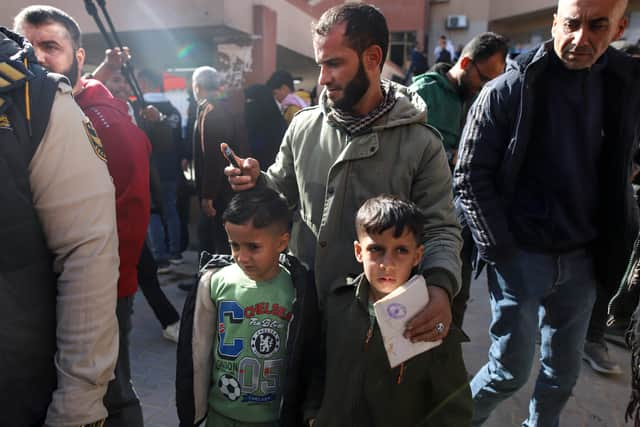
Even before the Gaza war began, the Rafah crossing represented a crucial escape valve from the territory.
An Israeli-Egyptian blockade aimed at containing Hamas has crippled health facilities and infrastructure in Gaza for the past 15 years. Palestinians routinely applied for permission to travel outside the territory for lifesaving treatments not available in Gaza, including chemotherapy.
It took some diplomatic gymnastics to reopen the crossing and overcome security disputes between Israeli, Egyptian and Palestinian officials.
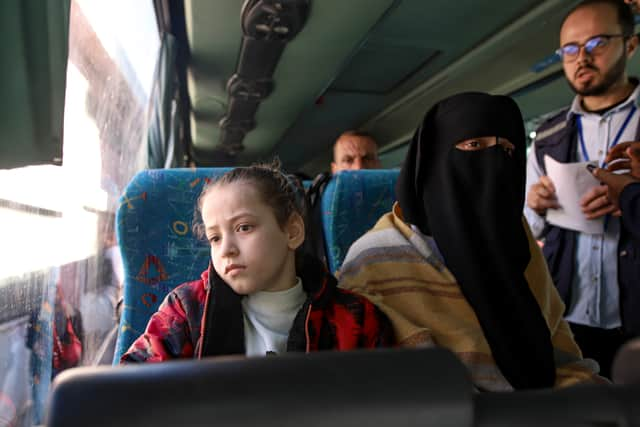
Management of the crossing is a sensitive issue. Israel accused Hamas of using its control of the border to smuggle weapons – a claim Egypt has denied. Israel has also refused to allow the Palestinian Authority to officially take over management of the crossing.
Instead, the crossing will be staffed by Palestinians from Gaza who previously served as border officers with the Palestinian Authority, but they will not be allowed to wear official PA insignia, a European diplomat said.
Israel has screened the officers to ensure they have no affiliation with Hamas, the European diplomat added.
European Union monitors will also be present, as they were before 2007.
Negotiations on the second phase of the deal – which calls for a permanent ceasefire, full Israeli withdrawal from Gaza and the release of any remaining hostages – are supposed to begin on Monday. Israel has resisted the notion that the PA would control post-war Gaza.