
Single mother ‘lost daughter overnight’ after child’s rare condition left her locked in her body unable to walk or talk
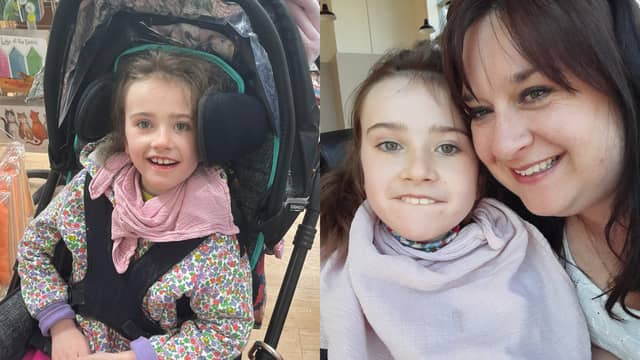

A single mother felt like she “lost (her) daughter overnight” after her child developed a rare condition which keeps her locked in her body and prevents her from walking and talking.
Poppy Allard, now 10, from near Folkestone in Kent, was born a seemingly healthy baby and was babbling and picking things up as expected, when, at around 15 months, her behaviour suddenly changed.

Poppy was referred to Clinical Genetics at Guy’s Hospital in London, where at the age of two she was diagnosed with Rett Syndrome, an incurable disease which impacts brain development that affects around one in 10,000 girls born each year, according to the NHS.
Rett Syndrome affects girls almost exclusively and results in severe mental and physical disability, but patients still retain their cognitive abilities, leaving them trapped in a body which will not do what the brain tells it to.
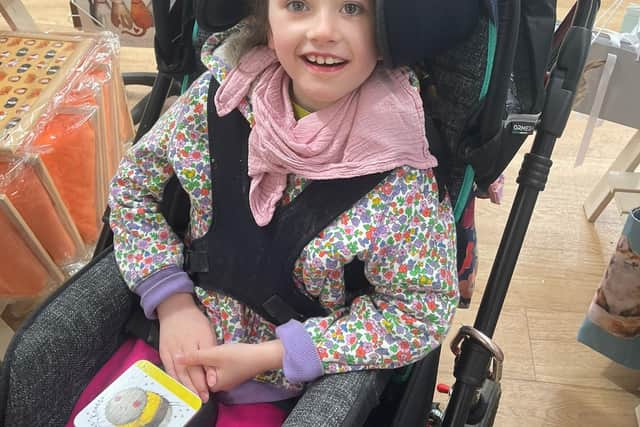
Mother Victoria, whose second child Daisy is 13, told PA Real Life: “Poppy was about a year old and everything up until that point seemed absolutely normal.
“All her milestones were coming up as you would expect … I didn’t really think for a minute that there was any problem.
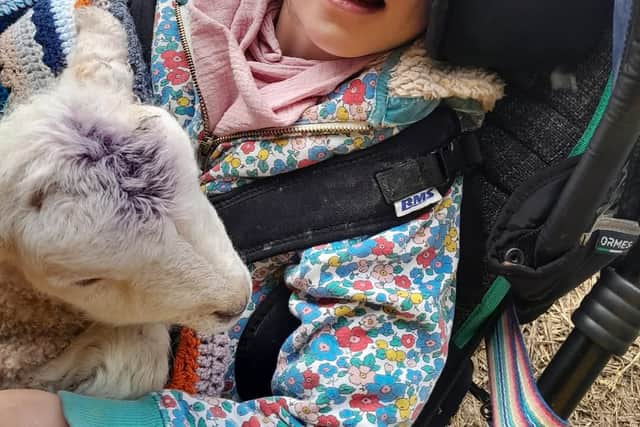
Poppy was born in 2014, and at first she seemed to be a healthy baby.
“She sat up, she was very engaging, she started to smile and babble,” Victoria said.
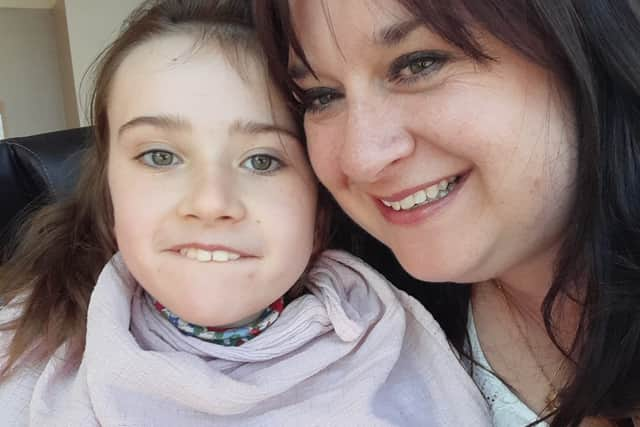
“I didn’t really think for a minute that there was any problem.”
But a few months after her first birthday, everything suddenly changed.
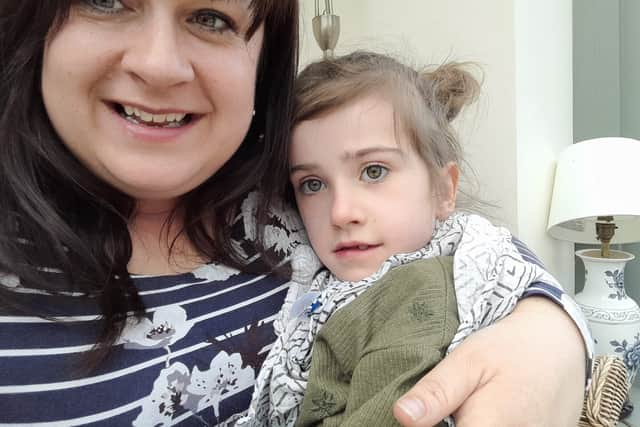
“As she passed the year mark … she sat up, but did not move and we were not getting any more development with her motor skills, so she didn’t start to pull herself up on furniture and things like that,” Victoria said.
“And then on the particular day, it was almost like I lost her overnight, she suddenly just stopped engaging.
“She stopped looking at me, she didn’t answer her name – she wasn’t making any noises.
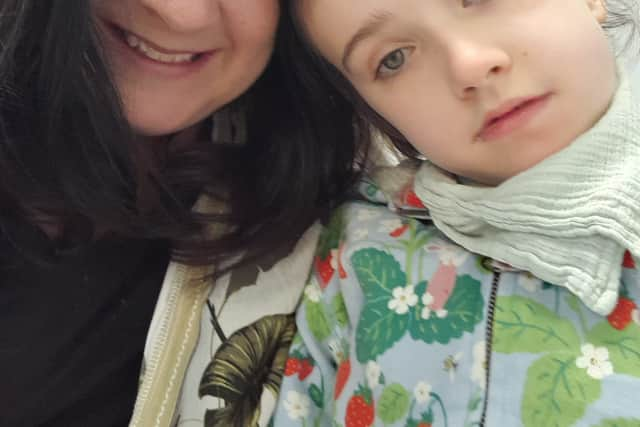
Rett Syndrome typically becomes apparent after six to 18 months of age when children often lose skills they had gained and stop reaching further milestones.
When Poppy’s troubling symptoms started, she was initially referred to a physiotherapist, who suggested she might have a genetic or chromosomal disorder because she had low muscle tone.

Victoria described waiting for a diagnosis as a “harrowing time, with many sleepless nights”.
A common symptom of Rett Syndrome is seizures, and Poppy experienced her first seizure at age three, although they have been relatively infrequent.
“I was actually driving in the car, and she was in the back of her car seat, and her eyes rolled to the back of her head, and she became very, very vacant,” Victoria said.

Victoria said it is a “blessing and a curse” that “cognitively, she’s like an average child” who understands things easily, adding it is a “really common misconception” that children with Rett Syndrome cannot have strong cognitive abilities.
Poppy uses Eye Gaze technology, where she looks at symbols on a screen that enable her to communicate.
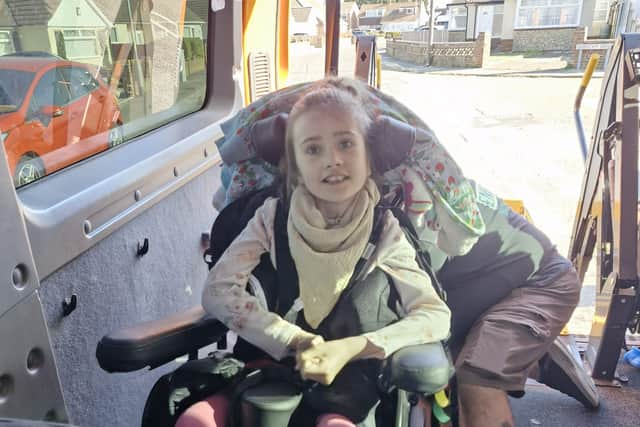
Poppy will be undergoing surgery in both hips in the summer and will have metal rods inserted into her spine in a few years as she has developed scoliosis.
Victoria said caring for Poppy and her other child Daisy while being a single mother had been “extra scary”, although she had had support from her parents.
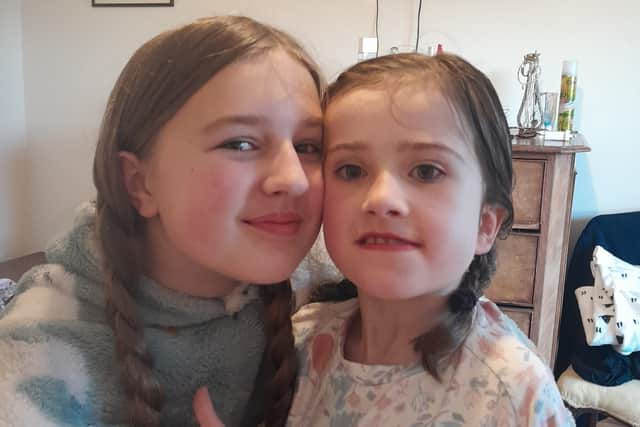
“Basically, it makes all of the uncertainties of the condition a lot worse I think, because if there’s someone working with you as a team to do things together, it’s very different.
“We don’t know what the future holds. We don’t know what’s coming, but we just have to kind of roll with it and deal with what happens as it comes.”
But Poppy’s “very special personality” has won the hearts of healthcare workers and professionals who have helped her in her development.
“I call her a ray of sunshine, because despite everything that she has to face and everything going on for her, she’s so cheerful,” Victoria said.
“She wins the hearts of people that she meets … people want to work hard to look after her because of how bright her personality shines through.”
Victoria said she is “really grateful” to her sister for fundraising for Reverse Rett.
“It really means a lot to me,” she said.
To find out more about Hannah’s fundraiser, go to: gofundme.com/f/hannahs-100km-triathlon-mashup-for-reverse-rett-poppy.