
Smoking rates ‘historically low’ thanks to 2006 ban, health officials say


Scotland has “historically low smoking rates” thanks to the ban on smoking in enclosed spaces that was introduced 20 years ago, health officials have said.
Public Health Scotland (PHS) said smoking rates in Scotland have halved and thousands of lives have been saved since smokefree legislation came into force on March 26 2006.
In a report published on Tuesday, the body said the legislation has also protected non-smokers from passive smoking, resulting in fewer deaths and hospitalisations from heart attacks and strokes, and improving the health of pregnant women and their babies.
Additionally, PHS said the ban has led to “significant shifts” in attitudes towards tobacco in Scotland, and that smoking is now seen as less socially acceptable.
Dr Garth Reid, consultant in public health at PHS, said: “Smoking is one of the biggest causes of ill health and premature death in Scotland.
“Thanks to the smoking ban we have historically low smoking rates in Scotland, and we’re keen to encourage more people to give up smoking as we progress to becoming smoke-free in 2034.
“Giving up smoking is one of the best things you can do for your health, and the benefits start to happen quickly - even for people who have smoked for a long time.
“Whether you’re ready to stop, or just beginning to think about it, the NHS Scotland stop smoking service Quit Your Way and your local pharmacy are here to help you stop smoking and stay stopped in a way that is right for you.”
Scotland became the first UK nation to ban smoking in enclosed public places, including workplaces, hospitality venues, public transport and healthcare facilities.
Scottish Government set out a target in 2013 of achieving a “tobacco-free” Scotland, in which no more than 5% of the population smokes, by 2034.
Dr Rishma Maini, also a consultant in public health at PHS, said: “Scotland’s smoking ban shows that bold, preventative action works.
“We now have an opportunity to apply that same ambition to other major drivers of ill health, including overweight and obesity.
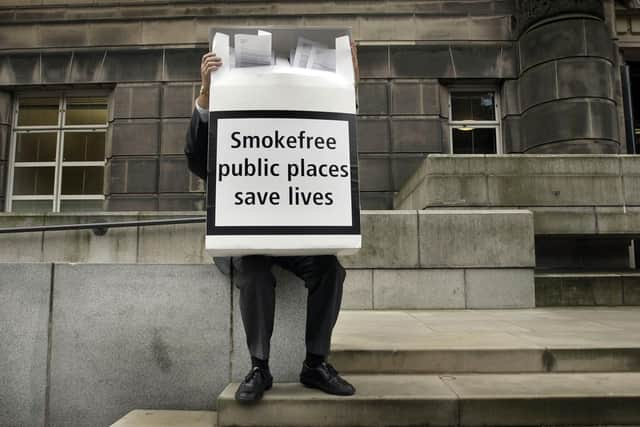
“If we get this right, we can deliver the same scale of change again, improving health and wellbeing for people across Scotland.”
Public health minister Jenni Minto said: “Banning smoking in indoor public places was a landmark moment for Scotland and one we can all be proud of.
“Since 2006, cigarette smoking has almost halved. To support people to quit we fund NHS smoking cessation services across Scotland, with more than 30,000 quit attempts recorded last year with their help.
“I’m pleased the Tobacco and Vapes Bill, which is in its final stages, provides new powers to Scottish ministers to expand existing smoke-free spaces as well as create vape and heated tobacco-free spaces.
“This will help ensure we meet our target of a tobacco-free Scotland by 2034 and further reduce exposure to health-harming products.”
Joseph Carter, head of Asthma + Lung UK Scotland, said: “The ban ensured that smoking inside public places has thankfully ceased, with the link between socialising and smoking broken.
“Since then, generations of young people have never started smoking and have largely avoided the harms caused by passive tobacco smoke.
“This has helped to bring down smoking rates, but there is much still to be done if a smoke-free Scotland by 2034 is to be achieved.
“For example, we would like to see more targeted funding for smoking cessation especially in more disadvantaged areas where smoking rates are higher and a smoking ban in places where children are present, for example around schools and playgrounds.”