
South Korean authorities debate tougher measures to detain impeached President


South Korea’s anti-corruption agency and police have debated more forceful measures to detain impeached President Yoon Suk Yeol after their previous attempt was blocked by the presidential security service last week.
The discussions highlighted the obstacles facing the criminal investigation into Mr Yoon’s martial law decree on December 3, which led to his impeachment on December 14.
The one-week detention warrant was set to expire at midnight, but the agency requested a new court warrant to extend the timeframe for taking Mr Yoon into custody.
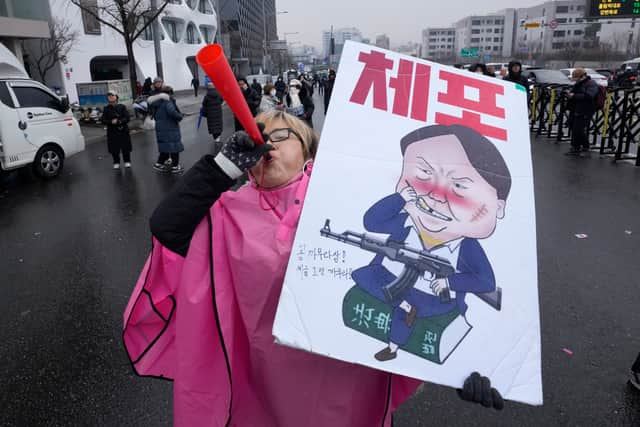
Executing those warrants is complicated as long as Mr Yoon remains in his official residence.
The President has described his power grab as a necessary act of governance against a liberal opposition bogging down his agenda with its legislative majority and has vowed to “fight to the end” against efforts to oust him.
While martial law lasted only several hours, it set off turmoil that has shaken the country’s politics, diplomacy and financial markets for weeks and exposed the fragility of South Korea’s democracy while society is deeply polarised.

However, the anti-corruption agency backtracked hours later after the police stated it could be legally problematic for them to be entirely responsible for Mr Yoon’s detention, given that the warrants had been obtained by the agency.
The agency, which has faced questions about its competence after failing to detain Mr Yoon, said the efforts to execute the warrants would be carried out under the authority of the joint investigation team but did not clarify whether its approach would change.
Police say they plan to make a more aggressive effort to detain Yoon at the official residence, where members of the presidential security staff were seen installing barbed wire near the gate and along the hills leading up to the building.
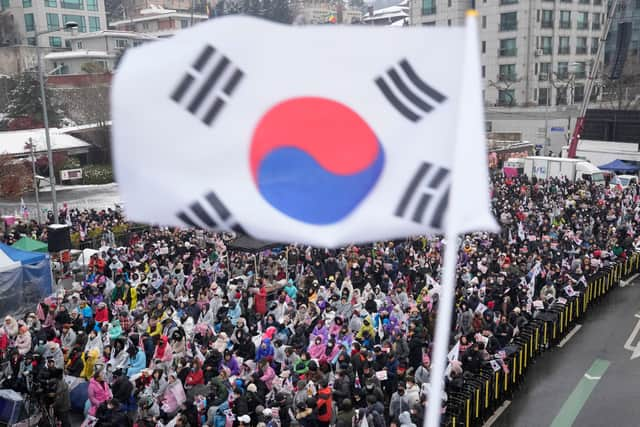
When asked about the possibility of deploying police special task forces, the official said “all available options” were being reviewed.
If investigators manage to detain Mr Yoon, they will likely ask a court for permission to make a formal arrest. Otherwise, he will be released after 48 hours.
Meanwhile, the agency has urged the country’s acting leader, Deputy Prime Minister Choi Sang-mok, to instruct the presidential security service to comply with the execution of the detainment warrant. Mr Choi has yet to publicly comment on the issue.
Mr Yoon’s lawyers argued the detention and search warrants against the president cannot be enforced at his residence due to a law that protects locations potentially linked to military secrets from search without the consent of the person in charge – which would be Mr Yoon.

Mr Yoon’s lawyers on Monday filed complaints with public prosecutors against the anti-corruption agency’s chief prosecutor, Oh Dong-woon, and six other anti-corruption and police officers for orchestrating Friday’s detainment attempt, which they claim was illegal.
The lawyers also filed complaints against the country’s acting national police chief, the acting defence minister and two Seoul police officials for ignoring the presidential security service’s request to provide additional forces to block the detention attempt.
The lawyers said they also plan to file complaints against some 150 anti-corruption and police investigators who were involved in Friday’s detention attempt.
The anti-corruption agency has been weighing charges of rebellion after Mr Yoon declared martial law and dispatched troops to surround the National Assembly. Legislators who managed to get past the blockade voted to lift martial law hours later.
His fate now lies with the Constitutional Court, which has begun deliberations on whether to formally remove Yoon from office or reinstate him.