
South Korean court orders two Japanese firms to compensate wartime workers
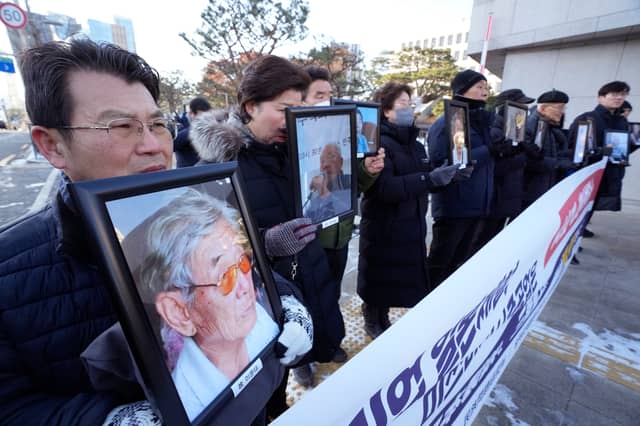

South Korea’s top court has ordered two Japanese companies to financially compensate more of their wartime Korean workers for forced labour.
Previous verdicts in 2018 caused a huge setback in relations between the two countries.
But observers say Thursday’s ruling will be unlikely to hurt bilateral ties much since Seoul and Tokyo, now governed by different leaders, are pushing hard to bolster their partnerships in the face of shared challenges such as North Korea’s evolving nuclear threats and China’s increasing assertiveness.
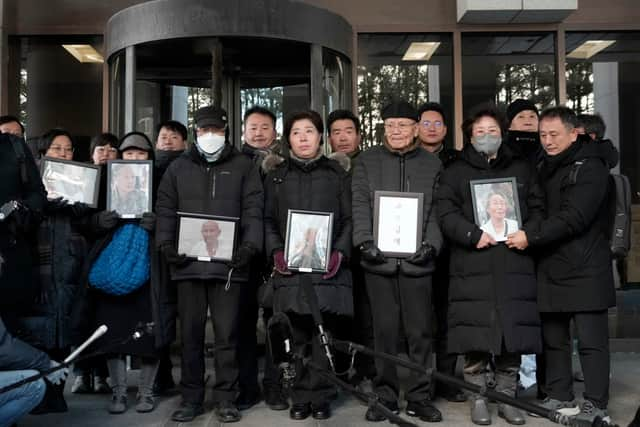
The court also said Nippon Steel Corp must give 100 million won to each of seven Korean plaintiffs for similar colonial-era forced labour.
In two separate verdicts in 2018, the top South Korean court ordered Mitsubishi and Nippon Steel to compensate a total of 15 other Korean employees for forced labour.
That irked Japan, which has insisted all compensation issues were already settled by a 1965 bilateral treaty that normalised their diplomatic relations.
But the 2018 South Korean court rulings said the treaty cannot prevent individual rights to seek compensations for forced labour because Japanese companies’ use of such labourers were “acts of illegality against humanity” that were linked to Tokyo’s illegal colonial occupation and its war of aggression.
In Thursday’s ruling, the South Korean Supreme Court cited that argument in one of the 2018 verdicts, saying it paved the way for “a judicial remedy for forced labour victims within Republic of Korea”.
Japan’s Chief Cabinet Secretary Yoshimasa Hayashi called the ruling “absolutely unacceptable” as it clearly violated the 1965 treaty.
“I felt so sad when I heard the name of (my father) being stated as the deceased at today’s trial, but I was still really glad that we won — though it’s a bit late,” said Joo Soon-ja, daughter of the late Joo Seok-bong, a forced labourer
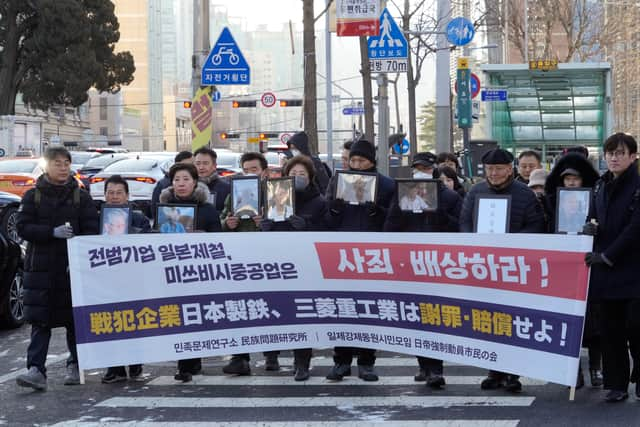
The Seoul-Tokyo relations, however, began thawing after South Korea’s current conservative president, Yoon Suk Yeol, announced in March that his country would use a local corporate fund to compensate the forced labour victims without demanding Japanese contributions.
Japanese Prime Minister Fumio Kishida later expressed sympathy for the suffering of Korean forced labourers during a Seoul visit. The two countries revived high-level talks and withdrew economic retaliatory steps against each other.
Eleven of the 15 former forced labourers or their families involved in the 2018 rulings had accepted compensation under Seoul’s third-party reimbursement plan, but the remaining four still refuse to accept it, according to their support group.
“I believe the South Korean government will continue its utmost effort in order to gain the understanding of the plaintiffs,” Mr Hayashi said.
Mr Yoon’s push to improve ties with Japan drew strong backlash from some of the forced labour victims and liberal opposition politicians, who have demanded direct compensation from the Japanese companies.
But Mr Yoon defended his move, saying it is essential to boosting ties with Japan to jointly cope with North Korea’s advancing nuclear arsenal, the intensifying US-China rivalry and global supply chain challenges.
On Thursday, the two countries held their first high-level economic talks in Seoul in about eight years.