
Spaniards march across dozens of cities in protest over growing housing crisis
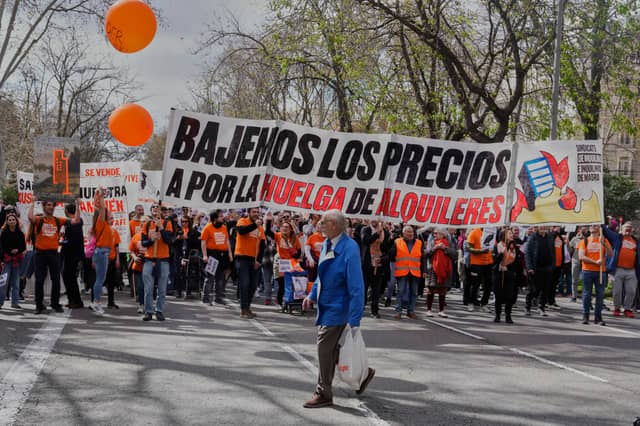

Protesters have returned to the streets across Spain to voice their anger over high housing costs.
Thousands marched in the capital, Madrid, and more than 30 other cities in a demonstration organised by housing activists and backed by Spain’s main unions.
The housing crisis has hit particularly hard in Spain, where there is a strong tradition of home ownership and scant public housing for rent.
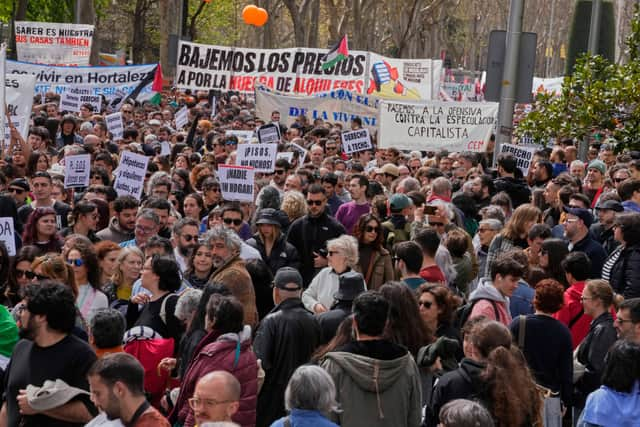
A generation of young people say they have to stay with their parents or spend big just to share an apartment, with little chance of saving enough to one day purchase a home.
High housing costs mean even those with traditionally well-paying jobs are struggling to make ends meet.
Mari Sanchez, a 26-year-old lawyer in Madrid, said: “I’m living with four people and still, I allocate 30 or 40% of my salary to rent. That doesn’t allow me to save. That doesn’t allow me to do anything.
“It doesn’t even allow me to buy a car. That’s my current situation, and the one many young people are living through.”
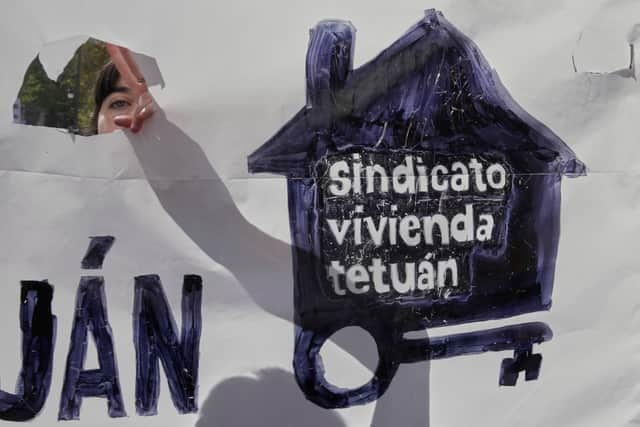
Incomes have failed to keep up, especially for younger people in a country with chronically high unemployment.
Spain does not have the public housing that other European nations have invested in to cushion struggling renters from a market that is pricing them out.
Spain is near the bottom end of Organisation for Economic Co-operation and Development countries with public housing for rent making up under 2% of all available housing. The OECD average is 7%. In France it is is 14%, Britain 16% and in the Netherlands 34%.
Angry renters point to instances of international hedge funds buying up properties, often with the aim of renting them to foreign tourists.
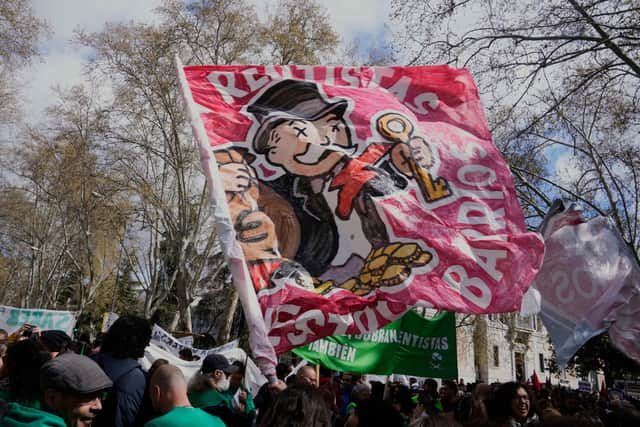
Marchers in Madrid on Saturday chanted “Get Airbnb out of our neighbourhoods” and held up signs against short-term rentals.
The central government’s biggest initiative for curbing the cost of housing is a rent cap mechanism it has offered to regional authorities, based on a price index established by the housing ministry.
But such measures have not proven enough to stop protests over the past two years. Experts say the situation likely will not improve anytime soon.
“This is not the first, nor will it be the last, (housing protest) given the severity of the housing crisis,” Ignasi Marti, professor with the Esade business school and head of its Dignified Housing Observatory, said in an email.
“We saw this with the financial crisis (of 2008-2012) when (a protest movement) lasted until there was a certain economic recovery and a reduction in the social tension,” Mr Marti added.