
Sri Lanka slashes fuel prices in welcome relief amid crisis
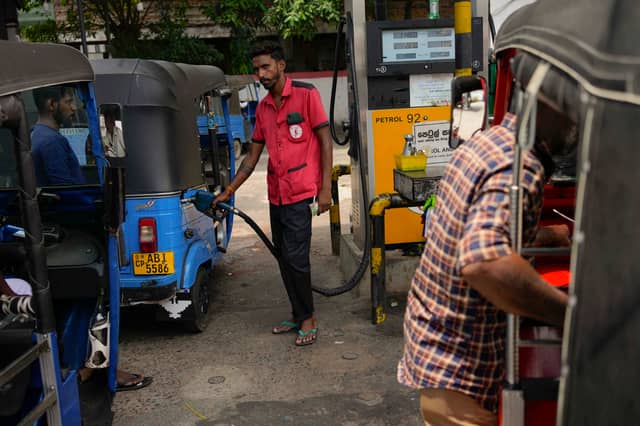

Sri Lanka’s government has announced significant cuts in fuel prices, providing welcome relief for many after a year of shortages and skyrocketing prices amid the country’s worst economic crisis.
Minister of power and energy Kanchana Wijesekara told reporters that different categories of petrol and diesel would be sold at prices from 8% to 26% lower starting midnight on Wednesday.
He said the price reduction was in line with an agreement with the International Monetary Fund (IMF), which includes adjusting fuel subsidies and prices based on production costs and global oil prices.

Last year, severe shortages of food, medicine and fuel led to street protests that forced then-president Gotabaya Rajapaksa to flee the country and resign.
In a related development, petroleum industry trade unions opposing a government decision to give licences to three companies from the United States, Australia and China to run petrol stations in Sri Lanka were threatening to strike.
The unions are protesting against a plan to partially privatise government-owned Ceylon Petroleum Corp, which now only faces competition from Indian Oil Corp.
People rushing to beat a possible strike lined up near petrol stations, fearing supply would run out.
The government plans to get out of business and privatise key semi-state-owned companies to raise revenue to build its reserves and resume payments of foreign debt.
Some opposition political parties and trade unions oppose the idea, contending that selling off state resources might compromise national interests.
Last year, Sri Lanka suspended repayment of about seven billion US dollars (£6 billion) of its foreign debt that was due in 2022. Sri Lanka’s creditors have agreed to restructure its debt, in addition to the IMF bailout.
President Ranil Wickremesinghe has said that giving up the IMF programme would compel cash-strapped Sri Lanka to repay six billion US dollars (£5 billion) to seven billion US dollars a year until 2029.