
Sri Lanka’s President and PM to resign after tumultuous protests
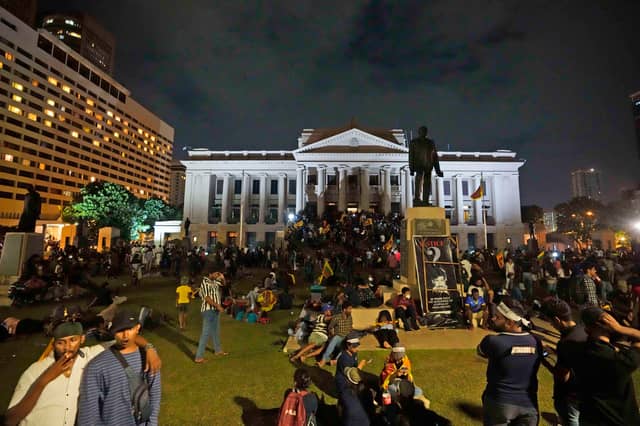

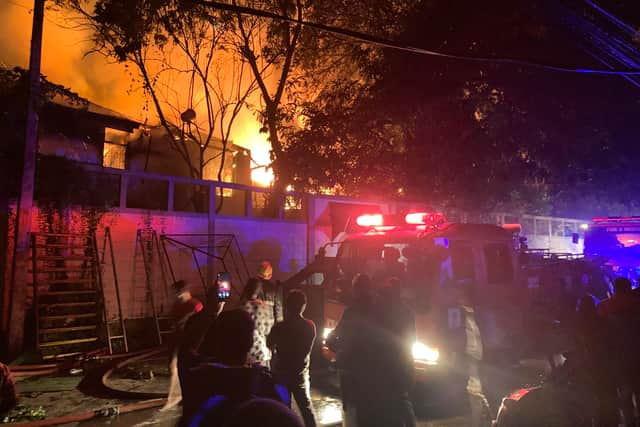
Sri Lanka’s President and Prime Minister have agreed to resign after protesters angry over the current economic and political crisis stormed both officials’ homes and set fire to one of the buildings.
Prime Minister Ranil Wickremesinghe said he will leave office once a new government is in place, hours before the speaker of the Sri Lankan parliament said President Gotabaya Rajapaksa would step down on Wednesday.
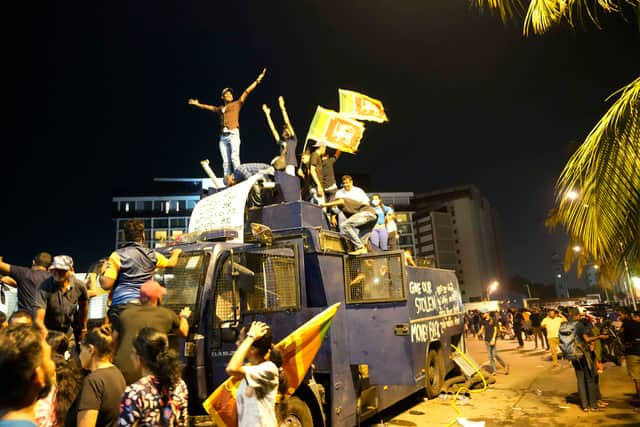
Police had attempted to thwart promised protests with a curfew, then lifted it as lawyers and opposition politicians denounced it as illegal.
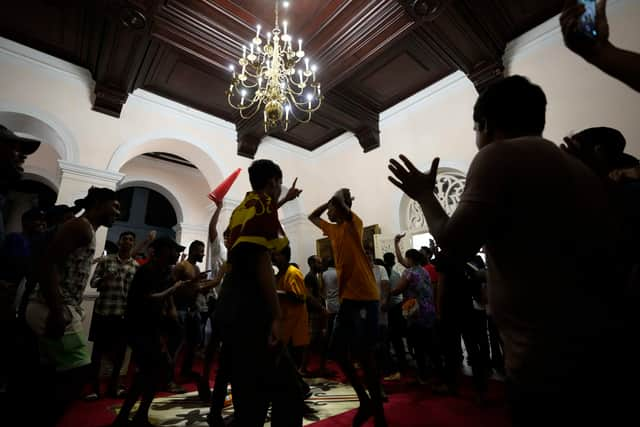
Thousands of protesters entered the capital, Colombo, and swarmed into Mr Rajapaksa’s fortified residence. Video images showed jubilant crowds taking a dip in the garden pool.
It was not clear if Mr Rajapaksa was there at the time, and government spokesman Mohan Samaranayake said he had no information about the president’s movements.
Speaker Mahinda Yapa Abeywardena said in a televised statement that he informed Mr Rajapaksa that parliamentary leaders had met and decided to request he leave office, and the president agreed.
However, Mr Rajapaksa will remain temporarily to ensure a smooth transfer of power, Mr Abeywardena added.
“He asked me to inform the country that he will make his resignation on Wednesday the 13th, because there is a need to hand over power peacefully,” Mr Abeywardena said.
Opposition legislator Rauff Hakeem said a consensus was reached for the speaker of Parliament to take over as temporary president and work on an interim government.
Mr Wickremesinghe announced his own impending resignation but said he would not step down until a new government is formed, angering protesters who demanded his immediate departure.
“Today in this country we have a fuel crisis, a food shortage, we have the head of the World Food Program coming here and we have several matters to discuss with the IMF,” Mr Wickremesinghe said.
“Therefore, if this government leaves there should be another government.”
Mr Wickremesinghe said he suggested to the president to have an all-party government, but did not say anything about Mr Rajapaksa’s whereabouts. Opposition parties were discussing the formation of a new government.
But people’s patience wore thin as shortages of fuel, medicine and cooking gas only increased and oil reserves ran dry.
The country is relying on aid from India and other nations as leaders try to negotiate a bailout with the International Monetary Fund.
Months of demonstrations have all but dismantled the Rajapaksa political dynasty, which has ruled Sri Lanka for most of the past two decades but is accused by protesters of mismanagement and corruption.
The president’s older brother resigned as prime minister in May after violent protests saw him seek safety at a naval base.
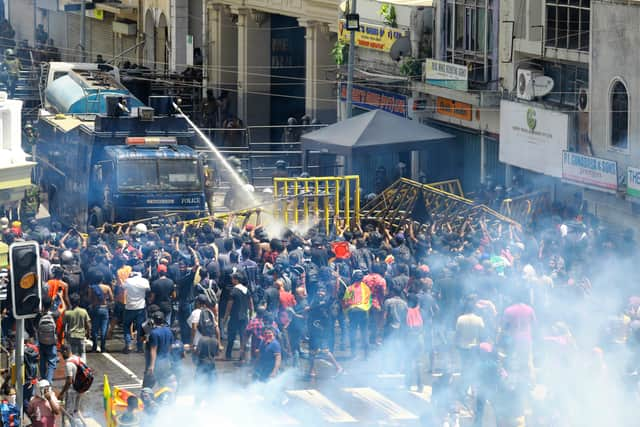
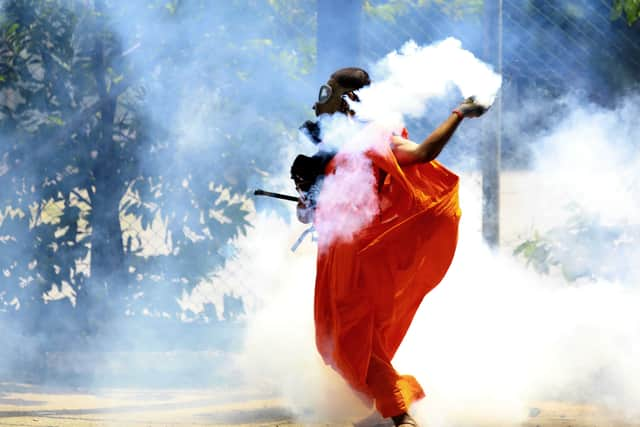
At least 34 people including two police officers were hurt in scuffles. Two were in critical condition, while others sustained minor injuries, according to hospital officials.
Privately owned Sirasa Television reported that at least six of its workers, including four reporters, were hospitalized after being beaten by police while covering the protest at the prime minister’s home.
Sri Lanka Medical Council, the country’s top professional body, warned that hospitals were running with minimum resources and would not be able to handle any mass casualties from the unrest.
Protest and religious leaders said Rajapaksa has lost his mandate and it is time for him to go.
“His claim that he was voted in by the Sinhala Buddhists is not valid now,” said Omalpe Sobitha, a prominent Buddhist leader.
He urged parliament to convene immediately to select an interim president.
US ambassador to Sri Lanka Julie Chung on Friday asked people to protest peacefully and called for the military and police “to grant peaceful protesters the space and security to do so”.