
Starmer: More patients to be treated privately in bid to slash NHS waiting lists
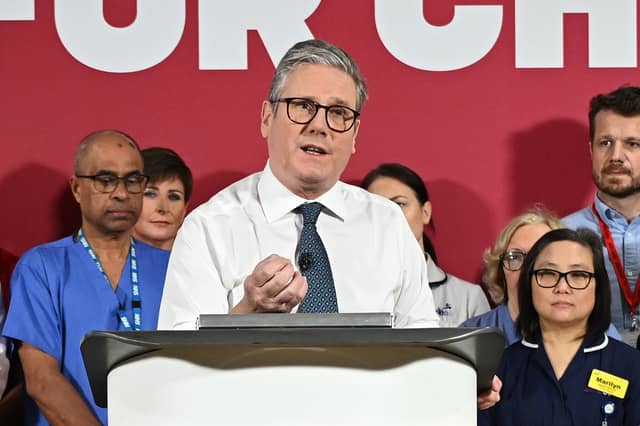

More patients will be sent for treatment in private hospitals under Government plans to slash the NHS waiting list, Sir Keir Starmer has said.
The Prime Minister used a speech to pledge “better use” of capacity in the private sector, with the NHS told it must actively tell patients when they can be treated at private hospitals.
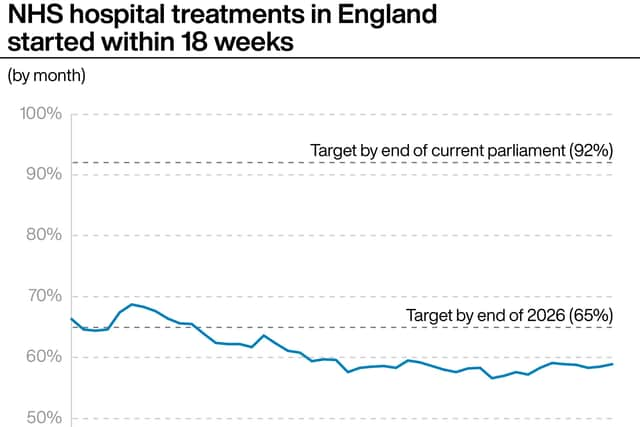
In gynaecology, there is currently a backlog of 260,000 women waiting more than 18 weeks for treatment, while in orthopaedics more than 40% of patients are waiting longer than the 18-week NHS waiting times target.
Under the deal, the independent sector has been told it must review its “clinical exclusion criteria” to ensure as “broad a cohort of patients as possible” can be treated in private hospitals, to prevent just the easiest operations being done privately.
In the wider plan, published on Monday, the Reforming Elective Care for Patients document states that, by the end of March this year, 85% of acute NHS trusts will enable patients to view appointment information via the NHS App.
By March 2027, the NHS App will also be “significantly expanded to improve information for patients in elective care”, while the app and Manage Your Referral website will become the “default route” by which patients choose where they wish to be treated.
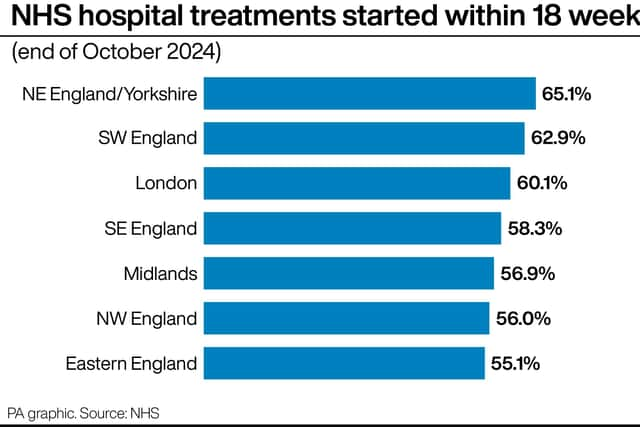
The overall plan aims to slash the number of people waiting longer than 18 weeks for NHS treatment in England by nearly half a million over the next year.
During his speech in Surrey, the Prime Minister said rebuilding the NHS is the “cornerstone” of rebuilding Britain, as he pledged to fight for it “day and night”.
Sir Keir acknowledged some people will “not like” expansion of the private sector in the NHS but he was “not interested in putting ideology before patients”.
He said that to “catapult the service into the future, we need an NHS that is reformed from top to bottom, millions of extra appointments signed, sealed and delivered with the plan that we are launching here today.”
The Government has said it will slash waiting times by:
– Creating a bigger network of community diagnostic centres, which provide appointments such as CT, MRI and ultrasound scans and endoscopies. These centres will run 12 hours a day, seven days a week. The hope is to deliver up to half a million extra appointments a year.
– Bone density scanning will be boosted through up to 13 new scanners, providing an estimated 29,000 extra scans.

– Creating 17 new and expanded surgical hubs, as championed by the Royal College of Surgeons. These hubs deliver surgery more quickly in areas such as cataract surgery and orthopaedic operations. These hubs are often separated from other hospital theatres, which means operations in the hubs are not cancelled to make way for emergency surgery.
– The creation of “super clinics”, where a wider range of clinicians working at the “top of their licence” are responsible for seeing patients while being overseen by an “accountable consultant”.

The plan further reiterates the Government pledge to meet the 18-week treatment target by March 2029.
It added: “By March 2026 the percentage of patients waiting less than 18 weeks for elective treatment will be 65% nationally.
“Every trust will need to deliver a minimum five percentage point improvement by March 2026.”
The plan also promises an improvement in hitting key cancer targets.

He said: “Productivity can’t (be) 11% lower than it was before the pandemic.
“Working people can’t be expected to subsidise the current levels of care with ever-rising taxes.
“That is the price of ducking reform, and I won’t stand for it.
“I believe in public service. I believe in the NHS. I’ll fight for it day and night. I’ll never stand for that.”
Sir Keir said the NHS must deliver convenience for patients, just as people can book holidays and find love online.
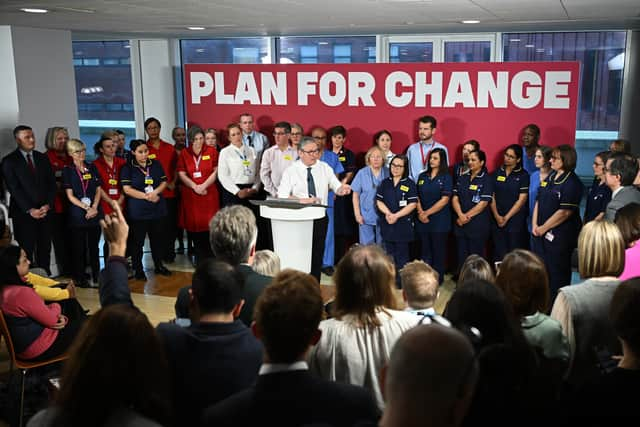
“Just think about it – every day, just a few swipes of their phone, millions of people buy food or clothes for themselves and their family, they book holidays, they even find love.
“There is no reason, no good reason, why a public, free-at-the-point-of-use NHS can’t deliver that kind of convenience. In fact, it must.”
In his speech, the Prime Minister pledged to put patients at the centre of their treatment and shift more care closer to the towns and cities where they live, which he said will make a “massive difference” to waiting times.
Meanwhile, allowing GPs to communicate directly with specialists to seek advice and diagnose people more quickly will save more than 800,000 “unnecessary” appointments and referrals every year.
Thea Stein, chief executive at Nuffield Trust, said the announcements show “the Government is serious about changing how planned health care is delivered in the long-term”.
“Many of the specific measures announced are good on paper and have some evidence behind them,” she added.
“But innovation and creating new services will take time, resource and money. The plan today has been announced with little firm detail on how it will be paid for, other than revealing that the £3 billion ring-fenced for cutting waiting times this current financial year will not be available from April.”
Dean Rogers, executive director of industrial strategy for the Society of Radiographers, welcomed the Government’s plans to increase capacity at community diagnostic centres, but called for “clear detail about how these centres are going to be staffed”.
Shadow health secretary Ed Argar said: “Patients cannot wait for more dither and delay from the Government who promised so much and so far have delivered so little.”