
Student who lost father to cancer and dedicates degree and future career to research of disease feels ‘sense of purpose’
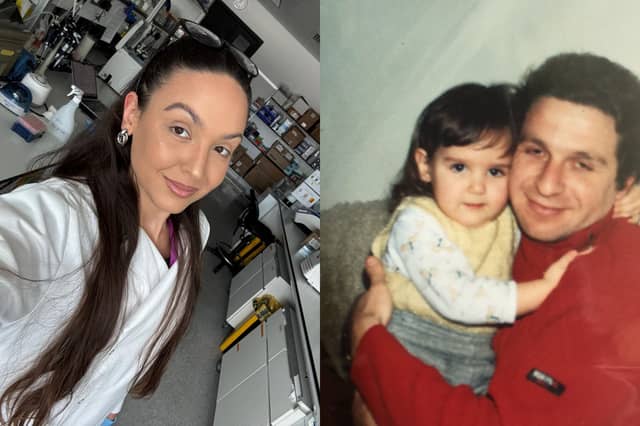

A PhD student who lost her father to colorectal cancer and has dedicated her degree and future career to research of the disease feels she has “a sense of purpose”.
Zornitsa Vasileva Kotopanova, 25, who is based in Manchester, was just five years old when her father, Vasil Stoichkov, died at the age of 31 in 2005 as a result of rectal carcinoma – a cancer that develops in the rectum and the final section of the large intestine.
As Zornitsa, who works at the Manchester Cancer Research Centre, was a child at the time, she feels she is grieving for “what could have been” – and her father’s absence was felt earlier this year when she tied the knot with her now-husband, Lyubomir Kotopanov, also 25.
Determined to make her father “proud,” Zornitsa, who is in the third year of her PhD, has dedicated her research focus to colorectal cancer and the effects of chemotherapies on the body with the aim of improving existing treatments.
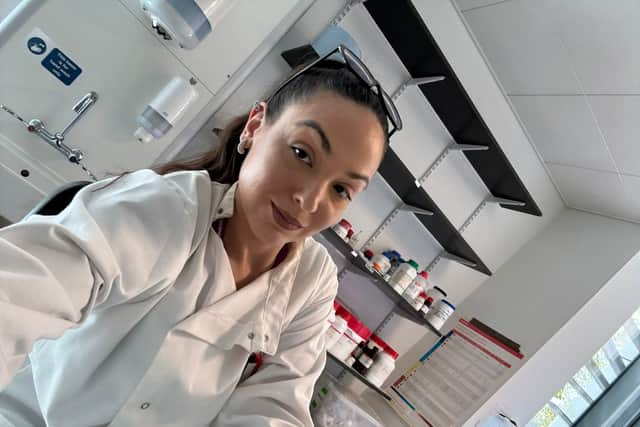
“My loss has inspired me to pursue a career in cancer research, to help people and raise awareness – and I really love what I’m doing now,” Zornitsa told PA Real Life.
“I have a sense of purpose in what I’m doing and I feel like it’s really meaningful.
“You can turn something bad, like loss or grief, into something positive that can maybe inspire other people as well.

Zornitsa said the only memories she has with her father are from a time when he was unwell.
“Most of the time, he was sick and didn’t have much energy – these are the memories I can remember,” she said.
“I’ve heard from other family members what he was like as a person.
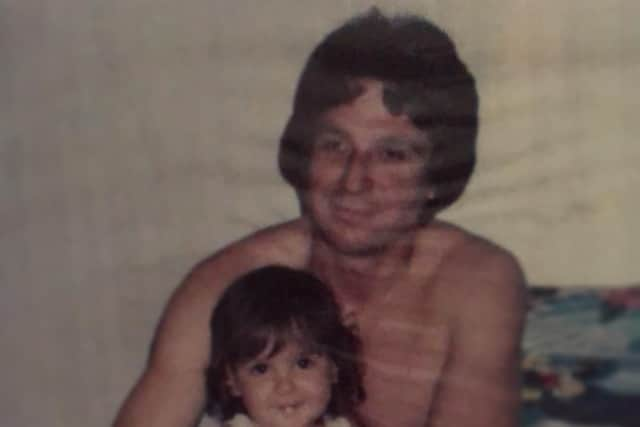
“He was also very helpful, he loved helping people, and that’s what I want to take on now as his daughter, to take on the best of him.”
Vasil was diagnosed with rectal carcinoma, a cancer that develops in the rectum and the final section of the large intestine.
Zornitsa said he also had peritoneal and liver metastases, meaning the cancer cells spread to the membrane lining the abdomen and his liver.

“It’s difficult to lose someone and not get to know them, you miss that father-daughter relationship,” Zornitsa said.
“Growing older, I started to realise his absence more and more and I missed the presence of him.
“You can grieve someone even if you don’t have a lot of memories with them, you actually grieve what could have been.

Zornitsa said her father’s absence was felt even more heavily at her wedding, which took place in her and her husband’s home of Bulgaria on July 12 this year.
“It was bittersweet – the wedding was so happy because I knew I was getting married to the right person, but then obviously I wanted to my dad to be with me,” she said.
“There were moments where I was thinking he could have walked me to the altar or seen me in my wedding dress – all those lovely moments we could have shared.”
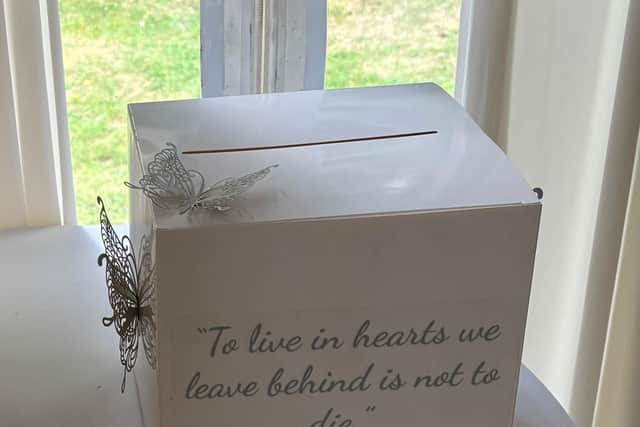
The charity is funding Zornitsa’s PhD research, and the couple and her wedding guests raised £1,200 which will go towards early-onset colorectal cancer patients being supported by the organisation.
“I wanted to honour my father but I also wanted to give back to the charity because I’m really grateful to them,” Zornitsa said.
Zornitsa’s husband, Lyubomir, who is also undertaking a PhD in the field of cancer research, shares the same birthday as her late father – December 20.

“I’m not religious but there is always something special about the number 20,” she said.
“It might sound crazy but I feel like it’s my father communicating with me and telling me I’m doing the right thing.
“I believe the connection to him is not lost – just because he isn’t physically here, the love is still there.”
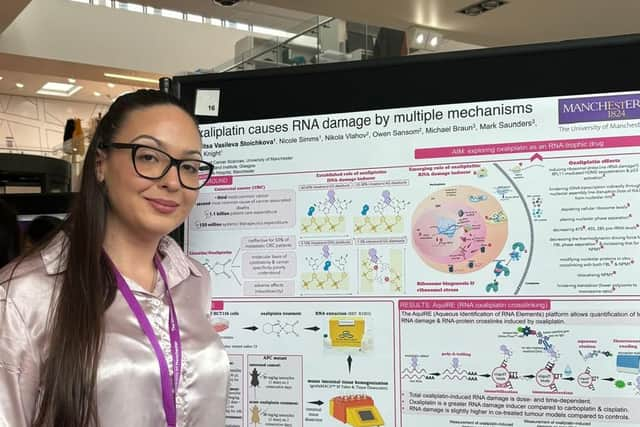
She said her research focus is on colorectal cancer and the effects of chemotherapy treatments on the body.
While many have investigated the effects of chemotherapy on DNA, Zornitsa said, her focus is the impact on proteins and RNA – a molecule in the body that is essential for most biological functions.
“I’m trying to understand what works, what the particular molecular effect is stemming from the chemotherapy, and I’m trying to eliminate any other side effects,” Zornitsa explained.
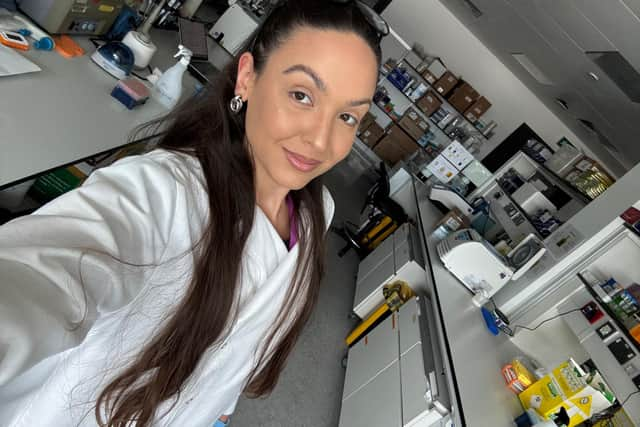
Zornitsa said she also hopes to pursue a career in colorectal cancer research.
“I’m really interested in it and it’s what I would like to pursue, especially early-onset colorectal cancer just because it has affected me personally,” she said.
“It doesn’t matter what the project is really, I’m just really keen to contribute to that field.
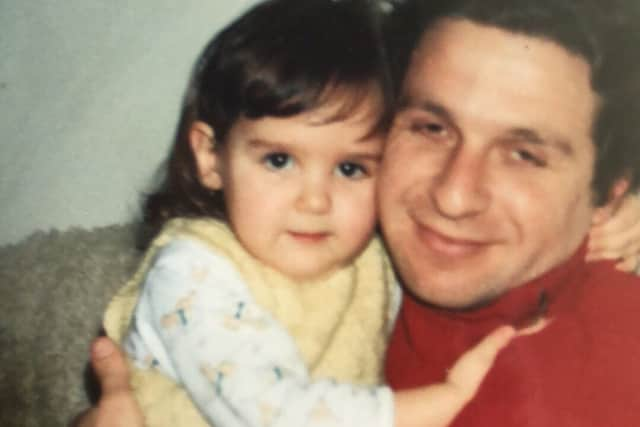
Zornitsa hopes her father would be “proud” of her.
“I think he would say that he’s glad I’m actually trying to help people, because that is what he was keen to do,” she said.
“Doing research is helping people at the end of the day, it’s a privilege to work in this field and a lot of patients are relying on the research community.
“I think my dad would definitely be proud of me.”