
STV proposals ‘best thing for audiences across Scotland’, says Ofcom director

STV’s news programme changes are the “best thing for audiences across Scotland” and for the “sustainability” of its licence, a director at Ofcom has said.
The broadcaster announced plans last year to remove its dedicated north of Scotland television news programme and cut 60 jobs.
It will replace it with a single programme from Glasgow, which will include sections devoted to regional news.
The cancellation would require permission from the regulator Ofcom and it is expected to begin a consultation shortly.
Giving evidence to the Culture Committee at Holyrood on Thursday, Ofcom’s group director of broadcast and media Cristina Nicolotti Squires said the regulator “will be monitoring STV” to ensure the new programme will interest people across Scotland.
She said: “There is a loss of local news perhaps on a linear television programme, which fewer and fewer people watching. There will be more news on the platforms that people are using to consume news, that is what the outcome should be.
“If the proposal goes ahead we will be monitoring STV to make sure that the programme that comes out of Glasgow has got a good range of material that is of interest to people right across Scotland, and we’ll be holding them to account on that.”
Conservative MSP Jamie Halcro Johnston made reference to a letter from Ofcom to Parliament that he said sounds as if the regulator’s minds are “pretty made up”.
He said: “You said our minds are not made up. I mean, the letter that we’ve received from you says we’re proposing to approve STV’s request.”
Quoting from the letter, he said “‘In our view, STV’s proposal will ensure that audiences continue to be served with high-quality regional news provision on a sustainable basis for STV.’
“That sounds pretty made up.”
Ms Nicolotti Squires replied: “With all consultation processes we take into account the range of views, the volume of views that have been provided, and we will perhaps go back to the licence holder on this occasion and might have further discussions with them, but we think that the proposal they’re putting forward is the best thing for audiences across Scotland and for the sustainability of the STV licence.”
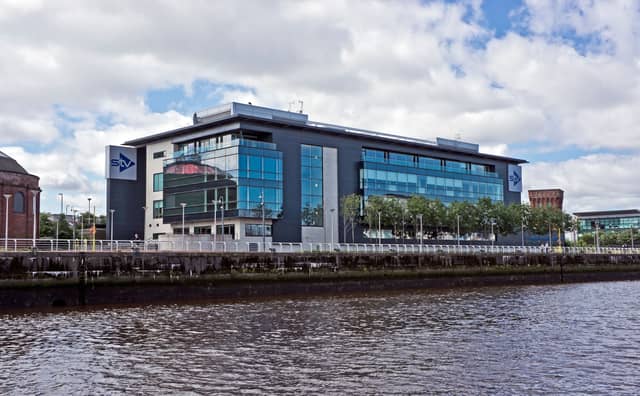
At the beginning of the month, around 80 STV journalists took to picket lines outside the broadcaster’s headquarters in Glasgow and Aberdeen due to STV’s proposals as staff are now facing compulsory redundancies.
In December, STV said that 28 roles are impacted across newsrooms and “the majority of which have been achieved through voluntary redundancy or redeployment”.
STV chief executive Rufus Radcliffe said: “Our request to Ofcom for changes to the news commitments in our licences, which they propose to accept, ensures the delivery of newsgathering and coverage across Scotland on a sustainable basis for the company, and sees the expansion of our digital news service in response to the changing ways people are consuming news.
“We will still have journalists on the ground in Inverness, Aberdeen, Dundee, Glasgow and Edinburgh, telling the stories that matter to people in these areas.
“STV is a commercial business with public service commitments, which we are incredibly proud of but for which we receive no public funding, and our proposals will protect our valued news service in the face of a dramatically changing media landscape.
“The regulator Ofcom reports on the extent to which STV and all public service broadcasters fulfil their obligations and we are very comfortable with this high level of accountability.”
The NUJ has blasted Ofcom after the regulator described proposals that include axing STV North News at 6 as the “best thing for audiences across Scotland.”
Nick McGowan-Lowe, NUJ national organiser for Scotland, said: “Ofcom’s assertion to Holyrood’s Culture Committee today that STV’s axing of the STV North News at 6 programme is ‘the best thing for audiences across Scotland’ is both astonishing and out of touch.
“If Ofcom wants to join with STV in defending the proposals, which are opposed by STV’s own journalists, opposed by leaders of the five main political parties in Scotland, opposed by 83% of viewers, and opposed by business leaders, then I think viewers have a right to question whether this supposedly independent regulator is really acting to protect the public interest.”