
Subianto in lead as Indonesian voters choose new leader
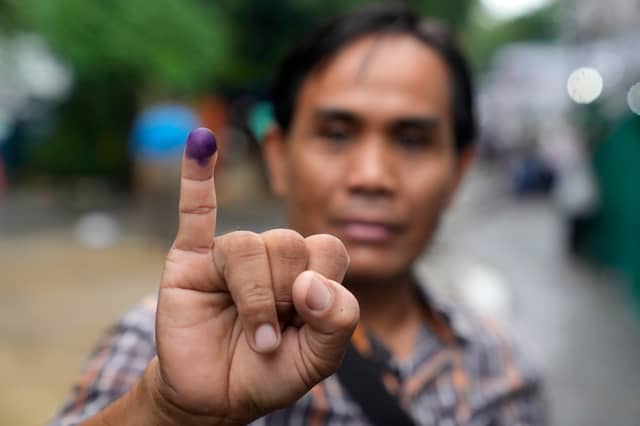

Defence minister Prabowo Subianto has taken an early lead as Indonesia began counting votes in its presidential election, with a 60% share among the nearly 40% of ballots counted so far in an unofficial tally.
Indonesians are voting for a new president as the world’s third-largest democracy aspires to become a global economic powerhouse, a quarter of a century after shaking off a brutal dictatorship.
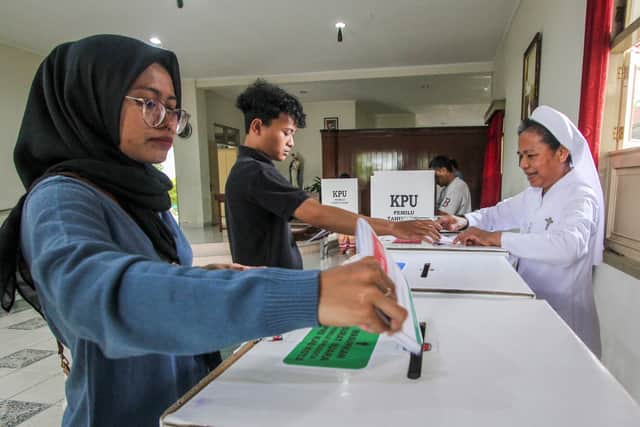
Voting ended on Wednesday afternoon with no major problems reported across the archipelago. Unofficial results were expected within the day via preliminary quick counts based on samples. Official final results will come in about a month.
Two former provincial governors, Anies Baswedan and Ganjar Pranowo, were also vying to succeed the immensely popular President Joko Widodo, who is serving the final of his two terms in office.
Mr Widodo’s rise from a riverside slum to the presidency has shown the vibrancy of Indonesia’s democracy in a region rife with authoritarian regimes.
His successor will inherit an economy with impressive growth and ambitious infrastructure projects, including the ongoing transfer of the nation’s capital from congested Jakarta to the frontier island of Borneo at a staggering cost exceeding 30 billion dollars (£23 billion).
The election also has high stakes for the United States and China, since Indonesia has a huge domestic market, natural resources like nickel and palm oil, and diplomatic influence with its south-east Asian neighbours.

A fierce thunderstorm flooded several streets of Jakarta at dawn on Wednesday. Last week, damage from heavy rains in Central Java’s Demak regency prompted the postponement of the election in 10 villages.
Aside from the presidency, some 20,000 national, provincial and district parliamentary posts were contested by tens of thousands of candidates in one of the world’s largest elections, which authorities said concluded with no major problems. About 10,000 aspirants from 18 political parties eyed the national parliament’s 580 seats alone.
Mr Baswedan, the former head of an Islamic university, served as governor of Jakarta until last year. A former Fulbright scholar, Mr Baswedan was education and culture minister from 2014 to 2016, when Mr Widodo removed him from the Cabinet after accusing him of failing to address problems by thousands of students affected by forest fires.
Mr Baswedan opposes Widodo’s plan to move the Indonesian capital from Jakarta to Nusantara on Borneo island, which involves constructing government buildings and residential enclaves by clearing lush tropical rainforests.
In an interview with the AP last month, he said democracy in Indonesia is under threat, given Mr Subianto’s choice of the president’s son as running mate.
“This means that there is a decline in trust, it means that our democracy is experiencing a decline in quality, it means that many legal rules are being bent,” he said.