
Supermarket prices set to add £180 a year to average shopping baskets

Annual shopping bills are set to rise by around £180 on average as inflation pushes up the cost of groceries, according to new data.
Analysts at Kantar said inflation in the past four weeks stands at 3.8% – a rise on levels in December – with savoury snacks, fresh beef and crisps up, whilst beer, bacon and vitamins fell.
The higher prices come as sales continue falling compared with a year ago when lockdown restrictions saw restaurants, pubs and non-essential retailers closed.
But there was strong growth in sales of vegan and low-alcohol products as customers embraced Dry January and Veganuary.
In the 12 weeks to January 23 overall sales fell 3.8%, although they remain 8% higher than pre-pandemic levels, Kantar said.
Fraser McKevitt, head of retail and consumer insight at Kantar, said: “Prices are rising on many fronts, and the weekly shop is no exception.
“Like-for-like grocery price inflation, which assumes that shoppers buy exactly the same products this year as they did last year, increased again this month.
“Taken over the course of a 12-month period, this 3.8% rise in prices could add an extra £180 to the average household’s annual grocery bill.
The market growth figures do not include on-the-go food and drink purchases, which are likely to be higher than last year.
Mr McKevitt added that the end of lockdown rules and a return to the office means pre-pandemic shopping patterns are starting to return.
He explained: “Since the first lockdown in March 2020, shoppers have been buying in bulk and visiting the supermarket less often.
“But basket sizes are now 10% smaller than this time last year, hitting their lowest level since the beginning of the pandemic, while footfall increased by 5% as every major retailer was busier in their stores.”
Londoners changed their habits the most, Kantar said, with take-home sales of food and drink down 11%.
The return to work also saw an increase in sales of personal hygiene sales, Kantar found, with razor blade sales up 14% and deodorant up 20%.
There was also strong growth in plant-based products, with shoppers embracing vegan diets in January. Around 10.7 million households bought at least one dairy-free or meat-free alternative.
Whilst those embracing Dry January by avoiding alcohol helped push alcohol-free sales up 5%.
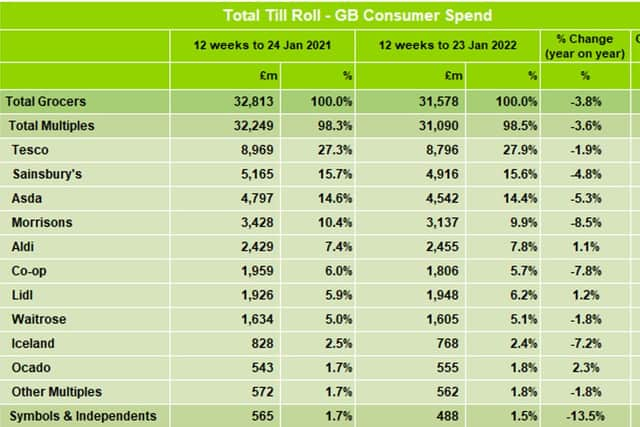
Only Aldi and Lidl recorded year-on-year growth during the period, up 1.2% and 1.1% respectively, although all supermarkets enjoyed rises on a two-year basis.
The discount supermarkets enjoyed growth for the first time since June last year and both grew market share, along with Tesco and Waitrose.
Sainsbury’s now holds 15.6% of the market, Asda 14.4% and Morrisons 9.9%. Co-op share stands at 5.7% and Iceland at 2.4%.
There were heavy falls in online grocery sales as shoppers opted for trips to supermarkets instead, with online purchases down 15% year-on-year.
But online orders remain above pre-pandemic levels, with orders accounting for 12.5% of all grocery spend.