
Surfing adventures in an electric car: Does charging infrastructure get in the way of the waves?
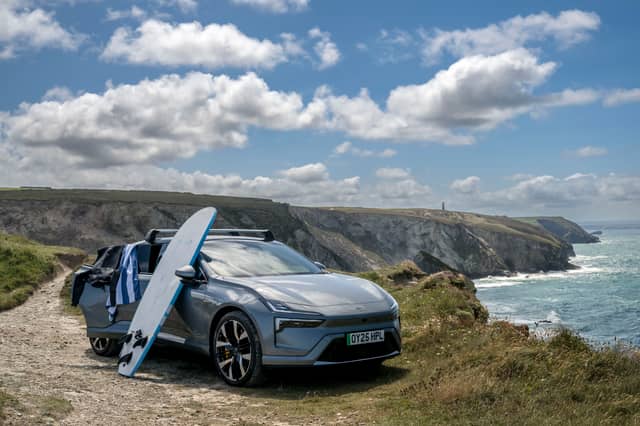

Thousands of families head to Cornwall each year for a dose of sea, surf and – sometimes – sun. Taking well-trodden routes such as the A30 and A38, there’s usually a mad scramble to head down to the coast and recently, I wanted to see how that could feel with an electric car.
There’s a lot of talk about electric vehicles of late, of course. The Government recently introduced a new wave of grants to help incentivise EVs and, in the most recent Society of Motor Manufacturers and Traders (SMMT) data, one in four cars registered during June was electric. While fleet purchasers continue to dominate the uptake of EVs, falling prices and rising demand mean that more private owners are looking to make the switch.
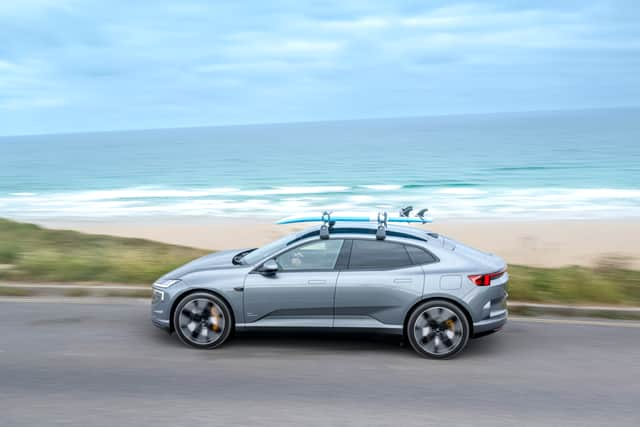
Take a look at the spread of chargers across the county and while things have improved considerably over the years, there are still some large gaps. They’re mainly focused on the primary arteries south and it’s here that you’ll find most of the rapid units – those which can deliver quicker rates of charge and are your best bet if you’re only stopping for a short period – whereas the bulk of those spread throughout Cornwall are slower, 7kW units. These are a better option if you’re sticking around for a while, such as overnight.
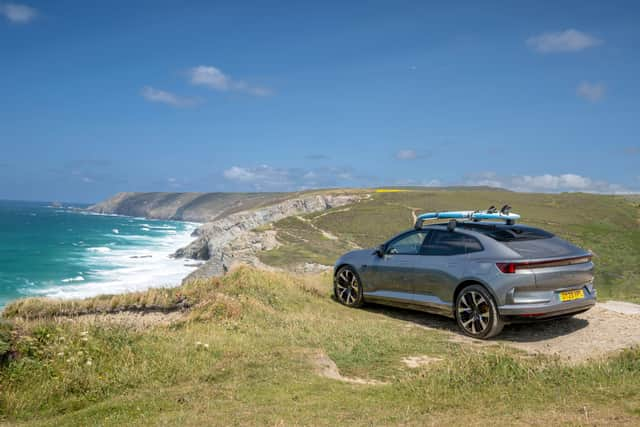
Though as I saunter towards Cornwall across the south coast on a sunny summer morning, it appears that the Polestar isn’t lying. I’m not doing this as an economy mission, either; I’ve still got elements such as the air conditioning running, I’m maintaining a steady speed wherever I can (onwards west from Southampton is notoriously congested) and I’ve got my phone on charge in the middle of the car.
In truth, the route helps too. After leaving the M27, it’s largely single country roads with the odd smattering of dual-carriageways and these do help to maximise an electric car’s efficiency. Staying on the motorway for long periods of time is never the best way to maintain range, so this kind of route is ideal.
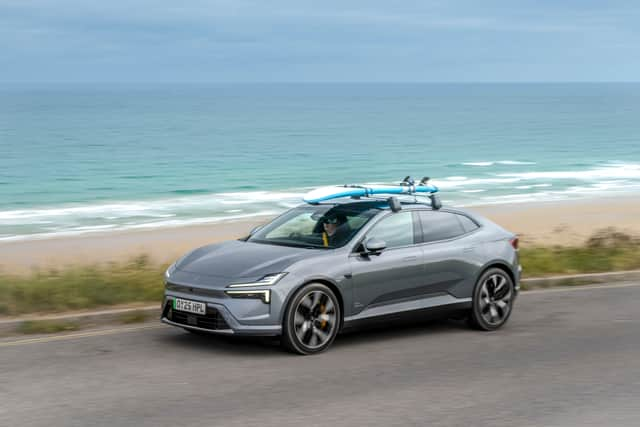
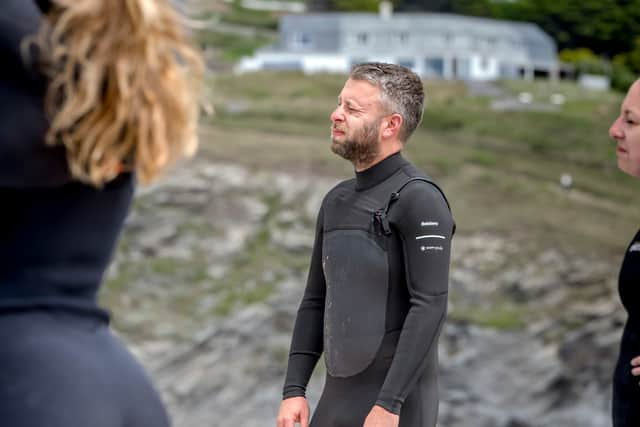
There’s a tour of the area around the Scarlet Hotel, too, and it’s clear how much sustainability is becoming a core part of what this part of the country is about. It even trickles down as far as surfing equipment, with local surf companies such as Finisterre highlighting the sustainability of wetsuits through eco-friendly materials such as Yulex, which uses natural rubber instead of more harmful neoprene, which isn’t biodegradable.

Slow chargers are also ideal for most of those who are travelling down to Cornwall for longer periods, since you can use them if you’re around for a little while. One look at the map highlights that these types of units are the most easily found, too.
But with a (nearly) full battery, I clamber back into the car the following morning to head home. Most drivers looking to make the switch into an EV should find the charging experience to be better than reported – it’s leagues ahead of where it was a few years ago – and while there are still stumbling blocks, there’s no reason why you can’t take your battery-powered car on longer journeys, Cornwall included.