
Swinney says target for cutting car use can be met – despite end of rail trial
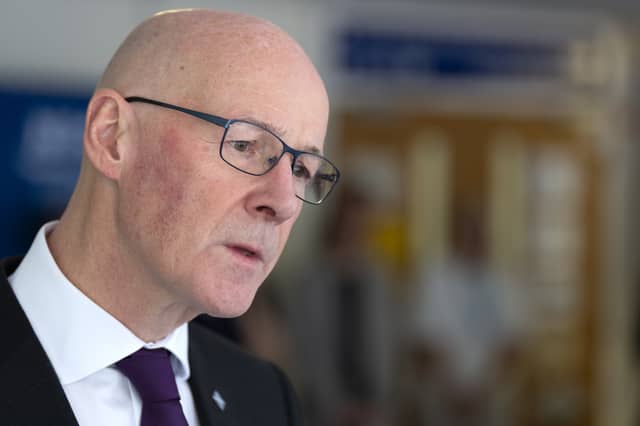

A Scottish Government target to cut car usage by the end of this decade can still be met, First Minister John Swinney has insisted, as his government axed a trial scheme for cut-price rail fares.
Concerns have been raised that ending the year-long trial – which abolished peak rate tickets, with all customers paying off-peak fares regardless of the time of travel – will force more commuters on to the roads.
Mr Swinney, however, insisted the £40 million a year price tag for the scheme meant it was “not justified to continue the pilot at that cost”.
While it will now end on September 27, Mr Swinney said he believed the Scottish Government could still meet its target of reducing the number of kilometres travelled by car by 20% by 2030.
Expert advisers at the Climate Change Committee warned back in April that it would be “extraordinarily difficult” for this target to be achieved.
Asked directly if the target could be met in the wake of the decision to end the pilot scheme which scrapped peak time fares, Mr Swinney told the PA news agency: “Yes, I think it can.”
However, he added that this “obviously requires changes in behaviour from members of the public” – saying achieving this was “not focused simply on one particular policy intervention”.
He added that while the peak fares pilot had “demonstrated a limited amount of success”, and had boosted rail passenger numbers to “some extent”, it had “not delivered the modal shift we had hoped would be the case”.
With the scheme requiring “significant amounts of public investment to make it work” and the Scottish Government “operating under significant financial constraint”, Mr Swinney said it had not been possible to continue with it.
“We simply cannot continue to invest those resources because the money is not available to continue that subsidy,” the First Minister added.
His comments came after Transport Secretary Fiona Hyslop hinted the scheme could return in the future – if finances permit.
Ms Hyslop told BBC Radio Scotland that ministers could be “prepared to go back to this” as she conceded it will “take years” to shift commuters from cars to public transport.
The Transport Secretary added that ministers had twice extended the trial, which was initially only due to run for six months, in a bid to give it the “best chance of success”.
She added: “If we are using public funding and public subsidy to cut prices, we need to demonstrate it is having the impact that the pilot was meant to achieve, which was to try to shift more people to rail, to choose to use rail, not their car.
“Now, that hasn’t shown evidence to the level that would justify that level of investment and we are living in tough financial times.

She accepted the decision to end the pilot will be “disappointing” for rail travellers but added: “We did say back in May when we extended it that we needed people to use the rail, to demonstrate in numbers, otherwise we wouldn’t be able to continue. Unfortunately, we are not able to continue.
“If we are going to be able to use public investment to tackle climate change, there are measures that might have more impact than this.”
Mick Lynch, general secretary of the RMT union, said scrapping the scheme was a “retrograde step” from the Scottish Government.
He argued it undermines ministers’ ambitions to cut car use and tackle climate change, adding: “RMT has long called for the off-peak fares trial to be made permanent and the decision to scrap the trial will be significant disappointment for many passengers.
“The return of peak fares, inflated by this year’s 8.7% fare increase, will make rail travel unaffordable for many and push people into cars.
“The Scottish Government should be investing in making rail travel affordable, accessible and reliable and it should rethink this short-sighted and damaging decision.”