
‘The contraceptive pill nearly killed me – it caused seven blood clots in my legs then lungs, I can’t care for myself now’
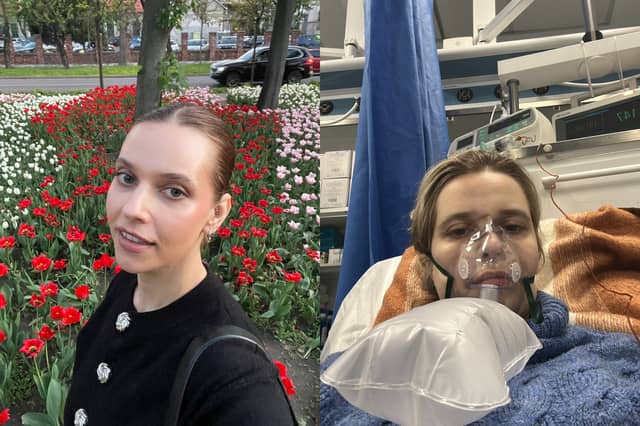

A 31-year-old woman “nearly died” after seven blood clots in her leg, caused by the contraceptive pill, travelled to her lungs, now leaving her feeling like a “baby in an adult’s body” and struggling to care for herself.
Cristina Popescu developed a persistent pain in her heel in early February 2026 while visiting family in Romania, but doctors initially reassured her it was plantar fasciitis – a common condition causing pain in the foot.
Within days, the pain crept up her leg, and on February 13, during a therapy appointment, she suddenly felt dizzy and had severe chest pain.
She was rushed to hospital, where doctors discovered she had suffered a life-threatening pulmonary embolism caused by multiple blood clots that had travelled from her leg to her lungs.
According to the NHS, the risk of developing a blood clot from combined hormonal contraception remains very small, affecting up to one in 1,000 users.
She is now recovering at her parents’ home in Romania, “barely moving each day”, and is “very stressed” as she has not had any income since losing her job in October 2025.
Cristina, who is single and lives in Luton, told PA Real Life: “I can’t believe the pill contributed to this – it’s terrifying, it nearly killed me.
“I feel like a baby in an adult’s body, I struggle walking – I just want my life back.
In October 2025, while living in Luton, Cristina lost her job as a barista and decided to visit family in Romania for a break, planning to return after the new year and find a new job.
She spent Christmas with her family and chose to see a therapist while there, as she said she was “struggling with anxiety and depression”.
In the first week of February 2026, she began experiencing pain in her right foot, particularly in her heel, to the point where she struggled to walk.
After a few days, she went to A&E and had an X-ray and doctors suspected plantar fasciitis – a condition that causes pain on the bottom of the foot, especially around the heel and arch.
She was prescribed anti-inflammatories, but the pain did not improve.
“It wasn’t swollen or anything,” Cristina explained.
“In my mind, I didn’t think too much of it because I thought I’d put a lot of pressure on my leg.”
On February 13, she had a therapy appointment, and that morning, she felt “a little dizzy” but assumed it was due to low blood sugar, as she felt better after eating and drinking.
However, when she got out of the taxi at her therapist’s office, she felt a “sudden pain” in her chest.
“I got into the office and sat down, I tried to explain to my therapist that I didn’t feel well, and by that point I thought I was going to be sick.
“She tried to calm me down and thought it was a panic attack, but I’ve had them before and it was nothing like this pain.”
After around 20 minutes, her therapist called an ambulance, and she was taken to the nearest hospital at around 10am.
“I was extremely pale and it took me about 30 minutes to get into the ambulance,” she added.
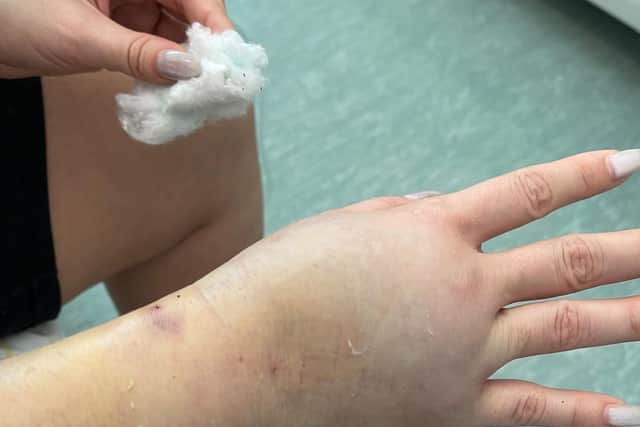
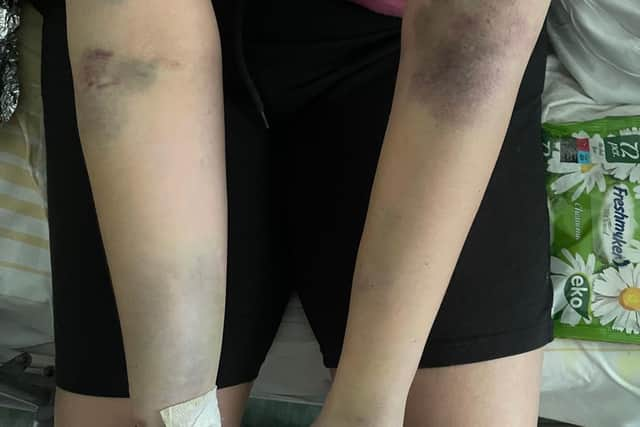
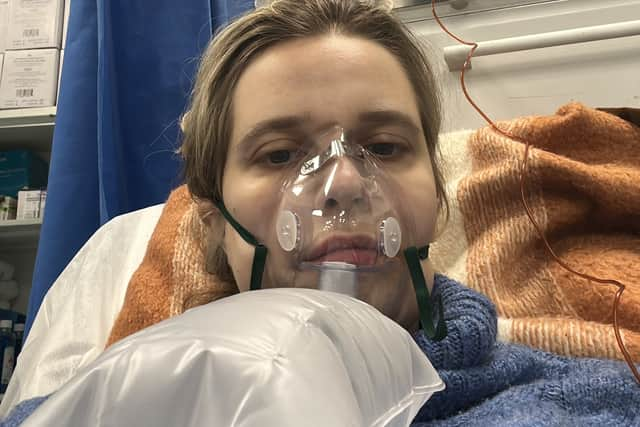
She said the IV drips caused her hands and arms to swell and bruise.
Cristina said she continued to experience chest pains, but doctors told her there was nothing further they could do.
She stood up and walked out of the ward to meet her sister and father at around 4pm, but as she went to greet them, she collapsed, with her father catching her.
Cristina was rushed back to the ward and given a blood test, which revealed signs of clotting.
She said scans also showed she had a pulmonary embolism and seven blood clots in her lungs, which had travelled from her leg – the cause of her earlier foot and leg pain.
“It took me a few days to realise what had happened. I could have died,” Cristina added.
She was initially prescribed the combined contraceptive pill, as according to Endometriosis UK, it contains the synthetic female hormones oestrogen and progestogen and the combination of these hormones stops eggs being released and makes periods lighter and less painful.
When taken continuously, back-to-back, periods stop and the symptoms of endometriosis are reduced, it adds.
Cristina immediately stopped taking the pill after her pulmonary embolism diagnosis due to its blood clot risk, and instead had a copper coil fitted.
This often reduces heavy bleeding and chronic pain – which are common endometriosis symptoms – by thinning the uterine lining and slowing tissue growth.
Following genetic testing, she was also diagnosed with hereditary thrombophilia – a genetic predisposition to developing blood clots.
Cristina was put on blood thinners and remained in hospital for seven days.
Doctors expect her to make a full recovery, but said it will take several months for her to feel like herself again.
She returned to her parents’ house on February 20 to recover and had to “completely depend” on her loved ones.
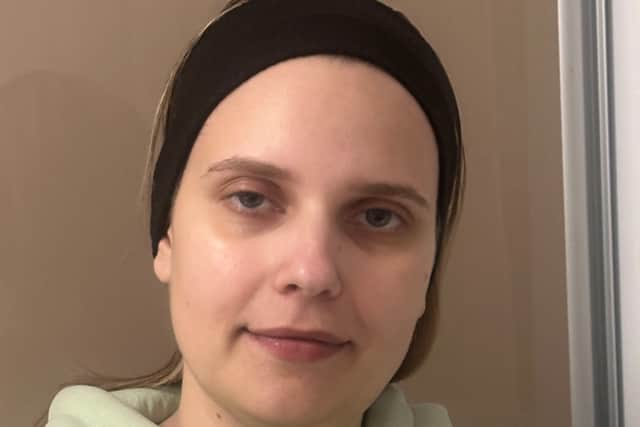
She continues to stay with her family in Romania for additional support, and so her medical team is nearby in case her condition deteriorates.
Cristina said: “I’m not doing much day to day – I’m just waking up, reading a lot, and going on a short walk every two hours.
“I’m more active than I was at the beginning, but I’m still feeling very tired.”
She added that the “trauma” of the experience has also affected her mental health, and she has not yet returned to therapy.
“It’s hard for me to talk about. I’m scared to discuss it with her (my therapist), I think I’d just be crying a lot,” Cristina explained.
“It’s also not easy with my condition at the moment, I get so exhausted.”
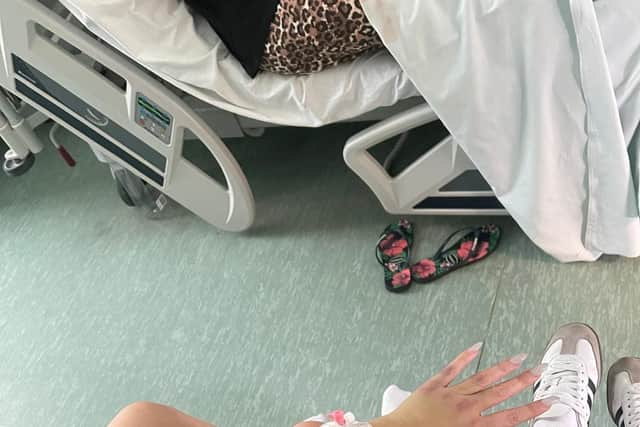
Fortunately, before travelling to Romania, she had been staying with a friend, so she does not need to pay rent while she is away.
However, since losing her job, Cristina has had no income, which she says is “very stressful” and she has set up a fundraiser to help financially.
She added: “When I go back to Luton, I’ll have to look for a job that doesn’t involve standing for long periods. This stress takes up so much of my thoughts every day.”
Reflecting on her experience, Cristina said it has made her realise that “life is short and we need to live our lives”.
To donate to her GoFundMe, visit: www.gofundme.com/f/help-me-recover-after-a-lifethreatening-pulmonary-embolism.